dailynewsnblog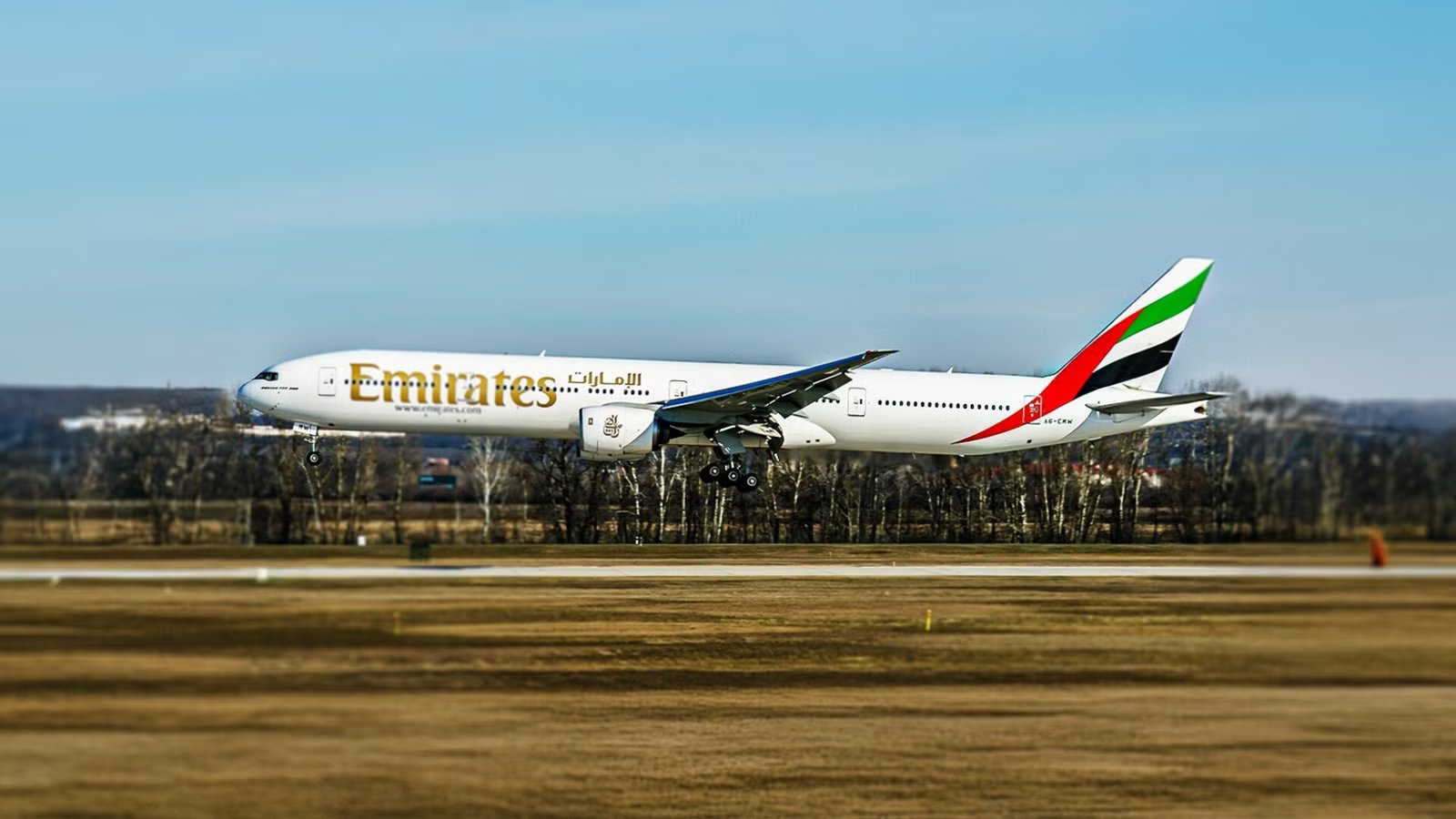
Ten years ago, as smoke began spreading through the cabin of Emirates Flight EK521 at  Dubai International Airport (DXB), some passengers did something cabin crew had specifically told them not to do: they reached for their belongings. Overhead bins opened, bags appeared in the aisles, and some passengers arrived at the limited number of usable exits carrying luggage. All 282 passengers and 18 crew miraculously escaped the Boeing 777-300, but the evacuation took nearly seven minutes before fire destroyed the aircraft.
The intervening decade has produced no shortage of warnings. Passengers have taken luggage from burning or damaged aircraft in incidents all across the world, and official investigators have repeatedly found bags slowing or obstructing evacuations. In June 2026, the International Air Transport Association (IATA) finally launched a global “Save a Life, Not a Bag” campaign, backed by both the FAAand EASA. Its research found that while 80% of passengers believe they know what to do during an evacuation, only 61% correctly said they should leave everything behind.
How Emirates Flight 521 Came To Rest On Its Belly In Dubai

Emirates Flight 521 had flown from Thiruvananthapuram, India, to Dubai on August 3, 2016, carrying 300 people aboard Boeing 777-300 A6-EMW. After a long landing, the crew initiated a go-around just after the main landing gear briefly touched the runway. The aircraft began climbing, and the pilots expected the autothrottle system to increase thrust after they pressed the takeoff/go-around switches. But because the wheels had already touched down, the TO/GA switches were inhibited, and the engines remained near idle.
The pilots eventually moved the thrust levers manually, but the response came too late. Eighteen seconds after the attempted go-around began, the 777 struck Runway 12L with its landing gear retracting. It then slid on the lower fuselage for roughly 2,600 feet (800 meters) before stopping beside a taxiway. The General Civil Aviation Authority (GCAA) of the UAE ultimately concluded that the crew’s reliance on automation, combined with inadequate training for go-arounds initiated close to the runway, significantly affected their response.
Crucially, the fuselage remained substantially intact during the slide, protecting those inside. But fire developed around the aircraft, and smoke began entering the cabin. After the aircraft came to a halt, the captain ordered an evacuation of the 300 people on board, including 60 children, seven infants, and several adults who had required assistance during boarding, adding to the challenge facing the 15 cabin crew members.
Everyone aboard ultimately escaped, but 31 passengers and crew were injured during the incident and subsequent evacuation. Approximately ten minutes after the aircraft had stopped — and just three minutes after the last passenger had got off — the center wing fuel tank exploded. Tragically, a large section of wing skin was thrown from the aircraft and fatally struck a firefighter, Jasim Issa Mohammed Hassan.
Ten Exits Rapidly Became Just A Handful Of Escape Routes

A Boeing 777-300 has five pairs of large passenger doors, but EK521 demonstrated why the number of exits on an aircraft does not necessarily equal the number available after an accident. Fire and smoke blocked some exits, while Dubai’s strong winds repeatedly blew evacuation slides away from the ground or back toward the aircraft. For much of the evacuation, investigators found that only one exit was usable in the forward cabin, and two in the rear.
Exit | What Happened During The Evacuation |
|---|---|
L1 | Slide detached from the aircraft. |
R1 | Wind initially affected the slide; it later became available before deflating. |
L2 | Slide blown by wind and unable to provide a reliable escape route. |
R2 | Initially unusable because of smoke outside. |
L3 | Not opened because of external smoke/fire. |
R3 | Opened, then closed after fire/smoke was seen outside. |
L4 | Slide severely affected by wind. |
R4 | Usable. |
L5 | Slide affected by wind but ultimately used by passengers. |
R5 | Used during parts of the evacuation, with the slide affected by conditions. |
Despite these perilous conditions, scores of passengers can be seen on video opening overhead bins and retrieving luggage. Crew initially tried to stop passengers reaching the exits with bags, but confiscating them created piles of luggage around galleys and exits, while confronting passengers interrupted the evacuation flow. Letting bags onto the remaining slides created another risk: a suitcase could damage one of the very few escape routes still available. As the GCAA accident report states:
“The number of passengers carrying bags and the time it would have taken to remove them meant the cabin crew were left with no choice but to let the passengers evacuate with their bags.”
The GCAA concluded that bags, limited exits and the need to redirect passengers contributed to an evacuation lasting nearly seven minutes. This is far short of the 90-second test, the aircraft-certification benchmark for evacuations, and illustrates why seemingly small delays matter when smoke, fire and usable exits can change from second to second.
The margin was finite. Roughly three minutes after the passengers had escaped, the center fuel tank exploded while the captain and a senior cabin crew member were still aboard searching for anyone left behind. Investigators praised the cabin crew’s performance under extraordinarily difficult circumstances, but also concluded bluntly that “attempting to evacuate with carry-on baggage posed a significant threat to passenger lives.”
EK521 Was Not An Isolated Case

If EK521 had been followed by a decade in which passengers consistently abandoned their possessions when confronted with an evacuation, its baggage problem might now be an historical footnote. Instead, the public record shows the behavior repeatedly recurring. In several accidents, investigators went beyond simply noting that bags were present, and specifically concluded that baggage slowed, obstructed, or complicated the evacuation.
Date | Airline | Aircraft Type | Location | What The Evidence Says About Baggage |
|---|---|---|---|---|
October 2016 | American Airlines | 767 | Chicago | Passengers used all three usable exits with bags; one crew member abandoned a struggle because it was prolonging the evacuation. |
March 2017 | Air Berlin | A320 | Helsinki | Passengers retrieving bags blocked the aisle and slowed deplaning. |
January 2018 | WestJet | 737-800 | Toronto | TSB found passengers retrieving baggage contributed to the evacuation delay. |
August 2018 | Czech Airlines | A319 | Helsinki | Bags and passenger behavior impeded the evacuation. |
March 2019 | Laudamotion | A320 | Stansted | Passengers retrieved baggage despite commands; AAIB subsequently made a safety recommendation. |
May 2019 | Aeroflot | SSJ100 | Moscow | |
May 2019 | Air Canada Jazz | Dash 8 | Toronto | A passenger re-entered the aircraft for belongings; others subsequently attempted to do so. |
December 2019 | Qantas | A330 | Sydney | Passengers retrieved bags; ATSB concluded that baggage delayed evacuation. |
June 2022 | RED Air | MD-82 | Miami | Video showed passengers leaving the damaged, burning aircraft with substantial carry-ons. |
June 2023 | Cathay Pacific | 777 | Hong Kong | Evacuation footage showed passengers taking luggage onto slides. |
September 2023 | Air China | A320neo | Singapore | Footage showed passengers evacuating with luggage. |
February 2025 | United Airlines | A319 | Houston | NTSB found passengers obstructing the aisle with bags; most tried to bring belongings. |
February 2025 | Delta Connection | CRJ900 | Toronto | TSB confirmed some passengers took baggage from the overturned aircraft. |
March 2025 | American Airlines | 737-800 | Denver | Images showed passengers on the wing/ramp carrying bags. |
April 2026 | SWISS | A330 | Delhi | Passengers took cabin bags onto evacuation slides. |
May 2026 | Frontier Airlines | A321 | Denver | Video showed bags being carried down slides despite crew instructions. |
Some cases reveal just how difficult human behavior can be to control. During the 2017 Air Berlin incident at Helsinki Airport (HEL), passengers who had initially left their possessions reportedly attempted to go back after seeing other people with theirs. At  Toronto Pearson International Airport (YYZ) in 2019, a passenger actually re-entered an Air Canada Jazz Dash 8 to retrieve belongings. During the QantasAirbus A330 evacuation at
  Sydney Kingsford Smith Airport (SYD) later that year, the ATSB found at least 40 of the 129 passengers who used the two air bridges were carrying cabin baggage, while others took luggage down slides; it concluded that the behavior delayed the evacuation and increased injury risk.
The problem remains strikingly current. The NTSB’s investigation of United Flight 1382 at Houston in February 2025 found that passengers obstructed the aisle with baggage and reported that most attempted to take belongings. Two weeks later, the Delta Connection CRJ900 at Toronto overturned with passengers hanging upside down from their seatbelts, luggage scattered on the ceiling and fuel flowing over one potential exit — yet Canada’s TSB still recorded some passengers evacuating with carry-ons.
And in 2026, the images kept coming. Passengers were seen taking bags onto slides following the SWISS aborted takeoff at Delhi, while footage from a Frontier Airlines evacuation at  Denver International Airport (DEN) again showed travelers carrying backpacks and other belongings despite crew instructions. That persistence is crucial to the EK521 anniversary: the behavior documented in Dubai in 2016 has not merely survived another decade — it is still generating new safety investigations and put passengers’ lives at risk.
Aeroflot Flight 1492 Showed How Little Time Passengers May Have

The darkest example came at  Moscow Sheremetyevo International Airport (SVO) on May 5, 2019. Aeroflot Flight 1492, operated by Sukhoi Superjet 100 RA-89098, returned shortly after departure for Murmansk following a lightning strike and electrical-system disruption. The aircraft made an exceptionally hard, bouncing landing; its landing gear collapsed, fuel escaped, and an intense fire rapidly engulfed the rear fuselage. Of the 78 people aboard, 41 died.
Aeroflot Flight 1492 | Key Statistic |
|---|---|
Occupants | 78 |
Survivors | 37 |
Fatalities | 41 |
Passenger exits used | 2 forward exits |
Last surviving passenger | Escaped 106 seconds after evacuation began |
Main cabin threat | Rapid fire, smoke and toxic gases |
Baggage finding | Bags in/retrieved from aisle contributed to congestion |
The circumstances were far more severe than EK521. Cabin crew later described how fire and smoke overwhelmed the rear cabin extremely rapidly, while only the forward exits offered a realistic passenger escape route. Impact forces had also opened some overhead bins, spilling baggage into the cabin. On top of that, survivors told investigators that passengers stopped to retrieve belongings. The last surviving passenger escaped around 106 seconds after the evacuation began, illustrating just how little time the occupants had.
One surviving passenger described a traffic jam caused by people opening overhead compartments; another said that large bags being removed unquestionably impeded movement in the cabin. The Royal Aeronautical Society ultimately concluded:
“The baggage almost certainly slowed down the evacuation and led to a higher number of fatalities than would otherwise have occurred.”
We can’t reduce Aeroflot 1492 to a simple claim that passengers grabbing suitcases led to the death of 41 people. The fire developed with extraordinary speed, rear exits were unavailable, and fatalities were likely unavoidable. But what the final investigation does support is still extremely troubling: people stopping in the aisle for baggage contributed to congestion, and undoubtedly increased the death toll.
Japan Airlines Flight 516 Showed The Opposite Is Possible

Japan Airlines Flight 516 provides an extraordinary counterpoint. On January 2, 2024, an Airbus A350-900 carrying 367 passengers and 12 crew collided with a Japan Coast Guard Dash 8 while landing at  Tokyo Haneda Airport (HND). The A350 continued down the runway engulfed in flames and was eventually destroyed, yet all 379 people aboard escaped. Five of the six people aboard the Coast Guard aircraft were killed.
Aeroflot 1492 | Japan Airlines 516 | |
|---|---|---|
Year | 2019 | 2024 |
Aircraft | Sukhoi Superjet 100 | Airbus A350-900 |
Occupants | 78 | 379 |
Aircraft destroyed by fire | Yes | Yes |
Major exit restrictions | Yes | Yes |
Baggage behavior | Retrieval contributed to congestion | Passengers overwhelmingly left baggage |
Occupant fatalities | 41 |
JAL516 was hardly an ideal evacuation scenario. The aircraft’s public-address system became unavailable; the crew had to shout instructions and use megaphones; a fire was visible outside; and only three of the A350’s eight exits were ultimately used. Yet passengers overwhelmingly followed crew directions and left their belongings behind, and all were able to evacuate safely.
Japanese aviation experts subsequently contrasted that discipline with other evacuations — including  Air China Flight CA403 at Singapore only months earlier, where passengers were filmed taking luggage from a smoke-filled A320neo:
“Unlike other incidents, crew instructions were followed to the tee … and we believe that led to the swift evacuation and the survival of all on board.”
The JAL example challenges the idea that grabbing possessions in an emergency is simply inevitable human behavior. Japan Airlines had already placed considerable emphasis on emergency evacuation behavior in its passenger safety materials, videos, and cabin crew training. The Haneda escape depended on many factors, including the A350’s survivable structure and the decisions of its cabin crew, but well-briefed and compliant passengers ultimately removed one potentially dangerous variable from an already chaotic situation.
Passengers Think They Know What To Do. The Survey Says Otherwise

The persistence of the baggage problem is particularly striking because most travelers believe they already understand emergency procedures. IATA commissioned Savanta to survey more than 300 recent air travelers in each of four different travel markets — the US, UK, UAE and Singapore — in April 2026. Eight in ten respondents said they knew what to do during an emergency evacuation. Yet only 61% correctly identified the safest response: leave every personal item behind and get off the aircraft.
In other words, two out of ten passengers who have traveled recently don’t know what to do in an emergency. Another two out of ten think they know, but would make the wrong decision when seconds really matter.
IATA Survey Finding | Result |
|---|---|
Passengers who said they know what to do during an emergency evacuation | 80% |
Passengers who correctly said they should leave all belongings behind | 61% |
Passengers who had seen reports of travelers taking bags during evacuations | 33% |
Of those who had seen such reports, the share who said they might do the same | 22% |
Overall share who might retrieve baggage or follow others doing so | 10% |
Passengers aware of the 90-second evacuation certification benchmark | 18% |
Passengers who thought an evacuation could take three minutes or longer | 38% |
Passengers less likely to retrieve baggage if essentials were already on their person | 60% |
The findings also suggest that bad evacuation behavior can be contagious. One-third of respondents had seen reports or footage of passengers taking baggage during an evacuation, and 22% of that group said they would still be likely to do the same. Overall, one in ten respondents admitted they might retrieve luggage — or copy someone else doing so — even after being instructed to leave it behind.
Passengers may also substantially overestimate how much time is available. Only 18% knew that aircraft evacuation procedures are designed around a 90-second certification benchmark, while 38% believed an evacuation could take three minutes or longer. This suggests many passengers may approach an emergency without appreciating just how rapidly survivable conditions can deteriorate. Aeroflot Flight 1492, where the final surviving passenger escaped only 106 seconds after the evacuation began, provides a grim illustration of why a few wasted seconds can matter.
Perhaps the most useful finding, however, points toward changing passenger behavior before the emergency begins. Some 60% said they would be less likely to retrieve baggage if small essentials such as their passport, money and medication were already secured on their person. It is precisely that combination of preparation and blunt messaging that IATA’s new campaign is now trying to encourage.
“Save a Life, Not a Bag”: Aviation’s Latest Attempt To Change Behavior

Those research findings led IATA to launch “Save a Life, Not a Bag” on June 8, 2026, with support from both EASA and the FAA. Its instructions are deliberately simple: listen to crew, leave all baggage behind, do not stop to record or photograph, keep aisles and exits clear, and get out quickly. Campaign materials developed by behavioral specialists are available for airlines to use across websites, apps and social media, while travelers are encouraged to keep vital small items on their person before takeoff and landing.
In September 2025, the FAA also issued Safety Alert for Operators SAFO 25003, warning that retrieving baggage can obstruct aisles and exits, damage evacuation slides, and increase evacuation time beyond survivability thresholds. It urged airlines to review crew procedures, training, announcements and passenger communications. The NTSB had been raising essentially the same problem much earlier: after  American Airlines Flight 383 in 2016, it noted that carry-on baggage was the obstruction most frequently cited by flight attendants in its earlier evacuation research.
More radical solutions are now entering the discussion. IATA officials have acknowledged the possibility of measures including locking overhead bins so that passengers physically cannot retrieve large bags during an evacuation, although such systems would introduce their own design and operational questions. For now, the industry is concentrating on changing behavior before an emergency occurs rather than trying to change it once smoke is already filling an aircraft.
EK521 demonstrates why that matters. Its 300 occupants were extraordinarily fortunate to have the time, usable exits, and cabin crew performance necessary to overcome a difficult evacuation, even as passengers brought bags with them. Aeroflot 1492 demonstrated that another aircraft may offer barely a fraction of that margin, while JAL516 showed that passengers can behave differently when the moment comes. Ten years after EK521, the rules are the same. Your bag can be replaced. The seconds lost trying to save it cannot.