dailynewsnblog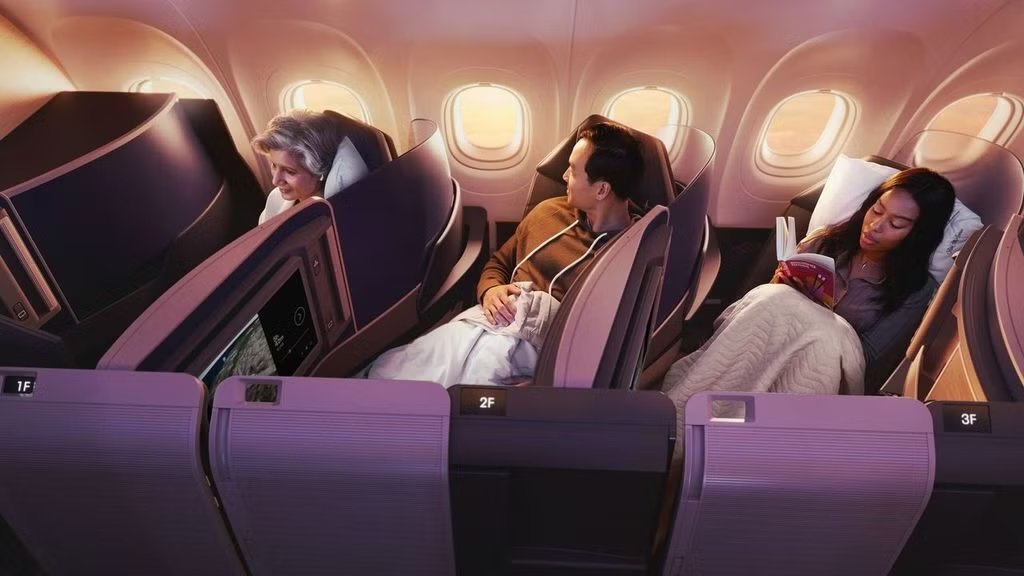
 United Airlines is preparing to put one of its most anticipated new aircraft into passenger service, and the Airbus A321XLR is shaping up to be considerably more than a long-range replacement for the carrier’s aging Boeing 757 fleet. Designed as United Airlines’ most premium narrowbody for international flying, the aircraft brings lie-flat suites, premium economy, large seatback screens, and other features more commonly associated with widebody aircraft into a single-aisle cabin.
The first Airbus A321XLR has now arrived at United Airlines, giving passengers a much clearer idea of what the aircraft will actually feel like onboard. A recent Simple Flying video tour of the cabin also provides a useful look at the layout and finishes, while United Airlines’ latest announcements fill in the details about the seats, entertainment system, overhead bins and economy experience. The airline expects domestic flying to begin later in 2026, followed by international services by early 2027.
A Narrowbody Built Around Premium Travel

The most striking thing about United Airlines’ A321XLR is how heavily the cabin is weighted toward premium seating. The aircraft will have 32 premium seats, which is 16 more than the Boeing 757s it is intended to replace, reflecting United Airlines’ broader strategy of putting more high-value seats onto newer aircraft.
The carrier has described the A321XLR as its most premium narrowbody, and the cabin seen in the video makes clear that this is not simply a standard A321 with extra fuel capacity. At the front is United Polaris, where passengers will find a new lie-flat suite designed specifically for the A321XLR and certain A321neo aircraft.
Each seat provides direct aisle access, while a privacy door gives passengers a more enclosed personal space than the traditional open business-class seats found on many narrowbodies. The  Star Alliance carrier says the seat was developed through more than five years of research and customer sleep trials, with particular attention paid to shoulder and elbow room. That approach is important because the Airbus A321XLR remains a single-aisle aircraft.
Therefore, the premium cabin has to create a sense of space without the physical width available on a Boeing 787 or Airbus A350. The video offers a useful impression of that compromise, showing a polished, modern cabin in which the suite walls provide privacy without completely closing off the passenger from the surrounding cabin. For travelers accustomed to United Airlines’ older Boeing 757 business-class product, the difference should be substantial.
United Polaris Gets A Major Upgrade

The United Polaris experience will be the biggest attraction for passengers choosing the Airbus A321XLR. The lie-flat seat is arranged so that every passenger can reach the aisle without climbing over someone else. At the same time, the privacy door creates a more personal environment for sleeping, working, or simply avoiding the cabin’s activity. United Airlines says the design deliberately balances privacy with an open feeling.
The suite also brings the sort of technology expected on United Airlines’ newest premium aircraft. Every seat in the Airbus A321XLR will have a 4K OLED display with Bluetooth connectivity, with the United Polaris screen measuring 19 inches. That means passengers can use their own compatible wireless headphones rather than relying entirely on wired connections.
Meanwhile, the high-resolution display should make the airline’s expanding entertainment library look considerably sharper than on older seatback systems. There is a wider strategic point here, because United Airlines is increasingly trying to make its narrowbody aircraft resemble smaller versions of its long-haul widebodies.
The March fleet announcement explicitly described the Airbus A321XLR as bringing a widebody-style experience to narrowbody aircraft, while United Airlines is simultaneously introducing its more premium Elevated interior across other parts of the fleet. The A321XLR therefore fits into a broader effort to make the airline’s premium cabins feel more consistent regardless of aircraft type.
Premium Plus Is Coming To The XLR

Behind United Polaris, passengers will find United Premium Plus, giving the A321XLR a genuine premium-economy cabin rather than simply dividing the aircraft between business class and economy. United Airlines has confirmed that the Premium Plus seats will have 16-inch 4K OLED screens with Bluetooth connectivity, placing the product much closer to the carrier’s latest widebody interiors than to a traditional narrowbody premium-economy cabin.
For passengers who want more comfort but do not need a lie-flat bed, this could become one of the aircraft’s most attractive features. The A321XLR is intended for international short- and medium-haul routes, where a wider seat and more personal space can make a meaningful difference without requiring the price of United Polaris.
Cabin | Passengers |
|---|---|
United Polaris | 20 |
United Premium Plus | 12 |
Economy Plus | 36 |
United Economy | 82 |
Total | 150 |
The cabin shown in the video also reinforces the impression that United Airlines has treated Premium Plus as a distinct product rather than simply giving economy passengers a slightly larger seat. Each of the carrier’s Airbus A321XLRs can carry up to a maximum of 150 passengers, as detailed above. The result is an unusually premium cabin mix for a single-aisle aircraft, with United Airlines effectively creating three recognizable experiences before reaching standard economy.
That matters for the airline’s network because the Airbus A321XLR can serve markets that may not generate enough demand for a widebody but can still support meaningful premium traffic. United Airlines has said the aircraft will replace Boeing 757s on some existing international routes while eventually allowing it to open new destinations in Europe and South America.
Economy Passengers Have Not Been Forgotten

The biggest surprise for many travelers may be that United Airlines has invested heavily in economy class as well. Every economy passenger will receive a 13-inch 4K OLED seatback screen with Bluetooth, meaning the high-resolution entertainment system is not reserved for the premium cabins.
There are also practical improvements that passengers will notice before the entertainment system even becomes relevant. The A321XLR has larger overhead bins designed to accommodate more bags, reducing one of the most common frustrations on narrowbody flights. At the back of economy class, United Airlines has also installed a self-service snack bar, allowing passengers to pick up snacks or non-alcoholic beverages without waiting for a traditional service cart to reach their row.
United Airlines is also adding a special Economy Plus feature across all 50 A321XLR aircraft, with a row containing open middle spaces and large custom tables. The carrier has described this as another economy-class innovation, while passengers still receive the three inches of additional legroom associated with Economy Plus. Pricing for the new product is yet to be announced, but it shows that the airline is treating the economy cabin as an area for experimentation.
The Aircraft Will Replace The Boeing 757

The Airbus A321XLR’s arrival is closely connected to United Airlines’ long-running need to replace its Boeing 757 fleet, particularly aircraft used on routes where a widebody would provide too much capacity. The 757 has become an important tool for transatlantic and other long-distance missions, but many of United Airlines’ 757-200s are approaching three decades of service.
The A321XLR offers newer technology and greater efficiency while retaining the operational flexibility of a narrowbody. United Airlines has 50 firm A321XLR commitments, with eight deliveries expected in 2026, 16 in 2027, and more than half of the aircraft in service by 2028. As such, the type will not suddenly replace every Boeing 757.
However, the fleet is large enough to become an important part of the airline’s international network. The aircraft also gives network planners more freedom because its smaller capacity can make thinner international routes viable.
Rather than needing enough passengers to fill a widebody, United Airlines can operate a premium-heavy narrowbody between smaller European or South American markets and its US hubs, such as  Newark Liberty International Airport (EWR). That could mean more non-stop destinations over time, although the exact future route map will depend on demand, aircraft availability, and the airline’s broader fleet plans.
When Can Passengers Actually Fly It?

The first Airbus A321XLR is already in United Airlines’ fleet, and the airline expects the aircraft to begin carrying passengers on domestic flights later in 2026 before moving into international operations. United Airlines has said international service should begin by early 2027, providing a period in which the carrier can introduce the aircraft, train crews and build operational experience before committing the type more extensively to longer routes.
That rollout means the first passengers may encounter the Airbus A321XLR on a domestic sector rather than across the Atlantic, even though international flying is the aircraft’s primary purpose. Such flights should offer an early opportunity to experience the new Polaris suite, Premium Plus cabin, and economy features before the aircraft begins taking on the longer missions for which its extended range was designed.
The Star Alliance carrier recently unveiled a host of new routes to be operated by its Airbus A321XLR aircraft, including from Washington Dulles International Airport (IAD) to both  Amsterdam Schiphol Airport (AMS) and Dublin Airport (DUB), and Newark Liberty International Airport (EWR) to both Ibiza Airport (IBZ) and Valencia Airport (VLC) in Spain.
The aircraft’s arrival therefore represents a gradual transition rather than an overnight fleet change. For passengers, the practical takeaway is that the Airbus A321XLR should feel substantially different from an older United Airlines Boeing 757, particularly at the front of the cabin, while economy travelers are also receiving meaningful upgrades.
The combination of lie-flat, all-aisle-access suites, a dedicated Premium Plus cabin, 4K OLED screens at every seat, Bluetooth, larger bins and a rear snack bar gives the aircraft an unusually comprehensive product for a narrowbody. As the first aircraft moves into regular service, its real test will be whether that premium-heavy cabin can deliver the widebody-style experience United Airlines has promised on the international routes where passengers will ultimately spend the longest time onboard.