dailynewsnblog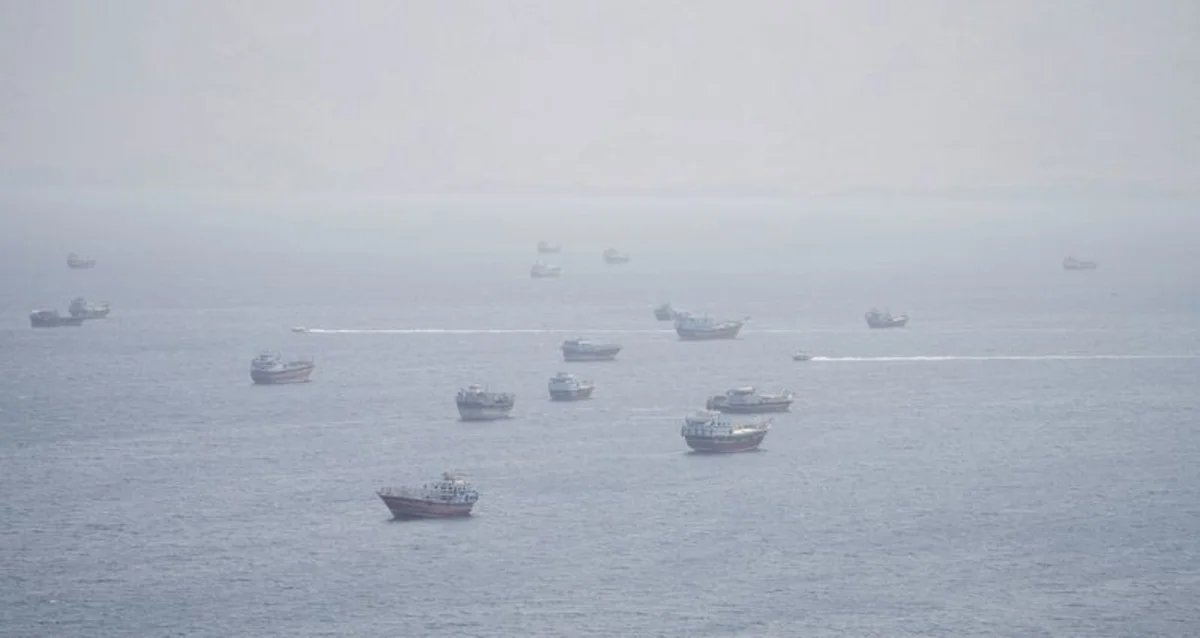
By Florence Tan
SINGAPORE, Sept 8 (Reuters) – Global oil benchmark Brent crude has rallied this month but stayed below $100 a barrel despite recent escalation in the U.S.-Iran conflict that has disrupted Gulf exports from the Strait of Hormuz and the Red Sea.
Crude oil shipments from Middle East producers are at about 11 million barrels per day (bpd) now, from 18 million bpd before the Iran war began seven months ago, according to Argus.
Here are some of the factors driving oil prices:
SIGNIFICANT VOLUMES HAVE BEEN ABLE TO FLOW THROUGH HORMUZ
In the week before fighting erupted again on August 30, roughly 8 million to 9 million bpd had been flowing through Hormuz, double the previous week’s volume, said Rystad Energy’s Chief Economist Claudio Galimberti.
While flows have since fallen to below 2 million bpd, the daily moving average is still around 4 million to 5 million barrels which puts Brent at a “fair” price of $95, Galimberti said. Industry estimates put daily exports between 6 million and 8 million barrels.
There has been no visible very large crude carrier exiting the strait since September 2, Kpler data showed on Monday.
During the interim U.S.-Iran peace deal in July, Hormuz exports touched pre-war levels of 16 million bpd.
GULF EXPORTERS ARE USING ALTERNATIVE ROUTES AND MEANS
Gulf producers have found alternative routes and are expected to continue sending cargoes for ship-to-ship transfers outside of Hormuz, mitigating some of the earlier shortfall.
Saudi Aramco resumed loadings from its Ras Tanura port inside the Gulf in August, although its exports from Yanbu in the Red Sea remain under pressure from a naval blockade by the Iran-aligned Yemeni Houthis. Yanbu exports hit a six-month low of 1.429 million bpd in August, from an average of 3.9 million bpd in the previous three months, provisional Kpler data showed.
Exports from the alternative port of Egypt’s Sidi Kerir hit 2.139 million bpd in August, more than double June volumes.
Exports from No. 2 OPEC producer Iraq rebounded in August to around 2.34 million bpd.
Shipments from the United Arab Emirates hovered around 2.9 million bpd in August and July after hitting a record in June, Kpler data showed.
Kuwaiti crude exports have recovered to about 1 million bpd in July and August.
However, Iran’s oil exports have fallen sharply due to the U.S. blockade.
OTHER PRODUCERS ARE STEPPING UP
Non-OPEC producers including the U.S., Canada and Guyana are set to increase output by a combined 1.4 million bpd this year, according to Jarand Rystad, founder of Rystad Energy, partly filling the shortfall.