dailynewsnblog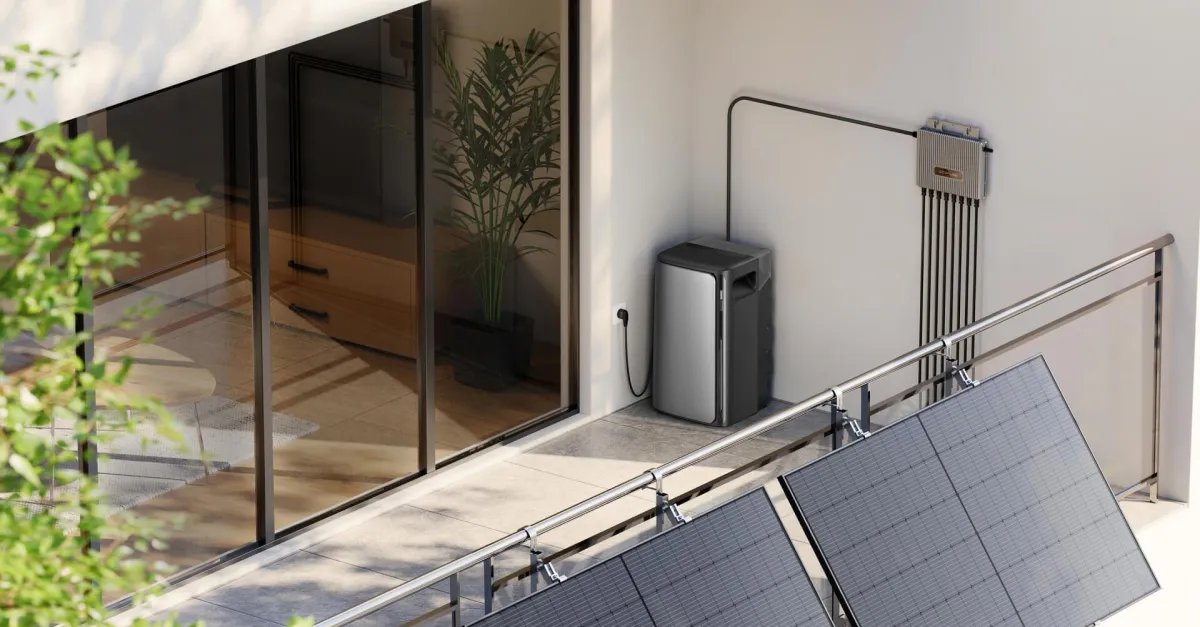
This is The Stepback, a weekly newsletter breaking down one essential story from the tech world. For more on e-bikes, power stations, and how to work anywhere, follow Thomas Ricker. The Stepback arrives in our subscribers’ inboxes at 8AM ET. Opt in for The Stepback here.
With a deep breath, I took the cable seething with 800W of solar power and plugged it directly into a standard wall jack in my home. Nothing sparked, nothing smoked, and by the end of that sunny summer day, my electricity bill had dropped to nearly $0.
As unnerving as it sounds to treat a common household power outlet as a power input, these DIY plug-in solar kits, sometimes called balcony solar, have proven to be safe and effective for years already in Europe, and are slowly making their way into the US to democratize the production of energy. They transform solar from a high-barrier capital improvement (starting at around $15,000) requiring contractors, engineering permits, and utility preapproval, into an consumer appliance you can buy at a supermarket (starting around $300) and hang from a balcony railing or prop against a wall — all without the help of an electrician.
Traditional plug-in solar kits include a few solar panels and a small microinverter that ties itself to the electrical grid. The microinverter converts solar energy into power that’s prioritized for use by devices inside your home.
Optionally, you can add a battery to the kit to store any surplus energy produced during the day. That way, you can continue to cut your costs by feeding that stored energy back into the home when the sun goes down. These so-called power stations can also be used to power a fridge and other critical devices during a blackout. They start at around $500 for a small 1kWh battery or $1,500 for 3kWh.
I live in Europe, where millions of households, including as estimated 1.5M in Germany, have purchased plug-in solar systems over the last few years to gain a modicum of energy independence. They’re so popular, even Ikea sells them (though they’re actually just EcoFlow resellers).
Plug-in solar’s popularity has been fueled by two things. Oil and gas prices have surged ever since Russia invaded Ukraine, and have remained high amid the ongoing US war with Iran. Meanwhile, global prices for solar panels and batteries have fallen to record lows — though US consumers face higher costs due to Trump’s tariffs on panels and batteries and the elimination of solar tax credits. Nevertheless, plug-in solar is finally getting a foothold in those amber waves of grain.
Historically, utility regulations in the US treated a budget solar panel in a garden like a massive 10kW rooftop array. Now, over a dozen states have passed laws or introduced bills to legalize the deployment of plug-in solar systems. The rules vary, but in general they allow for qualifying plug-in solar systems to be installed without utility preapproval so long as they meet safety requirements, prevent individual circuits from overloading, and shut down during a power outage to keep line workers safe.
I’ve had a modest 400W plug-in system operating on my rooftop deck in the Netherlands. In those 21 months of use, it produced 709kWh, saving me about €225 (about $260) — enough to nearly offset the purchase price of my kit. It will take longer to offset the rather large $1,800 power station it all plugs into when I’m home. But as an avid vanlifer, I get a ton of extra value out of that emergency battery, which also enables me to live and work off grid for months at a time.
People operating a plug-in solar system in sunnier climates with maxed out solar arrays will recoup costs much faster. European plug-in solar systems can feed as much as 800W into the home, while US states typically support up to 1200W. And kits often support even greater solar capacity so long as it’s diverted to a battery.
In the US, plug-in solar is now legal in Virginia, Maine, Colorado, Maryland, New Jersey, Connecticut, Vermont, and New Hampshire, ever since Utah pioneered the state-level reclassification of plug-in solar as a small household appliance last year. Legislation is awaiting governor signature in California and New York, while another half-dozen states have introduced bills.
In Europe, of the 27 EU member states, only Sweden and Hungary still prohibit plug-in solar devices.
European adoption of plug-in solar systems will almost certainly continue its upward trend so long as solar and battery prices keep falling — it’s not like the geopolitical situation will bring energy prices down anytime soon. US adoption could be in for a hockey stick moment of growth just as soon as California — the state with the highest residential electricity rates — signs plug-in solar into law.
Now that the legal dominos have started falling in the US, the nascent plug-in solar category has piqued the interest of companies focused on home energy. EcoFlow, Bluetti, Anker, and many others, are all trying to capitalize on the surge of interest, giving renters and budget-conscious consumers a wider selection of kits to choose from.
Already in the last few months, we’ve seen EcoFlow launch its more capable Stream 2 series alongside Bluetti’s Balco series. Both of these plug-in solar systems are built on modular architectures so that owners can expand from entry-level solar generation to a larger, whole home energy system over time.
I can attest that plug-in solar is a slippery slope. First you buy the microinverter and a few solar panels, then more panels and a battery to store the energy surplus, and then you start looking at how you can extract even more energy out of thin air. Because once you start looking closely at the power you’re paying for, canceling it out with “free energy” becomes an addictive game.
Plug-in solar isn’t going to replace utility-scale solar farms or 10kW rooftop arrays, but it fills the missing bottom layer of the clean energy transition. My two-year-old kit has already nearly paid for itself. Beyond the savings, I like that I’m reducing my contribution to climate change, and that feeling’s invaluable.
And who knows, maybe a new US administration will arrive in a few years to give the entire sector a goose, instead of actively working against solar and handing the future of energy production to China, uncontested.
- Plug-in solar systems just became legal across Great Britain on August 27th. Retailers like Lidl, B&Q, Argos, Currys, and Amazon are selling solar-only kits in stores and online. The UK took the unusual step of forbidding battery-integrated systems, but they’re being explored for future inclusion.
- New Jersey Governor Mikie Sherrill signed the Garden State Balcony Solar Act into law earlier this week, legalizing setups up to 1,200W on 120V outlets. But the law takes effect on March 1st, 2027.
- Here’s my review of an early EcoFlow plug-in solar system from back in 2024.
- The New York Times looks at the race between the US and China to define the future of energy, each guided by two very different strategies mired in economic and national security concerns.
- This New York Times piece takes a sober look at the transformative effects plug-in solar could have on American energy production and consumption.