dailynewsnblog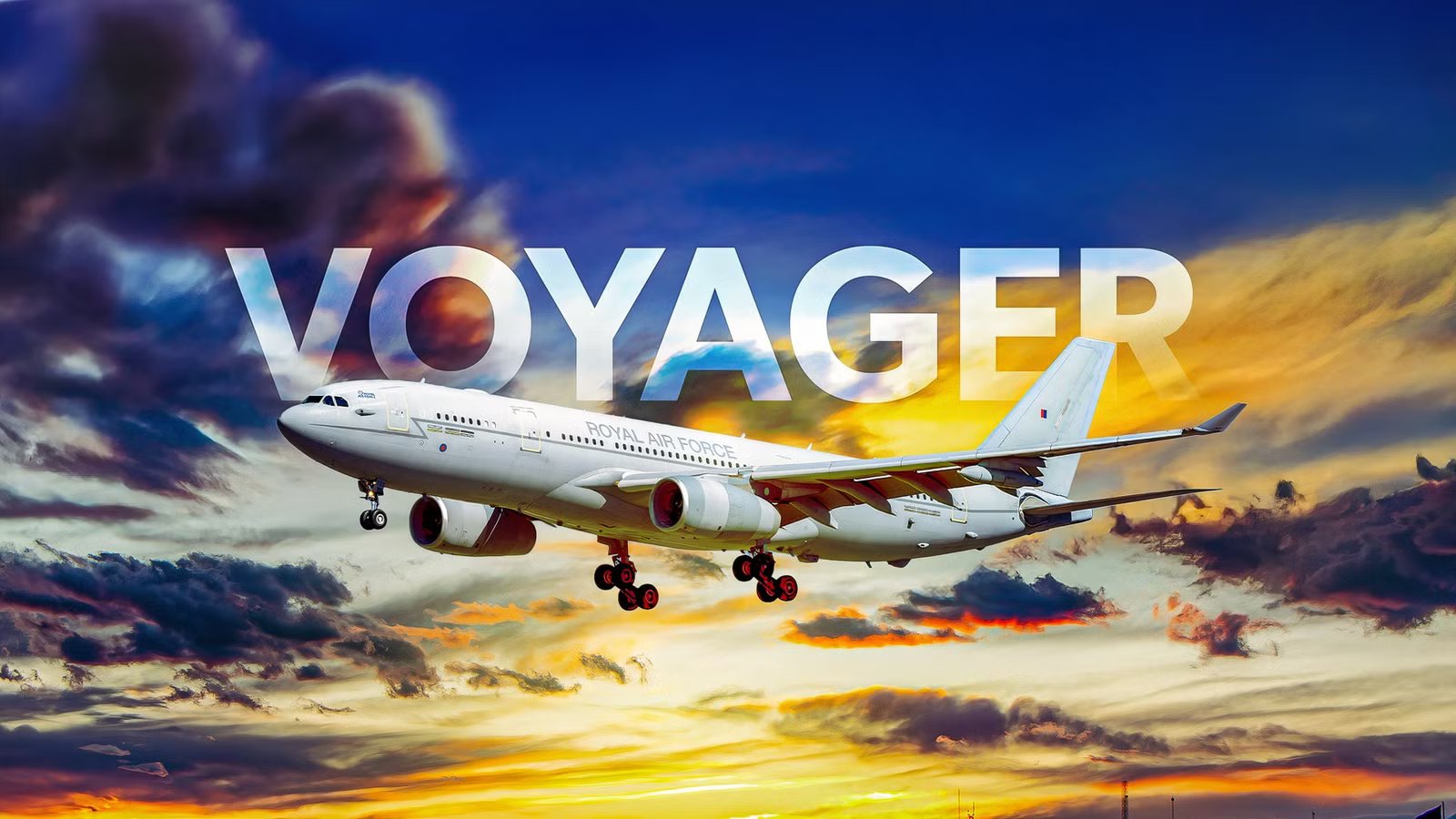
Exercise Pitch Black, held every two years, brings together partner nations to hone air combat skills in the skies above Northern Australia. This year, the exercise featured numerous nations and more than 2,000 personnel from across the globe, working to build interoperability and enhance the collective ability to ensure security and stability across the Indo-Pacific region.
This year’s iteration also featured the Royal Air Force’s (RAF) Voyager refueling and strategic airlift aircraft. The Voyager demonstrated its key air-to-air refueling capabilities and its ability to perform strategic aeromedical evacuation duties. The latter is highly relevant today, as demonstrated by the extraordinarily high casualty rates in Ukraine, highlighting how robust medical evacuation capabilities and infrastructure are a necessity for modern high-intensity warfare.
Voyager Fuels Multinational Airpower

The multinational Pitch Black 26 exercise, held earlier this month, is a biennial training opportunity focused on air combat and interoperability. This year, the exercise brought together over 2,500 personnel from 21 countries, and the 100 aircraft involved primarily operated out of Royal Australian Air Force (RAAF) Bases Darwin and Tindal in Australia’s Northern Territory, as well as RAAF Base Amberley in Queensland. The exercise also saw the debut of the Japan Air Self-Defense Force’s Lockheed Martin F-35A Lightning II, as well as the Indian Air Force’s Rafale aircraft.
The pilots involved in the exercise honed their skills while participating in complex air combat missions across 849,000 square miles (2.2 million square kilometers) of training airspace. While Pitch Black places heavy emphasis on building and strengthening operational capacity at the multinational and coalition levels, pilots were additionally placed in scenarios that tested their individual tactical skills. Regarding the exercise, Air Commodore Matthew McCormack of the Royal Australian Air Force stated, “Exercise Pitch Black brings together air forces from across the globe to plan together, fight together and learn together through realistic and complex training scenarios.”
Operation Pitch Black: Participating Nations | Asia | Europe | Oceania | North America |
|---|---|---|---|---|
Brunei | Finland | Australia | Canada | |
India | France | Fiji | United States | |
Indonesia | Germany | New Zealand | ||
Japan | Spain | Papua New Guinea | ||
Malaysia | Sweden | |||
Philippines | United Kingdom (UK) | |||
South Korea | ||||
Singapore | ||||
Thailand |
The UK’s RAF contribution consisted of around 80 personnel from the Air Mobility Force, who supported the operation of an RAF Voyager, an Airbus A330-200 MRTT modified to operate as an aerial refueling tanker. During the exercise, the aircraft proved its utility as a connector and enabler of airborne operations.
As a key participant, the RAF stated that Voyager flew 11 sorties, during which it offloaded 114 tons (103 tonnes) of fuel through 41 air-to-air refueling contacts, enabling 57 receiver aircraft from Germany, Spain and Australia to remain in the “fight.” The Voyager also transported more than 130 personnel in and out of the theater of operations. These complex operations took place over approximately 90 flight hours, during which the tanker covered more than 25,000 nautical miles.
Beyond Refueling: Voyager’s Medical Mission

While aerial refueling remains Voyager’s primary mission, its strategic aeromedical evacuation capabilities also made an important contribution during the exercise. The aircraft, designed for modularity, can be rapidly configured into an intensive care unit, complete with space for up to 40 stretchers and three critical-care patients. In instances of heavy combat and humanitarian or disaster relief missions, Voyager and its highly trained medical staff can provide a crucial link in the evacuation chain, allowing seriously injured patients to receive continued care as they are transported to medical facilities. During the complex Pitch Black exercise, an RAF medical team coordinated with RAAF medical personnel and counterparts from other participating nations.
The team acted as first responders following a simulated missile strike—a scenario reflective of the threats seen in Ukraine and, more recently, the Middle East—that created multiple casualties with severe blast and burn injuries. British and Australian medics then coordinated to provide immediate aid, stabilize the casualties, perform lifesaving care, rapidly evacuate them, and continue providing medical care in transit.
Commenting on the highly realistic training, RAAF Flying Officer Jessica Wiblin, a nurse from No. 1 Expeditionary Health Squadron, stated, “There are definitely complexities treating a patient up there, things that you wouldn’t consider on the ground definitely come into play when you’re in the air.” The training allowed the medical teams to exchange knowledge, compare procedures, and enhance their professional relationships, which is a cornerstone of coalition operations.
Such training is essential in preparing Forward Aeromedical Evacuation teams for the reality of heavy casualty flows, such as those experienced by the British military while supporting the International Security Assistance Force in Afghanistan.
According to the Journal of Paramedic Practice, between April 2006 and September 30, 2016, Medical Emergency Response Teams (MERT) evacuated 935 patients while deployed in Helmand province. The journal further states that the teams provided care for medical emergencies, including “…gunshot wounds, fragmentation and blast injuries, road traffic collisions and a small percentage of disease non-battle injury [sic].” The realistic medical training incorporated into Pitch Black will help maintain the critical skill sets that could be needed should great-power competition escalate into high-intensity warfare.
How the A330 Became the RAF’s Voyager

By the early 2000s, the RAF was in need of a new tanker fleet, as its Vickers VC10 and Lockheed Martin L-1011 TriStar tankers were advancing in age and becoming increasingly expensive to operate. The Voyager, a derivative of the Airbus A330-200, was seen as a way to solve two problems at once: replace the aging tanker fleet while also inducting aircraft that could provide greater strategic mobility for an expeditionary military.
The 27-year Voyager Private Finance Initiative (PFI) contract was originally valued at $17.7 billion (about £13 billion), although the government later stated the outturn value was £10.5 billion. In terms of delivery, the RAF’s first in-service flight took place in April 2012, with the tanker subsequently beginning air-to-air refueling duties in 2013, and deliveries being completed in 2016. Currently, the RAF operates a 14-aircraft Voyager fleet, comprising a nine-unit core fleet—eight military-registered airframes and one civilian-registered aircraft—supplemented by five A330-200s that can be recalled from commercial service when required.
Given that the tankers are dual-use, those carrying civilian registration can be configured for commercial use, essentially reverting to their role as Airbus A330-200s. One particular model, Voyager ZZ336, was selected to receive special upgrades for VIP transport in 2015 and was later adorned with a UK Government paint scheme.
The Voyager is capable of carrying up to 109 tons (98.8 tonnes of fuel), stored within the wings and center-section tanks. When performing air-to-air refueling duties, the Voyager comes in two versions: the KC Mk2 with two refueling points and the KC Mk3 with an additional centerline hose for refueling larger aircraft.
For personnel transport, the cabin can accommodate up to 291 passengers for expeditionary operations or general transport. The spacious cargo hold can accommodate equipment for service personnel, with a maximum payload of about 94,800 pounds (43,000 kg) of cargo, including up to 32 463L cargo pallets. In theory, the RAF’s nine airframes in the core Voyager fleet could carry 2,619 personnel in a single lift. A 5,000-strong brigade would therefore require two such lifts, assuming all nine aircraft were available and dedicated exclusively to troop transport.
Voyager’s Role Is Set to Evolve

The RAF’s Voyager fleet has demonstrated that its value extends well beyond simply transferring fuel between aircraft. At Pitch Black 26, the tanker supported multinational air operations by extending the range and endurance of fighter aircraft, while its aeromedical capabilities demonstrated its ability to provide critical care during strategic evacuation missions. Its ability to transport personnel and cargo further gives the RAF a flexible strategic mobility asset capable of supporting operations far from the UK.
However, Voyager’s role could evolve as the RAF prepares for the arrival of a new generation of combat aircraft. The UK’s participation in the Global Combat Air Program (GCAP) will eventually introduce a sixth-generation fighter requiring boom-based aerial refueling, potentially challenging the RAF’s longstanding reliance on the hose-and-drogue system.
While the RAF has not announced a timeline or specified how many Voyagers could receive a boom, adapting the fleet would represent a significant change for an aircraft originally intended to provide a flexible and enduring tanker and transport capability. As the RAF looks toward the future, Voyager may therefore have to evolve once again to remain a critical enabler of British airpower.