dailynewsnblog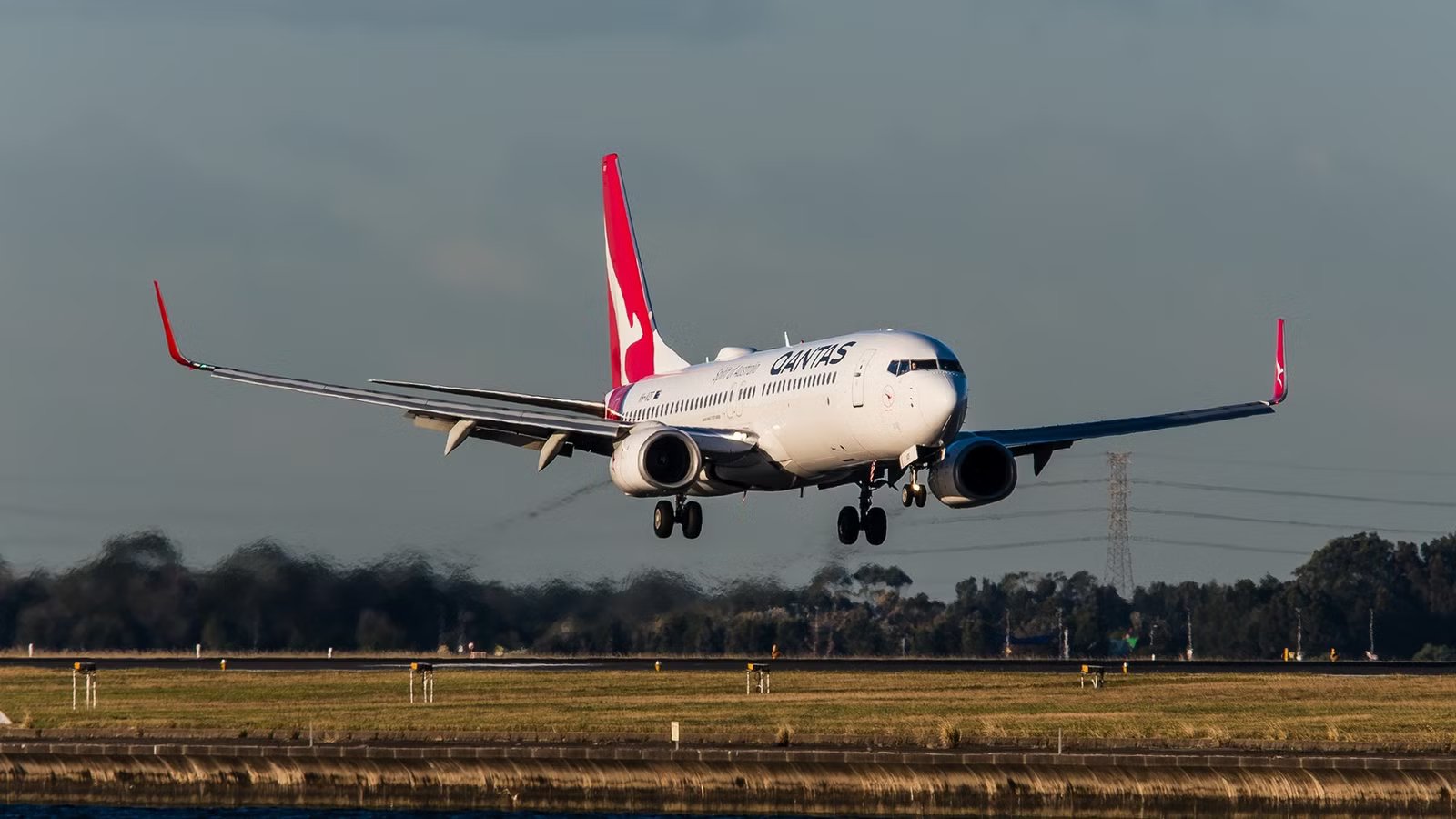
Passengers onboard a Qantas flight from Queenstown Airport (ZQN) to  Sydney Kingsford Smith Airport (SYD) were diverted to Christchurch Airport (CHC) on Saturday afternoon after flames were spotted coming from an engine shortly after takeoff. Subsequent reports confirmed that this was caused by a bird strike as the Boeing 737-800 departed the picturesque tourist resort in New Zealand’s South Island.
Several onlookers spotted the narrowbody jet in the skies above them, some capturing video of the plane. Initial reports suggested that “orange flames were shooting out the back” of the aircraft. One witness, Nic Chamberlain, spoke with Radio New Zealand (RNZ) and recounted the incident: “This was kind of like rapid succession boom, boom, boom, boom, boom, boom. And then it was loud enough that everyone kind of turned their heads and looked to see what the noise was.”
QF122 From Queenstown To Sydney Diverted To Christchurch

The flight was operating as QF122, a nonstop international service to Sydney. The flight had around 160 passengers onboard, which, according to flight data, had departed from Queenstown at 4:05 PM, some 40 minutes behind the scheduled departure time of 3:25 PM.
Qantas confirmed that the flight had experienced an ‘engine issue’ on departure, and initially had planned to divert to the southernmost controlled airport in the Commonwealth, Invercargill Airport (IVC), before it was decided that it would instead go to Christchurch, the largest and busiest airport in the South Island. Qantas released the following statement in relation to the flight:
“One of our flights to Sydney experienced a suspected engine issue after take-off from Queenstown this afternoon and the aircraft diverted to Christchurch. Our pilots are highly trained to manage situations like this and the aircraft landed safely. We know this would have been a distressing experience for passengers and will be contacting all customers to provide support.”
Met By Emergency Crews On Arrival

RNZ confirmed that the local fire and ambulance department were called to Christchurch in anticipation of the arriving aircraft. After a 52-minute flight to Christchurch, the plane touched down at 4:57 PM safely, and passengers and crew were disembarked. The onward flight was subsequently canceled, and passengers have been reaccommodated onto other services.
The aircraft remains on the apron at Christchurch Airport tonight, and was reported to be parked at an international terminal gate, with smoke suspected to be coming from its left engine.
Queenstown and Christchurch airports have both remained operational following the incident, with no major interruptions to scheduled services. Queenstown is one of three international airports on the South Island, and maintains a robust network of Australian trans-Tasman flights by Air New Zealand, Qantas, Jetstar and Virgin Australia.
Aircraft Involved: VH-VZQ

The aircraft at the centre of the incident was a 15-year-old 737-800. Bearing registration VH-VZQ, the aircraft first entered service under the Jetconnect subsidiary of Qantas (New Zealand base). The plane took its first test flight on August 6, 2011, before entering regular scheduled services for Jetconnect on August 18, 2011.
After being transferred to Qantas mainline on November 28, 2018, the airplane has operated extensive Australian domestic and short-haul international services for the oneworld carrier. Full characteristics for the aircraft are below, as per ch-aviation:
Aircraft Registration | VH-VZQ |
|---|---|
Serial Number (MSN) | 39357 |
Type | Boeing 737-838 |
First Flight Date | August 6, 2011 |
Delivery Date | Jetconnect: August 18, 2011 Qantas: November 28, 2018 |
Aircraft Nicknames | Jetconnect: Charles Upham Qantas: Belconnen |
Configuration | C12 / Y162 |
Engines | Two x CFMI CFM56 7B26 |
Age | 15.1 years |
The aircraft remains grounded in Christchurch while the affected engine is assessed and any repairs are made. There have been no reports of any injuries onboard, and the swift actions by the pilots and crew ensured that the aircraft was able to touch down safely.
Catch what other flight trackers miss
Emergency squawks, holds, NOTAMs — unique signals, live, no signup.
Open tracker
Catch what other flight trackers miss
Emergency squawks, holds, NOTAMs — unique signals, live, no signup.
Open tracker