dailynewsnblog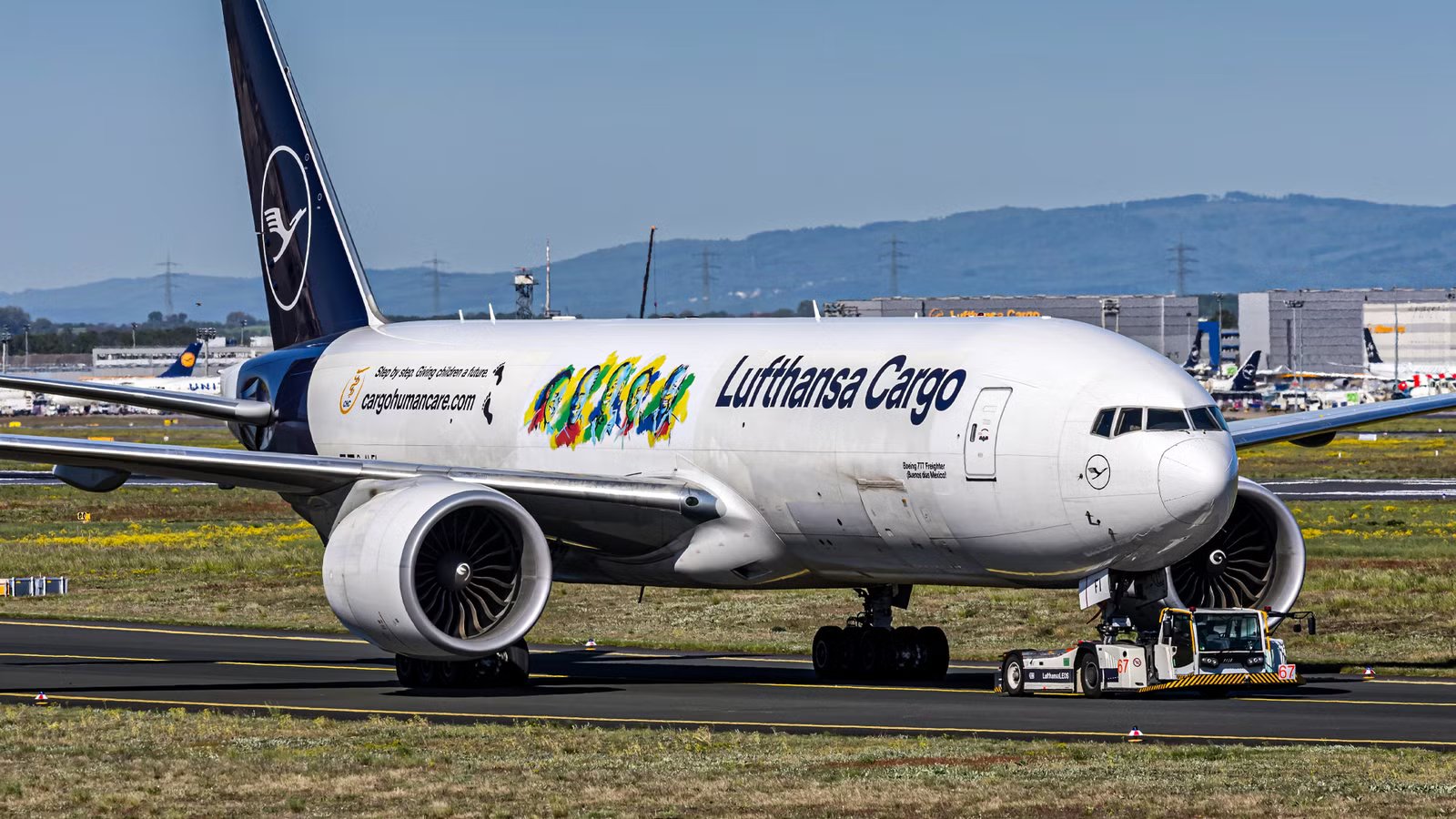
Global air freight has changed massively in recent years, driven by the rapid growth of cross-border e-commerce, shifting manufacturing corridors, and persistent maritime supply chain disruptions. Traditional cargo gateways across Europe, North America, and East Asia are increasingly constrained by urban sprawl, outdated sorting facilities, and tarmac bottlenecks, which has led to a reimagining of airside infrastructure for the next generation of logistics. In response, airport operators and logistics conglomerates are committing billions of dollars to mega-expansion projects designed to double or even quadruple their freight-handling capacity over the coming decade.
These massive infrastructure investments go far beyond adding concrete apron space or extending runway length. Modern air cargo facilities are fast becoming automated, artificial-intelligence-driven freight ecosystems that integrate high-bay vertical storage, specialized pharmaceutical cold-chain infrastructure, and direct multimodal connections to seaports, railways, and airside freighters. This article examines five major air cargo hubs undertaking transformative multi-billion-dollar expansions to redefine global trade routes by 2030, detailing the financial commitments, operational capacities, and technological innovations behind each project.
Punta Cana International Airport
Expanding its presence over land, sea, and air

Historically recognized as one of the Caribbean’s premier passenger destinations for leisure travel, Punta Cana International Airport (PUJ) in the Dominican Republic is aggressively moving itself well into the global freight forwarding market. Spearheaded by a $200 million joint venture between global supply chain enabler DP World and Grupo Puntacana’s Punta Cana Free Trade Zone (PCFTZ), the ambitious project expands the airport’s freight handling envelope from a modest baseline of 33,000 short tons (30,000 metric tonnes) to an annual threshold exceeding 220,000 short tons (200,000 metric tonnes). As reported by Cargo Facts, the multiphase development combines an international air cargo terminal with an adjacent duty-free industrial park, establishing a primary transshipment node designed to capture trade flows moving between Latin America, Europe, and North America.
A central element of the expansion is its purpose-built multimodal connectivity, which seamlessly links airside apron operations at PUJ with deep-water maritime logistics at the nearby Port of Caucedo. As outlined in operational updates from DP World, the facility features approximately 43,000 square feet (4,000 square meters) of dedicated, temperature-controlled cold storage engineered specifically to safeguard high-value, time-sensitive exports such as fresh produce, cut flowers, and temperature-critical pharmaceuticals. Punta Cana’s positioning as the middle ground, operating scheduled transshipment flights that consolidate cargo originating from Colombia, Ecuador, and Peru before forwarding it to major European hubs like Madrid, Frankfurt, and London, is highly strategic. Its position removes traditional administrative and physical bottlenecks that have historically slowed Caribbean trade.
The technical integration of automated customs clearance, bonded warehousing, and aircraft maintenance services is, in fact, a broader economic evolution for the Dominican Republic as a whole. Industry coverage from Air Cargo News notes that the air-sea-land hybrid model positions Punta Cana as a competitive near-shoring operational base, and is a great example for other airports in the region to follow.
Frankfurt Airport
What scale can truly achieve

At Europe’s busiest freight gateway, Lufthansa Cargo is pushing ahead with a comprehensive €600 million ($684 million) infrastructure overhaul at its central Lufthansa Cargo Center (LCC) in  Frankfurt Airport (FRA). Designated as the LCCevo masterplan, this six-year modernization program spans an expansive 3.55 million square feet (330,000 square meters) and aims to transform the hub into Europe’s most technologically advanced air cargo facility by 2030. The project replaces aging legacy systems with automated robotics, intelligent conveyor networks, and digital logistics nodes, all with the aim of significantly increasing the facility’s operational throughput. As highlighted by trade publication Trans.INFO, the entire transformation is taking place while maintaining uninterrupted 24/7 flight and ground handling operations across the facility, a truly incredible feat of engineering.
The ALPHA construction phase is where the bulk of the transformation is happening, an 861,000-square-foot (80,000 square meters) operational zone that went live in June 2026. Reporting by aviation outlet MigFlug details the centerpiece of phase ALPHA: a 138-foot-tall (42 meters) fully automated high-bay warehouse capable of holding nearly 3,000 large cargo pallet positions. Driven by automated cranes and intelligent routing software, the high-bay store can perform more than 300 storage and retrieval operations per hour, doubling the previous manual handling rate. Complementing the high-bay unit is a dedicated automated pallet warehouse engineered specifically for high-value, temperature-sensitive pharmaceuticals and specialized cargo, so that vulnerable shipments are unaffected by apron weather exposure.
Managing roughly half of all air freight moving through Frankfurt, Lufthansa Cargo is structuring LCCevo across three distinct sequential phases: ALPHA, BRAVO, and CHARLIE. Industry coverage from STAT Times notes that the remaining phases will progressively update material-handling systems and build modern administration campus offices through 2028 and 2030. During the opening ceremony, Ashwin Bhat, Chief Executive Officer of Lufthansa Cargo, stated, “LCCevo is one of the most significant investments in our company’s history and a clear commitment to Frankfurt as an air cargo hub.”
Shanghai Pudong International Airport
Bringing Asian cargo operations into a new world of automation

As cross-border e-commerce accelerates across East Asia,  Shanghai Pudong International Airport (PVG) is working on a massive Phase 4 expansion to solidify its position as mainland China’s premier air cargo hub. Official releases from the Shanghai Municipal Government confirm that this multi-billion-dollar infrastructure project will raise the airport’s annual freight handling threshold to 4.97 million short tons (4.51 million metric tonnes) by 2027. The comprehensive plan includes constructing one of the world’s largest satellite cargo facilities, adding approximately 6.67 million square feet (620,000 square meters) of dedicated airside operational footprint.
At the heart of this throughput upgrade sits China Eastern Air Logistics, which deployed advanced automation across its 2.37-million-square-foot (220,000 square meters) Cargo Terminal 4. Industry coverage from Cargo Facts highlights that logistics engineering specialist Lödige Industries delivered six German-manufactured, ten-foot automated guided vehicles designed for heavy-lift unit-load device transport. Operating autonomously without physical rail constraints, each vehicle carries unit loads weighing up to 7.5 short tons (6.8 metric tonnes), establishing a new global benchmark for automated airside freight handling.
These heavy-lift vehicles integrate directly with China’s first lift-and-run storage concept and Lödige’s data-driven Cargo Professional Suite management software. The digital terminal system provides real-time unit load tracking and mobile analytics, enabling continuous 24/7 operations while virtually eliminating the risk of transport damage. By pairing high-capacity robotics with expanded satellite airside capacity, Shanghai Pudong is building a highly resilient, data-driven trade gateway that connects major Asian manufacturing centers directly to European and North American markets.
Istanbul Airport
Perfect positioning, ready to cope with future demand

Capitalizing on its strategic geographic position between East and West,  Turkish Airlines is spending more than 100 billion Turkish Lira ($2.3 billion) on a comprehensive hub expansion at
  Istanbul Airport (IST). As reported by industry outlet Aerospace Global News, the central project in this program is Phase 2 of the SmartIST cargo terminal, which will more than double the facility’s annual handling capacity from 2.42 million short tons (2.2 million metric tonnes) to 4.96 million short tons (4.5 million metric tonnes). The expansion increases SmartIST’s closed operational footprint to 3.98 million square feet (370,000 square meters), positioning it among the largest dedicated air cargo complexes on Earth.
To manage this massive increase in freight density, Turkish Cargo also selected the German materials-handling specialist Lödige Industries to equip the expanded terminal with advanced automation systems. Coverage from Asia Cargo News details that the SMARTIST 2.0 buildout incorporates a six-level automated high-bay racking setup providing 1,562 unit load device positions, served by 19 elevating transfer vehicles. Additionally, the complex integrates an internal automated storage and retrieval system featuring 28 stacker cranes and 18,216 dedicated pallet positions, guaranteeing continuous material flow across 23 elevating workstations.
Scheduled for phased delivery between 2027 and 2028, the expanded mega-terminal provides direct airside connectivity for Turkish Airlines’ expanding fleet of passenger aircraft and dedicated widebody freighters. SmartIST incorporates temperature-controlled zones certified for pharmaceutical cold-chain logistics and high-value perishables, alongside automated e-commerce sorting channels. Overall, Istanbul Airport is putting forward an integrated logistics bridge linking global supply chains across three continents in an incredibly future-focused way, combining AI-driven inventory routing with high-density vertical warehousing.
Al Maktoum International Airport
The greatest cargo airport the world has ever seen

Sanctioned by Sheikh Mohammed bin Rashid Al Maktoum, Dubai is seeking to complete an ambitious 128 billion United Arab Emirates Dirham ($35 billion) expansion at  Al Maktoum International Airport (DWC). As reported by media outlet ENR, this massive development spans an expansive 17,300-acre (70 square km) footprint in Dubai South. Designed to eventually replace Dubai International Airport, the project expands DWC’s ultimate freight-handling capacity to 13.2 million short tons (12 million metric tonnes) per year, dwarfing the freight-handling capacity of every operational cargo airfield on Earth.
The operational scale of the airside infrastructure relies on five parallel independent runways, four concourses, and 400 active aircraft contact gates. Trade coverage from CargoTalk Middle East highlights that DWC is constructed around an integrated sea-air logistics ecosystem, linking airport airside operations with deep-water berths at Jebel Ali Port. Beneath the surface terminal footprint, automated subterranean logistics channels process up to 30,000 cargo packages and baggage units per hour, providing continuous, rapid transshipment across continental trade lanes.
With Phase 1 targeting operational launch by 2032, the expanded facility will serve as the primary global hub for Emirates SkyCargo. Official updates from Dubai Aviation Engineering Projects confirm that the multi-modal complex integrates dedicated high-speed rail freight terminals alongside bonded free-zone processing facilities. As a result, Al Maktoum International is engineered to become the undisputed central crossroads of global commerce for generations to come, and it will be hard for any other cargo port to come close on many metrics.