dailynewsnblog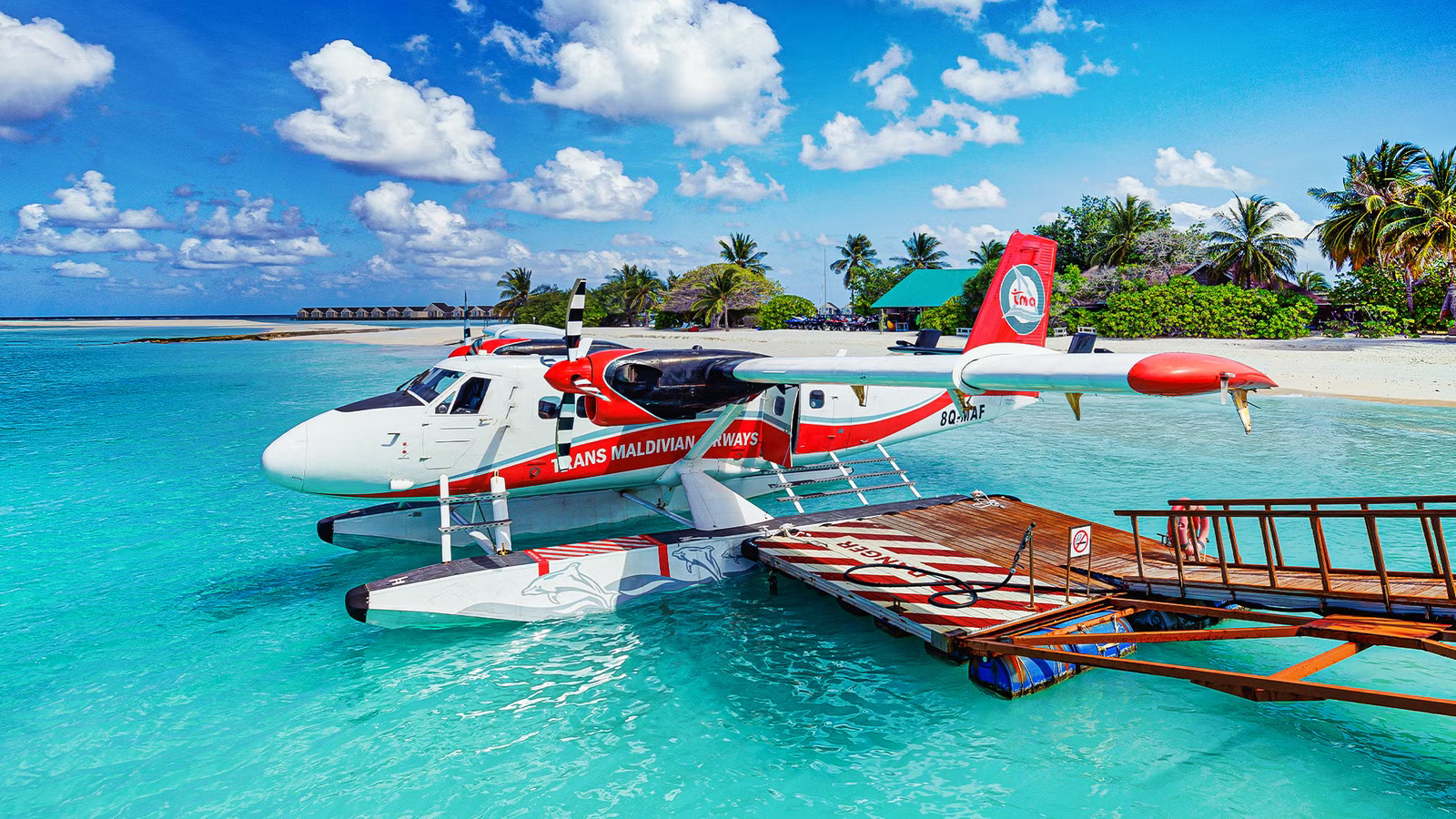
Amongst the countless deals signed at the July 2026 Farnborough Airshow was a letter of intent signed by De Havilland Canada with Island Aviation Services (Maldivian) for two new-generation DHC-6 Twin Otter Classic 300-G. This aircraft is lighter and has a more advanced flight deck than its predecessors, yet it remains a member of the Twin Otter family, which turned 60 last year.
The Maldives has an astonishingly large tourism industry worth $5.4 billion. Yet, the insurance policy for the small island archipelago’s primary source of income is a propeller aircraft that has been operational for six decades. The latest deal signed by Island Aviation Services (Maldivian) shows an ‘if it ain’t broke, don’t fix it’ attitude, a sign of enduring confidence in De Havilland Canada’s most famous aircraft.
The Twin Otter And The Maldives

“As ubiquitous as yellow cabs are in New York, no one leaves the Maldives without noticing the seaplane taxis,” writes Trans Maldivian Airlines on the Twin Otter. This mode of transportation is a safer and faster alternative to small-boat travel between the islands. The aircraft also has short take-off and landing capabilities, performing well in any conditions. Countless tourists board these small planes each year to explore the Maldivian tropical paradise.
The current Trans Maldivian Airways fleet includes 66 Twin Otters. That makes this carrier the world’s largest seaplane operation. Planespotters.net data reveals that three of these aircraft are currently parked. The site’s data also shows that the carrier has flown these planes almost exclusively. Its historic fleet has just two ATR 42/72 aircraft. The carrier has also retired just six Twin Otters.
The Maldivian domestic aviation market isn’t just about operating an old aircraft family. The aircraft themselves are also incredibly old and surely approaching the end of their service life. The average age of Trans Maldivian Airways Twin Otters is 48.2 years. The airline’s oldest Twin Otters were delivered in February 2013. The oldest, 8Q-OEQ, is almost 60 years old. The 22 other planes delivered in February 2013 are all over 45 years old, except for 8Q-MAJ, which is 38 years old. Meanwhile, Trans Maldivian Airways’ youngest aircraft are three planes that are under 16 years old.
How Island Aviation Services’ New Deal Shows A Doubling Down On The Twin Otter

After so many successful operations with the Twin Otter, all indications are that it will remain essential to the island’s tourism economy. At the Farnborough Airshow, the manufacturer and the small country’s national airline signed a letter of intent to acquire two DHC-6 Twin Otter Classic 300-G aircraft. These planes will be the first Twin Otters in the 300-G series, the latest development of the iconic commuter aircraft, delivered to the Maldives.
“The Maldives has long been known as the home of the Twin Otter,” said Ryan DeBrusk, Vice President of Sales for De Havilland Canada. “As the largest Twin Otter market in the world, there is no better place to introduce the next generation of this legendary aircraft.”
Meanwhile, Ibrahim Iyas, Managing Director, Island Aviation Services Limited, said: “The Twin Otter has been an integral part of aviation in the Maldives for decades, and this newest generation aircraft will allow us to continue providing the dependable service our passengers expect while benefiting from the aircraft’s latest technological and operational enhancements.”
What Will The Twin Otter Classic 300-G Offer To The Maldives?

The 300-G is the latest variant of the famous Twin Otter seaplane. It maintains the philosophy of supreme reliability and versatility, and the ability to execute short take-off and landing with wheels, floats or skis. Yet the 300-G makes several advancements. It has the best range, payload, flight deck, cabin interior and operating costs of any Twin Otter variant. Firstly, De Havilland Canada has introduced the Garmin G1000® NXi flight deck, which brings the plane’s avionics suite into the current era of aviation. Onboard technology includes autopilot, weather radar, flight-tracking systems, and ground-proximity warnings.
The entire aircraft is significantly lighter. De Havilland Canada claims it has achieved a 400 lb (180 kg) to 500 lb (227 kg) weight saving. It estimates that the resultant range and payload improvements improve operators’ revenues by 8%. Carriers can also choose from two Pratt & Whitney Canada engine options. The PT6A-27 has been designed for efficiency and affordability. Meanwhile, the PT6A-34 engine is designed for extreme operations. Both engines have lithium-chemistry battery starter generators to further enhance reliability.
The table below shows the specifications for the Classic 300-G Twin Otter plane, making use of De Havilland Canada’s data:
Maximum takeoff weight | 12,500 lb (5,670 kg) |
|---|---|
Maximum landing weight | 12,300 lb (5,579 kg) |
Short take-off and landing performance | Take-off distance: 1,200 feet (366 meters). Landing distance: 1,050 feet (320 meters) |
Maximum cruising speed | 170 knots true airspeed (KTAS) at sea level |
Maximum range (zero payload) | 871 nautical miles (1,613 km) |
Maximum range (2,270 lb or 1,040 kg payload) | 803 nautical miles (1,487 km) |
De Havilland Canada has also taken steps to improve the passenger experience aboard its 300-G Twin Otters. The manufacturer has completely redesigned the cabin interior. The windows have been improved to provide enhanced natural light. Passenger service units have also been integrated with LED lights.
What Is The Twin Otter’s 60-Year History?

The 300-G is the fifth iteration of the Twin Otter. The Series 100, 200, and 300 were built from 1965 to 1988 and were developed from the de Havilland Canada DHC-3 Otter. This aircraft is highly similar, except it has a single engine. Meanwhile, the Series 400 entered into service in 2008 and continues to be manufactured today. All of these variants have proven adept as commuter aircraft due to their 18- to 20-passenger capacity, versatility with short take-off and landing capabilities, and high rate of climb. The Twin Otter has also found plenty of use as a cargo and medical evacuation aircraft, as well as for commercial and military skydiving.
The aircraft’s development began back in 1964, with the first flight occurring in May 1965. It rapidly became popular because of the improved power, performance, and reliability offered by the twin-engine aircraft. The first production variant was the Series 100. The Series 200 arrived in 1968, featuring improved takeoff and landing performance and new baggage compartments. The Series 300, introduced in 1969, included the more powerful PT6A-27 engine. This was the most successful variant. By the time the first production run ended in 1988, 844 of the aircraft had been built.
The Twin Otter returned to production in 2007. Viking Air purchased the type certificates from Bombardier Aviation for all out-of-production De Havilland Canada planes. It first introduced the Series 400 to update the old Twin Otter design. The firm then began operating as De Havilland Canada in 2024 and started production of the Series 300-G. On March 20, 2026, the manufacturer delivered the 1,000th Twin Otter.
What Other Carriers Rely On The Twin Otter?

A total of 1,000 of these aircraft had been built in March 2026. 844 of these were manufactured by De Havilland Canada, with the remaining 156 built by Viking Air. It is clear that Trans Maldivian Airways is not the only carrier staking its success on this six-decade-old aircraft.
The table below shows the top ten operators of the Twin Otter according to the 2020 Airliner Census:
Airline | Twin Otter Fleet Size |
|---|---|
Trans Maldivian Airways | 62 |
Kenn Borek Air | 15 |
Grand Canyon Airlines | 13 |
Maldivian | 11 |
Zimex Aviation | 9 |
Transwest Air | 9 |
AeroGeo | 8 |
Air Borealis | 8 |
LADE | 7 |
Air Adelphi | 7 |
Alongside the civilian operators, the Twin Otter has also found extensive military usage. Unsurprisingly, Canada’s military is a key user, with four operated by the Royal Canadian Air Force. To the south, the United States Air Force operates three, with the UV-18B aircraft used by the United States Air Force Academy Parachute Team. The aircraft has also found significant military usage across the Atlantic. The Twin Otter is used by militaries in Denmark, Ireland, France, Norway, the United Kingdom and Switzerland.
Background To The Maldives And Its Need For The Twin Otter

26 atolls rise from the Indian Ocean a short distance south of the Indian subcontinent to make up the Maldives, with a total of 1,190 islands. The capital, Malé, is home to Velana International Airport (VIA), from which the nation’s flag carrier, Maldivian, operates. It is also a destination for carriers such as Emirates, British Airways, Singapore Airlines, Qatar Airways, and Turkish Airlines.
These stunningly beautiful islands first became a resort destination in the 1980s. However, traveling by boat from Malé to them was time-consuming and prone to seasickness. Trans Maldivian Airways and its fleet of seaplanes emerged as a rapid and safe alternative. Tourists could now quickly be taken to the most popular destinations. Much of the Maldives’ growth as a tourism hotspot is owed to the convenience offered by its domestic carrier.
Catch what other trackers miss
Emergency squawks, holds, NOTAMs — live signals, no signup.
Open tracker
Catch what other trackers miss
Emergency squawks, holds, NOTAMs — live signals, no signup.
Open tracker