dailynewsnblog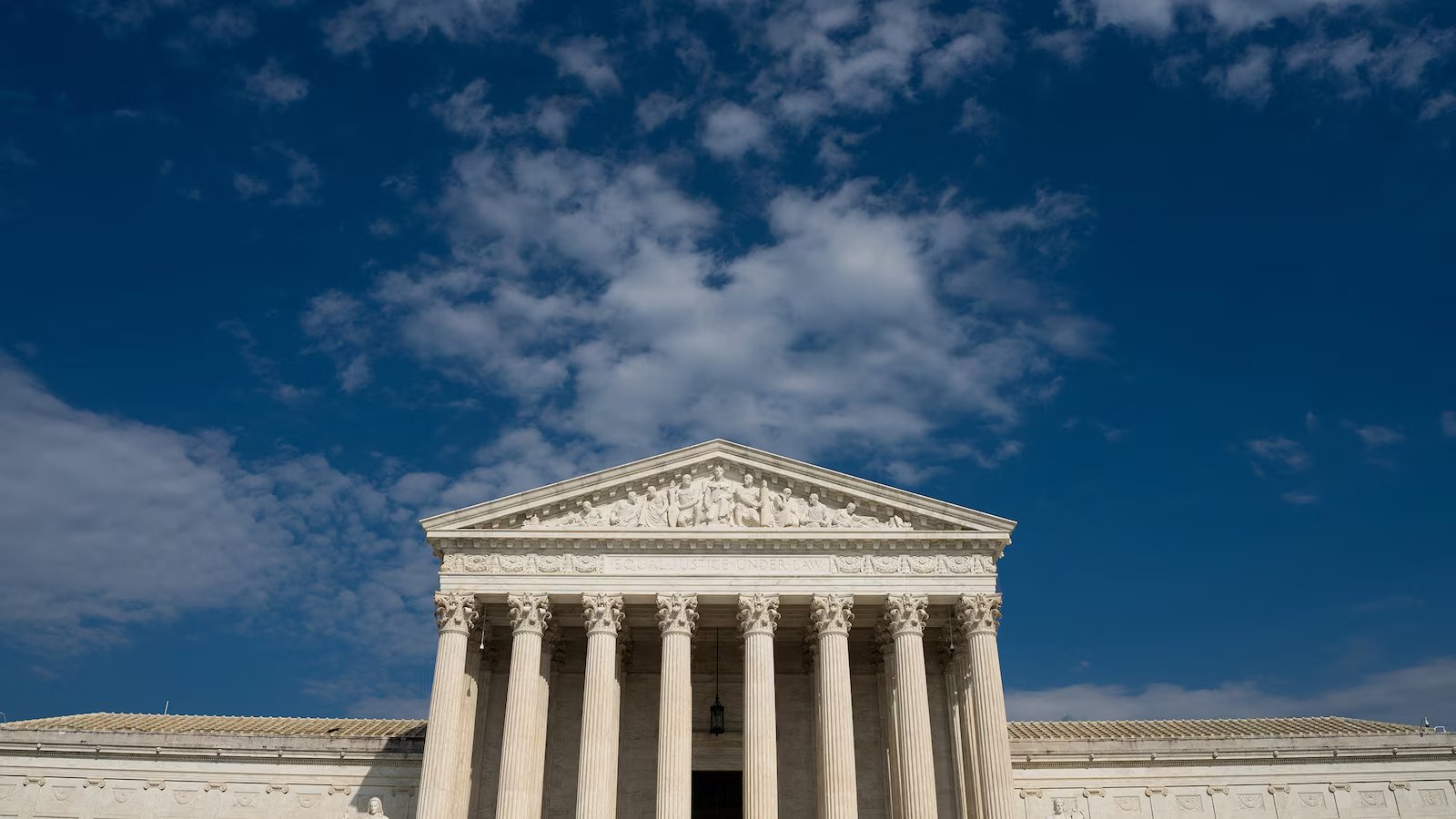
New Jersey has asked the Supreme Court to weigh in on a nationwide legal battle pitting dozens of states against online prediction markets.
The request this week arrived days after the 9th U.S. Circuit Court of Appeals ruled Aug. 28 against platforms like Kalshi, rejecting their requests to prevent state-level oversight from a Nevada regulatory agency. In that case, the court found Kalshi “did not show a likelihood” that federal regulation supersedes state officials in the oversight of sports-related events contracts on prediction markets. The finding challenged the firm’s assertion that such contracts qualify as financial instruments policed by the federal government.
The ruling in Nevada contrasts with a decision issued in April by the 3rd U.S. Circuit Court of Appeals, which sided with Kalshi in its lawsuit against New Jersey, finding that federal regulators retain exclusive oversight of prediction markets, including sports-related contracts.
Officials in states with both Republican- and Democrat-controlled governments have moved to regulate or ban prediction markets in recent months, invoking their statutory authority to police sports gambling, which they claim prediction markets facilitate.
In response, the prediction platforms have argued that their sports-related contracts are not gambling, but rather a type of derivative called a swap, and as such is solely regulated by the Commodity Futures Trading Commission (CFTC), a federal agency.
In her request for a Supreme Court hearing, New Jersey Attorney General Jennifer Davenport said the divide between the 9th and 3rd Circuit courts holds “tremendous importance.”
“It will determine whether a multi-billion-dollar gaming industry can suddenly operate free from state sports-gaming laws,” Davenport added, further noting that New Jersey has regulated sports wagers for more than 100 years.
In a statement to ABC News, Kalshi criticized New Jersey’s request for a hearing at the Supreme Court.
“We disagree with New Jersey’s filing. Kalshi is an open, nationwide financial exchange. It cannot be regulated by 50 different regulators. Both the Third Circuit and the District of New Jersey sided with Kalshi because the CFTC’s exclusive jurisdiction preempts state law,” Kalshi spokesperson Dani Lever said.

Kalshi logo is seen in this illustration taken, August 3, 2026.
Dado Ruvic/Reuters
“While New Jersey points to a recent decision in the Ninth Circuit, that decision agreed with that key principle. Where it differed, it did so based on a regulation that’s in the process of being rewritten. We remain confident in the lower courts’ rulings, and nothing in New Jersey’s filing today changes our view,” Lever added.
The filing marks the latest legal action taken by state officials to enable them to regulate online prediction markets like Kalshi.
A federal court in July temporarily blocked a Minnesota ban on prediction markets, siding with defendants who said they were subject to federal and not state oversight. A few days later, New York also sued Kalshi, alleging its prediction market is illegal, unlicensed gambling, in large part because the state says outcomes depend more on chance than skill.
Last week, Connecticut also sued Kalshi to block alleged unlicensed sports gambling. At the time, Kalshi directed ABC News to a post on X by Jovy Dedaj, the head of litigation for Kalshi, which called for federal oversight of prediction markets. Dedaj also criticized the Connecticut lawsuit for singling out Kalshi while allegedly allowing other prediction markets to operate in the state.
On its website, Kalshi states that it is “regulated as a Designated Contract Market (DCM), which is a financial exchange designated to trade futures, swaps, and or options on commodities” and as such is subject to federal oversight.”
In April, a federal judge blocked Arizona from continuing a criminal case against Kalshi. The state filed charges claiming the company operated an illegal, unlicensed gambling business and accepted unlawful wagers from Arizona residents.
At the time, a spokesperson for Kalshi denied the allegations, describing them as “meritless.”