dailynewsnblog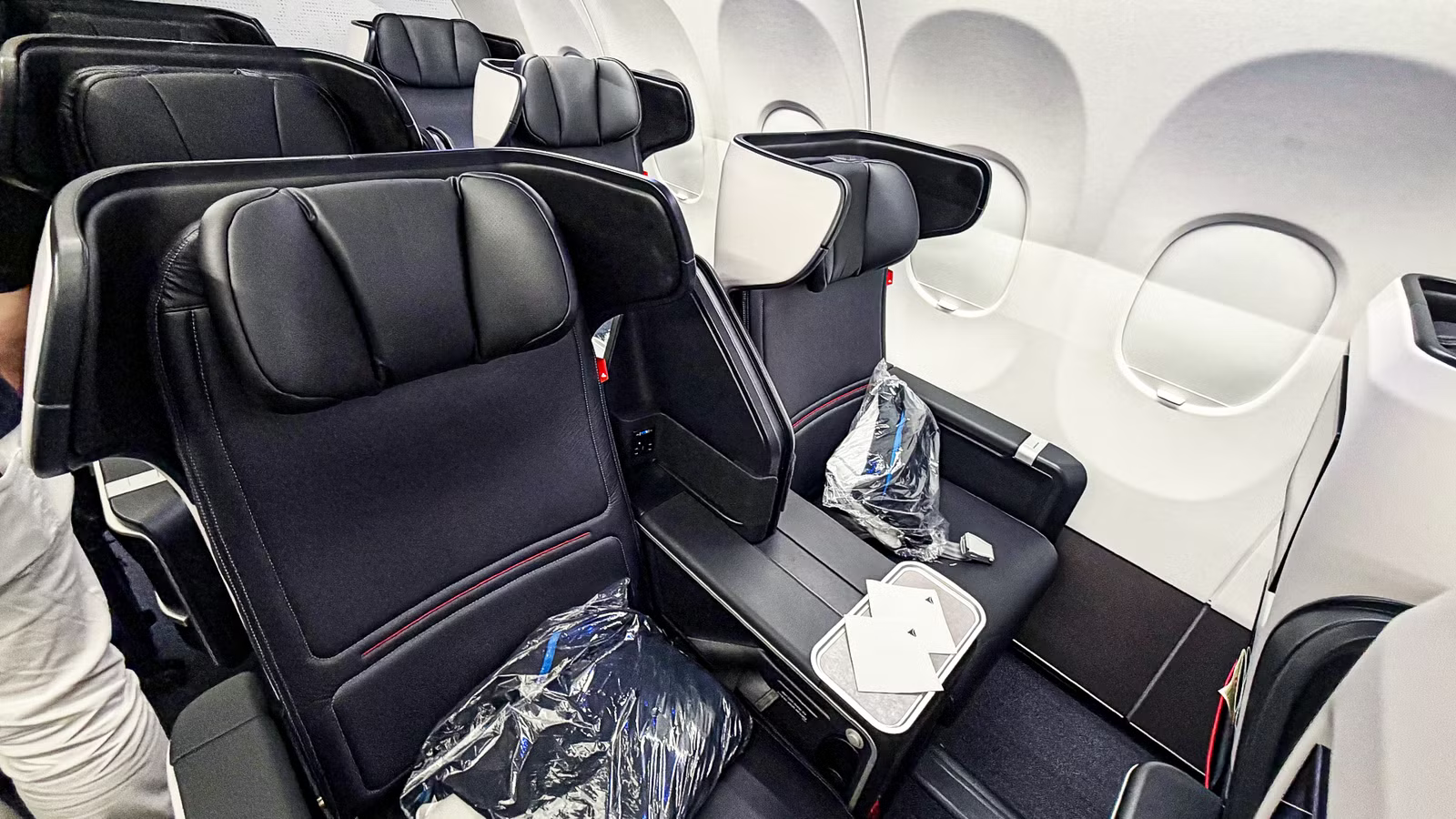
 Delta Air Lines is currently operating seven Airbus A321neos in a special layout with 44 Delta First seats. This wasn’t the original plan, as these planes were originally meant to feature Delta One lie-flats and Premium Select for transcontinental routes, but Delta ran into certification issues with the Safran VUE seats intended for Delta One. These planes have been sitting in storage without their lie-flats, so Delta has temporarily installed extra recliners and is flying them with 44 Delta First seats until the certification issues are resolved.
44 Delta First seats is a massive first class cabin, considering that Delta’s standard A321neo features 20 first class seats, while its 757-300s (the airline’s largest narrowbody) only come with 24 first class seats. Premium demand has been strong in the US, but airlines have mainly been taking advantage of this by making their widebodies more premium thus far. However, Delta is now reporting that it’s actively selling 80% of first class seats on the new A321neos, and now, it seems that airlines are concluding that 20 first class seats is too few.
The Deployment Of The Super Premium A321neos

These A321neos are coded as ‘3NP‘ and feature 44 Delta First seats, along with 54 Comfort seats and 66 Main seats, for a total of 164 seats. These aircraft were originally going to be used for premium transcontinental flights, but with issues relating to the certification of the new Delta One seats, the planes have been stored with empty business class cabins. What Delta has done is kept the back of the planes as is, and simply extended the Premium Select cabin to 44 seats, which it’s now selling as Delta First (the two cabins actually use the same seat models).
With such a massive first class cabin but no lie-flats, these planes are best suited for high-demand routes that are shorter than true transcontinental services where lie-flats are expected. For Delta, this means Atlanta to Los Angeles, San Francisco, San Diego, and Seattle. These are long routes to major business destinations that originate out of Delta’s Atlanta mega-hub, and there’s clearly demand for more first class seats than the 20 you’ll find on the standard A321neos.
Delta Chief Commercial Officer Joe Esposito revealed that Delta is selling about 80% of these seats, which has caught everyone’s eye because of how huge the cabins are. However, this actually isn’t as positive as you may think, because Delta usually sells close to 90% of its first class seats throughout its network. In addition, this is a limited subfleet operating what is presumably the selection of routes that Delta felt had the highest untapped premium demand.
The 44-seat layout may remain in service even once the Delta One seat issues are resolved, but it’s unlikely to become a widespread configuration. If Delta can only sell roughly 80% of the 44 first class seats on its highest-demand routes, then the layout would be unviable throughout the network. Instead, the results of this test will be used to inform future layouts, as Esposito himself confirmed. We will likely see larger first class cabins than today become widespread, but not 44 seats, and this can already be seen with Delta’s next narrowbody aircraft.
24 Seats On The 737 MAX 10

When Delta originally ordered the Boeing 737 MAX 10, it revealed a layout consisting of 20 first class seats and 182 seats in total, which is quite low-density considering that United reportedly planned 189 seats on the same type. More recently, however, it’s been revealed that Delta is now planning 24 first class seats for the 737 MAX 10, which matches the cabin size on the much larger 757-300.
While Esposito mentioned the 737 MAX 10’s first class cabin and the 3NP A321neos in the same conversation, the two ideas probably aren’t linked. The 737 MAX 10 was ordered before premium demand really took off in the US, and so Delta planned a standard layout for it in line with its A321neos that were ordered before COVID. Meanwhile, Delta’s booking and fare data likely indicate on their own that there’s demand for more first class seats, so the airline has now decided to add an extra row of first class.
Delta Air Lines Domestic Aircraft | Delta First Cabin Size |
|---|---|
Airbus A220/A319/Boeing 717 | 12 seats |
Airbus A320/Boeing 737-800 | 16 seats |
Airbus A321/A321neo/Boeing 737-900ER/757-200 | 20 seats |
Boeing 757-300 | 24 seats |
Airbus A321neo (3NP) | 44 seats |
Esposito indicated that he’d like to grow first class cabins even more. The A321neo partially serves as an experiment to validate just how large the airline can make its first class cabins, while also serving as an opportunistic way to make money with planes that otherwise were costing the airline over $20 million to store per month. While the 737 MAX 10 hasn’t debuted yet, that aircraft’s configuration has likely been decided on for some time now, while the results of the 3NP operations will inform new layouts that we haven’t seen yet with even more premium seats.
Rising Premium Demand In The US

The US legacy airlines more or less standardized their narrowbody premium cabins most recently in the 2010s. Small narrowbodies like the Airbus A319 have 12 first class seats, midsize planes like the Boeing 737-800 have 16 seats, while large narrowbodies like the Airbus A321 have 20 seats. Delta and United install 24 seats on their 757-300s, but both airlines operate this type in very small numbers. Premium seats are very high margin, but offering too many seats destroys yields, which is why airlines are careful to avoid oversupply.
But post-COVID, premium demand has grown significantly, as wealthy customers and business travelers increasingly prioritize comfort while economy has become increasingly segmented. Premium leisure has become particularly popular, as have the loyalty programs operated by American, Delta, and United. However, these carriers haven’t really attempted to capitalize on this demand in the domestic market yet.
American Airlines Domestic Aircraft | First Cabin Size | United Airlines Domestic Aircraft | United First Cabin Size |
|---|---|---|---|
Airbus A319 | Eight seats | Airbus A319/A320/ Boeing 737-700 | 12 seats |
Airbus A319 (new)/A320 | 12 seats | Boeing 737-800/737 MAX 8 | 16 seats |
Airbus A320 (new)/ Boeing 737-800/737 MAX 8 | 16 seats | Airbus A321neo/ Boeing 737-900ER/737 MAX 9 | 20 seats |
Airbus A321/A321neo | 20 seats | Boeing 757-300 | 24 seats |
Boeing 777-200 (domestic) | 28 seats | ||
Boeing 777-200ER (domestic) | 32 seats |
In large part, this is because the newest narrowbody aircraft type operated by these airlines, the Airbus A321neo, either started being delivered before the rapid rise in premium demand or had decided their layout before this change. These A321neos with 20 first class seats were intended for a different market than today, as were layouts for other aircraft types. However, the 737 MAX 10 will soon start being delivered to all three, and this is the first time we’re seeing the US three fully implement their vision for today’s market.
US Airlines And The 737 MAX 10

All three US legacy carriers have ordered the 737 MAX 10, with Delta and United hoping to start receiving their examples in 2027, while American’s units will come later. Initially, it was assumed that all three would simply install 20 first class seats on these planes since that’s how they’ve been doing it for over a decade. But with premium demand being stronger than ever, Delta has confirmed that the 737 MAX 10s will feature an additional row of first class.
American Airlines has gone even further, as not only will its 737 MAX 10s be delivered with 24 first class seats, but it will also install more premium seats on future Airbus A321neo deliveries and reconfigure the A321neos currently in its fleet. Curiously, American didn’t explicitly state that the A321neos would receive 24 first class seats, meaning that it’s possible that they’ll feature an even larger first class cabin.
United Airlines is also believed to be planning 24 first class seats for its 737 MAX 10s, while nothing has been stated on whether future A321neos will eventually receive a new layout. In addition, it’s been rumored that the Chicago-based carrier is planning to install 24 first class seats on its 737-700s, although this is not confirmed.
A Permanent Shift In US Airline Strategy

Joe Esposito stated that he would like to install even larger first class cabins than the 24 seats planned for the 737 MAX 10, and that the performance of the 44-seat cabin will inform the company on future layouts. In addition, Esposito stated that the ‘sweet spot’ for domestic first class is between 24 and 44 seats. This seems to be clear signaling that Delta aims to install even more than 24 first class seats on the Airbus A321neo in the distant future.
Now we’re seeing all three carriers commit to larger domestic first class cabins, while we’re already seeing carriers commit to more premium layouts on widebodies. Delta is retrofitting its A350s with 40 Delta One suites rather than 32, and its incoming A350-1000s will have 53 Delta One suites along with 48 Premium Select seats. Meanwhile, American’s recent 787 deliveries feature 51 Flagship business class seats rather than 30, while United’s latest 787 deliveries feature 64 Polaris seats, which is up from 48.
The shift to premium seating is now becoming a permanent shift in the US airline industry rather than just a fad, and airlines are betting their futures on this with their configurations. As it stands right now, more premium capacity is allowing airlines to properly meet demand while making loyalty programs more desirable, resulting in even more success for the airlines. Meanwhile, we’re also seeing budget airlines add domestic first class cabins, including Frontier, Allegiant Air, and JetBlue.
Catch what other flight trackers miss
Emergency squawks, holds, NOTAMs — live signals, no signup.
Open tracker
Catch what other flight trackers miss
Emergency squawks, holds, NOTAMs — live signals, no signup.
Open tracker