dailynewsnblog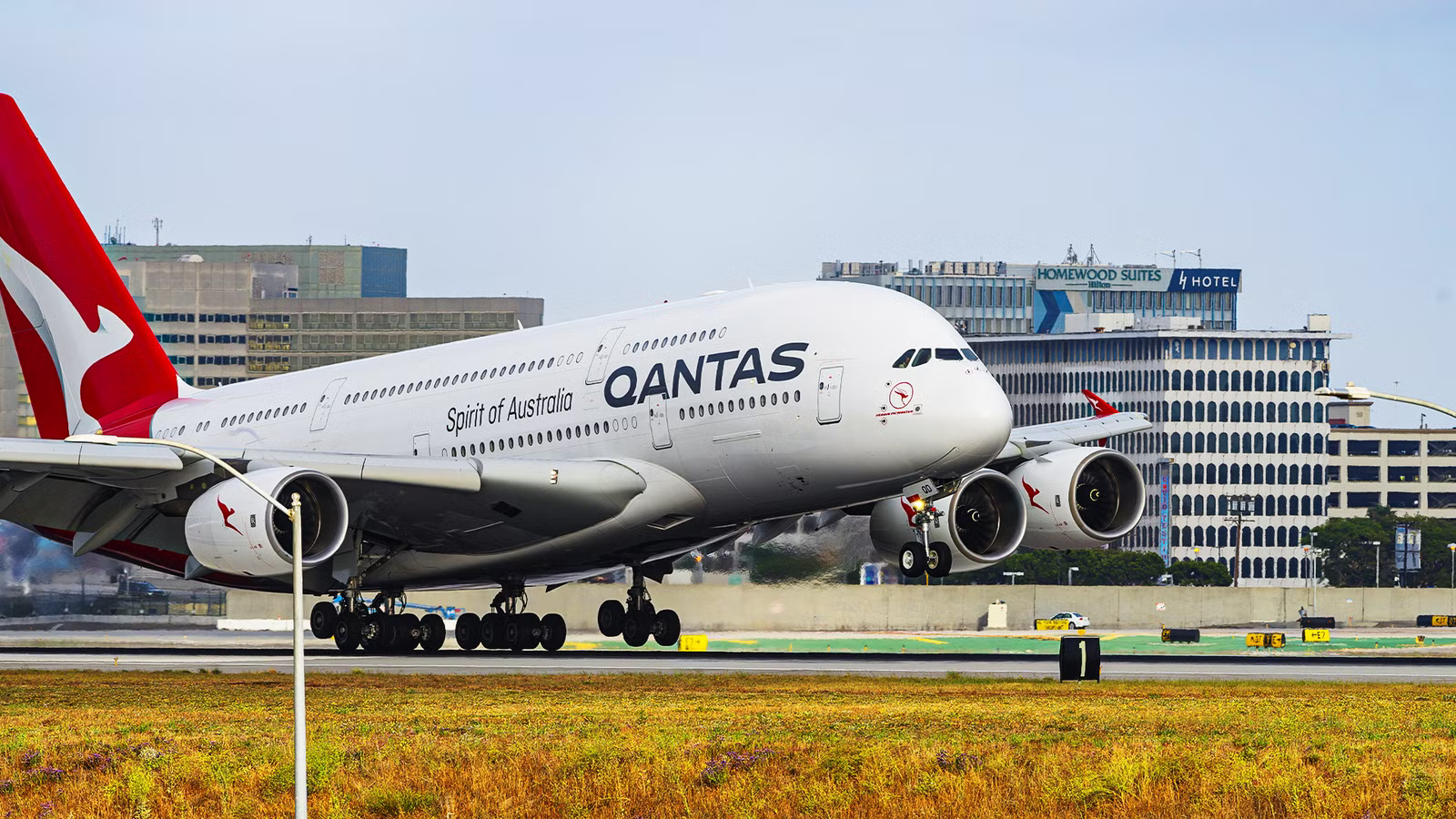
Starting December 7, 2026, Qantas will begin a significant shift in its flagship international scheduling by placing the Airbus A380 on 13 of its 14 weekly Singapore to Sydney flights. Replacing the smaller Airbus A330 on the QF81 and QF82 rotations, the superjumbo’s presence is far more than a simple capacity boost for Southeast Asia. On the surface, nearly doubling double-decker frequencies into Singapore Changi Airport(SIN) appears to be an aggressive offensive move to capture Asian market share. Beneath the headline numbers, however, the reality is that this is a tactical redeployment designed to protect carrier yield margins as Transpacific demand softens across long-haul routes.
Ultra-long-haul routes connecting Australia to the United States have faced mounting economic headwinds in recent months. A persistently weak Australian dollar combined with cooling leisure demand across the Pacific corridor has made filling a 485-seat quadjet on routes to Los Angeles increasingly difficult to sustain at top-tier yields. With this reallocation, Qantas is placing its flagship aircraft where premium demand remains extraordinarily resilient. What could have been a defensive retreat from North America is now a high-density profit driver, perfecting aircraft utilization while positioning the airline directly against major Asian competitors.
Justification Has Started To Disappear

Operating a four-engine aircraft across 7,488 miles (12,051 km) of open ocean can only be done so economically with immense passenger volume and consistently high yields to offset fuel burn and crew costs. For years, the Sydney to Los Angeles corridor stood as one of the most lucrative long-haul routes in the Qantas network. However, macroeconomic shifts have begun to erode the premium margins that previously justified deploying 485-seat superjumbos on daily Transpacific crossings. Central to this pressure is a persistently weak Australian dollar, which has traded well below historical averages against the US dollar. The diminished purchasing power of Australian travelers has significantly chilled outbound US-bound tourism, reducing point-of-sale bookings from Australia.
At the same time, competition across the Pacific has intensified. US carriers have added substantial capacity on routes between Australia and the West Coast, flooding the market with seats during periods when high inflation and rising living costs are tempering consumer spending, though airlines like  United Airlines have seen surprisingly low load factors on some routes. Premium demand from corporate travelers remains steady, but the broad leisure base needed to fill the economy cabin of an A380 has softened.
To protect route profitability, Qantas is right-sizing its Transpacific footprint by replacing four-engine superjumbos with more efficient twin-engine aircraft, such as the Boeing 787-9that has become the focal point of the long-haul fleet. The Dreamliner offers lower trip costs and a higher proportion of premium seating relative to total capacity, making it far better suited to current Pacific market conditions. Now, by stepping down aircraft size on Los Angeles flights, Qantas frees up its heavy widebodies for markets where sheer volume and shorter stage lengths yield far superior operating margins.
Why The Switch To Singapore?

Redeploying superjumbo capacity to Southeast Asian routes is a major change for the Qantas international network. Effective December 7, 2026, the Australian flag carrier will upgrade 13 of its 14 weekly flights between Singapore Changi Airport (SIN) and  Sydney Kingsford Smith Airport(SYD) to the A380, as reported by Mainly Miles. The four-engine aircraft will replace smaller Airbus A330 widebodies on the QF81 and QF82 services, leaving only one weekly frequency assigned to the twin-engine jet.
This swap delivers a 23% surge in total seat capacity along the corridor, raising weekly availability to over 6,580 seats in each direction. Of course, the 4,498-mile (7,238 km) flight between Australia and Singapore is significantly shorter than Transpacific crossings to North America, but the route boasts extraordinarily high passenger traffic and strong belly-hold cargo demand. Replacing twin-jet A330s with 485-seat superjumbos allows Qantas to absorb heavy passenger volumes without requiring additional air traffic control slots at slot-constrained hub airports.
The decision also cements Singapore as Qantas’s primary international hub outside Australia. With 13 weekly A380 flights to Sydney operating alongside seven weekly A380 flights on the flagship QF1 and QF2 route to  London Heathrow Airport(LHR), Qantas will manage 20 superjumbo departures out of Changi every week. Concentrating aircraft operations at a single Asian gateway can help the airline stay on top of ground handling efficiency, streamline aircraft maintenance rotations, and establish a high-density transit bridge connecting Australia, Europe, and Southeast Asia that is easy to manage.
What Moving From Two To Four Engines Offers

The decision to swap medium-haul A330 twin-jets for four-class A380 superjumbos greatly alters the seating configuration along the 4,498-mile (7,238 km) route between Sydney and Singapore. Operating QF81 and QF82 with an A330 limited the inventory to a basic two-class layout, offering 28 business class seats and an all-economy cabin without first class or dedicated premium economy seating. Reintroducing the refurbished superjumbo fundamentally shifts the cabin mix across the corridor, as each departure delivers 14 individual first class suites on the main deck, 70 lie-flat business class seats on the upper deck, 60 premium economy seats, and 341 economy class seats.
This cabin overhaul generates an 86% weekly surge in first class capacity alongside a 37% jump in business class seating on the route. Financial services, technology multinationals, and resource sector firms maintain heavy corporate travel between Australia and Asian commercial centers, driving consistent demand for top-tier seats, allowing Qantas to earn far higher yields on a route where premium demand consistently outpaces supply.
Introducing 60 premium economy seats per departure targets another vital demographic of corporate travelers operating under stricter company travel budgets who seek additional space and priority services without paying full business class fares. Furthermore, the superjumbo’s larger belly-hold capacity enables Qantas to capture additional high-value freight revenue alongside passenger ticket sales. Expanding premium inventory helps ensure that every flight operates at optimal profitability.
A New Home For Cabin Crew

To support the massive expansion of superjumbo flights across Southeast Asia, Qantas is creating its first dedicated cabin crew base in Singapore. Opening in September 2026, the hub will initially recruit 120 cabin crew members during its first year of operation, with long-term plans to scale the local workforce to 650 staff over five years, as per AeroTime. Local staffing provides a dedicated operational foundation for Changi Airport, which will host 20 weekly Airbus A380 departures once the Sydney schedule adjustments take effect. Recruiting locally means Qantas can foster an agile workforce tailored to support high-density widebody services across the region.
Establishing a permanent crew footprint in Singapore significantly enhances operational resilience across Qantas’ international network. Historically, long-haul flight delays or unexpected mechanical issues on routes originating in Australia could leave aircraft grounded while replacement crew members were flown in from Sydney or Melbourne. Having localized flight attendants stationed directly at Changi enables rapid crew swaps, mitigates cascading delays, and improves turnaround efficiency for flights operating along the corridor to Sydney as well as long-haul sectors to Europe.
The decision further adds to the emerging reality that Singapore is the primary international gateway for Qantas outside of Australia, which currently averages 50 weekly flights connecting Changi to five Australian destinations. As part of a broader group restructuring, the new base will also offer positions to crew members transitioning from the low-cost subsidiary Jetstar, an airline that has already built an impressive international presence, streamlining operations under the primary Qantas brand.
Qantas Has Rivals To Keep At Bay

Operating 13 weekly A380 flights on the Sydney to Singapore trunk route places Qantas in direct, aggressive competition with the equally large  Singapore Airlines. The
  Star Alliance carrier has long dominated the route with high-frequency services using its own flagship A380s and Boeing 777-300ERs. Upgrading QF81 and QF82 from twin-jet A330s to four-class superjumbos, Qantas significantly closes the capacity gap in first class and business class cabins. With the Changi-based airline offering six first class suites and 78 lie-flat business class seats per flight, the Australian carrier is actually going toe-to-toe with Singapore Airlines for high-yielding corporate accounts seeking premium long-haul comfort.
Besides the local point-to-point market between Australia and Singapore, the capacity injection poses a challenge to regional rivals like Cathay Pacific. Operating out of  Hong Kong International Airport(HKG) with modern Airbus A350-900 and Airbus A350-1000 aircraft, Cathay Pacific traditionally captures a substantial share of corporate traffic connecting Australia with major trade hubs across East Asia. Qantas is staying well ahead of its rivals, flooding the Changi gateway with additional premium capacity and strengthening its position as a primary corporate travel choice across Southeast Asia and beyond.
The competitive battlefield extends onto the ground at Singapore Changi Airport, where Qantas operates dedicated first class and business class lounges in Terminal 1. Providing direct lounge access to 84 premium passengers per A380 departure enhances the end-to-end customer experience, directly rivaling the SilverKris lounge offerings of Singapore Airlines in Terminal 3. As corporate travel management programs evaluate carrier contracts across the Asia-Pacific region, combining a four-class flagship product with top-tier ground facilities solidifies that Qantas can mount a formidable challenge against Asia’s established premium giants.
Only An Interim Strategy?

Reallocating superjumbo capacity to Singapore is ultimately a tactical bridging strategy as Qantas prepares for the arrival of its ultra-long-range Airbus A350-1000ULR fleet. Designed for Project Sunrise nonstop flights connecting Sydney and Melbourne to London and New York, the incoming A350 aircraft will totally redefine ultra-long-haul aviation for the Australian carrier. In the interim, keeping double-decker superjumbos deployed on high-density regional corridors can provide maximum capital return while four-engine aircraft remain in active service.
Shorter stage lengths, such as the sector between Sydney and Singapore, allow Qantas to sweat its heavy widebody assets efficiently without incurring the severe fuel-burn penalties of long Transpacific transits. Moving superjumbos onto routes where corporate volume and premium passenger yields remain exceptionally resilient helps protect profitability as the airline navigates manufacturing delays and delivery timelines for its next-generation long-haul fleet.
Ultimately, placing 13 weekly Airbus A380 flights into Changi shows that fleet flexibility is an excellent, critical defense against volatile global market conditions. Rather than allowing cooling US demand to continue to negatively impact route profitability, Qantas has successfully repositioned its flagship aircraft to capture market share on one of the most competitive trade lanes in Asia, establishing a profitable operational bridge into its non-stop ultra-long-haul future.