dailynewsnblog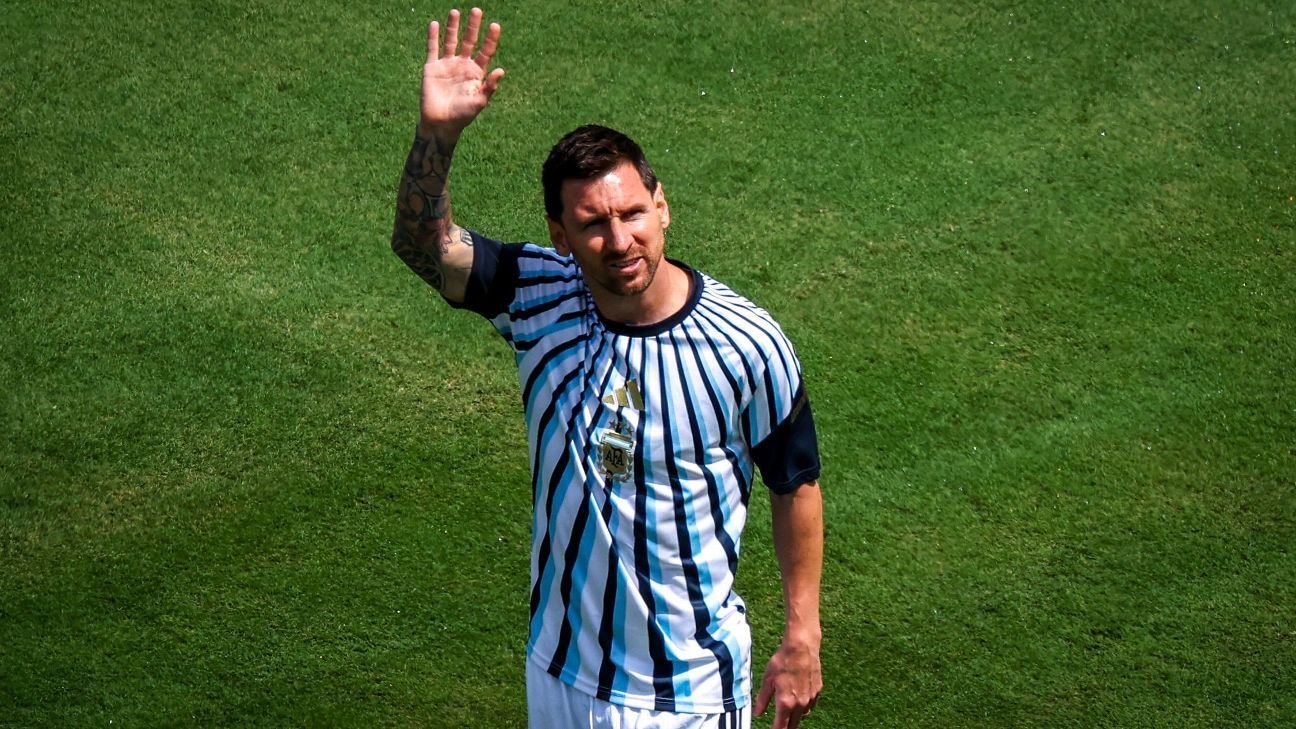
When a legend retires from a thing that made them legendary, too often it reads like an obituary — it comes across as a record for the general public, summing up who they were, what they did and why it was significant. I don’t want this to read like that, and not just because Lionel Messi is still here — Monday saw him retire from the Argentina national team — and is still dispensing magic in Major League Soccer. (Witness the four goals — in particular, the third — he inflicted on Montreal this past weekend.)
Nor do you you need me to tell you his footballing achievements in an Argentina shirt. (But since they sound like cheat code fare, let’s remind ourselves. Twenty-one years of international duty, 207 caps and 125 goals, placing him second all-time in men’s football. Nobody has taken his country to more World Cup finals or more Copa America finals, and when he guided Argentina to victory in Qatar four years ago to many it settled the GOAT debate between him and Cristiano Ronaldo.)
Rather, I’d like to focus on what he said in his farewell statement, released Monday.
Words are something that came a lot less naturally to him than football, and there was something sweet in the photo of the handwritten notes that accompanied his social media post beyond a reminder that, at 39 years of age, he is of the last generation that did most of their schoolwork on a pen and paper.
“It was a decision that hurt — and still hurts — deep in my soul, but I realize that the time has come,” he wrote. “I swear to you that I always gave my all — not just in recent years. Years when we won everything, but before that too — and I always fought hard and gave my all for this shirt, to bring you joy and make you feel proud to be Argentine through football …
“There’s not much time left and chapters are coming to a close; this is one that hurts me deeply. I love, have loved and will always love being a part of the national team … I leave with the peace of mind and pride of having given you, together with my teammates, moments we could only have dreamed of.”
It feels like a lot of real estate — within a 318-word post — to devote to the topic of how he always gave everything even in tough times, how he always loved playing for Argentina and how his achievements with the Albiceleste finally give him “peace of mind.”
If you know the backstory, you might suspect why, and you might also have a deeper appreciation for how it must have affected him throughout his career, gnawing at the back of his mind, tormenting him, maybe even sowing seeds of needless guilt. Because while Messi’s first decade as a professional were marked by stunning achievements on the pitch, the only silverware that came his way was at the individual level — he won the Ballon d’Or five times before his 29th birthday — or with his club, Barcelona, with whom he won eight Liga titles and four Champions Leagues before the summer of 2016.
With Argentina he had become the country’s all-time leading goalscorer, but had failed to lift a major senior trophy, losing four major finals. What’s more, he had endured pointed criticism — some of which appears silly with hindsight. For example, he cared more about Barcelona than about Argentina. Or his stoic demeanour on the pitch suggested he was merely going through the motions with the national side. There was the accusation that he lacked the intensity, generosity and ability to lift his teammates the way the legendary Diego Armando Maradona did when he carried a hum-drum Argentina side to the 1986 World Cup. Who can forget he didn’t sing the national anthem with any sort of passion? (Yes, really.)
How absurd. How ignorant. How idiotic. (Especially the Maradona comparisons, because he was unique and nobody should be compared to him, ever. End of.)
But also, how hurtful. And on June 24, 2016, after losing the Copa America Centenario Final to Chile — the third straight summer that ended with an Argentina defeat in a major final — he announced his retirement the first time, saying “it is evident that this is not for me.”
Two months later, he changed his mind (along with several other national team stars) and made his return to the national side. Yet his statement Monday suggests that the memory of those dark days, when he felt he couldn’t help his country and, perhaps more importantly, parts of his country felt he wasn’t giving them his all, still linger.
It should be water long under the bridge, considering the 70 goals in 91 appearances, two Copa America titles and the 2022 World Cup he has delivered since his brief retirement. Surely every last Argentina fan who hated on him and blamed him for the team’s shortcomings has now not only changed his or her mind, but gone to confession and been absolved of the sin.
Messi, you hope, has forgiven them too, but clearly, he hasn’t forgotten. And the stain of the accusation still inhabits the backrooms of his mind, like a man unfairly accused who knows he’s innocent.
You hope that as Messi moves on from international football, he can also move on from this demon. Everybody else has. Nobody doubts his love, passion and attachment to Argentina. The fact that he chose to address this in his farewell message to the international game shows that for all his quasi-divine ability and production on the pitch, off it, he’s human and subject to the same insecurities as the rest of us.
That humanity he showed in his goodbye is almost as touching as the emotions he dispensed to football lovers worldwide. Almost.