dailynewsnblog
It’s always a challenge to find technical clothing that fits my standards — both of style and sustainability.
For years, I’ve gone hiking in a mix of hand-me-downs and cotton workout gear. My outfits combined elements of my closet with makeshift tactical implements, so that I didn’t have to purchase anything new. I couldn’t bring myself to shop the nylon and polyester blends, designed with someone who certainly wasn’t me in mind. I didn’t even know what the references for a smart-looking hiking outfit would be. I made do.

But this year, I planned a trip to Maine with the express purpose of daily hikes and a trip to Acadia. Rather than sticking with my clothes that were good enough and I had in my closet — think leggings and me just, well, holding my phone in my hand while hiking — I decided to pick out a few new items to support myself while on the trail because I realized that I could from REI. Not only did they have styles that made sense for me, like barrel-legged hiking pants and cute tanks, but the materials and their provenance were spelled out clearly and easy to compare. A new era was on the horizon.
While waiting for my package to arrive, I went on an out-and-back in organic cotton biker shorts and a big vintage t-shirt (ZERO pockets in sight!). That day, I fell and scraped my knee after making a joke about how I could balance perfectly with my car keys in my left hand and my phone in my right. Just as I mimed a tightrope walker, I slipped on a mossy rock that was slick from yesterday’s rain. My knee was bleeding, my elbow quickly bruised, and my hand scraped. I made it to the peak with my pride barely intact, having hidden my bleeding knee from most of the passersby — distracting them with a big hello and smile. Eyes up, everyone!
When I did the same trail a few days later with my new gear from REI, the improvement was insane. Pockets, packs, and silhouettes that looked and felt good. It’s one of those things that you realize in hindsight is so worth spending money on. With grippier trail shoes, designated places for my personals, and a water bottle in tow, I was ready to hike the long loop.
I tend to see myself as a hiking novice, though that isn’t really true. I’ve been trekking in Nepal, climbed mountains in California, planned trips around the prospect of hiking, and basically count a hike as one of my favorite things on earth. I certainly have enough experience to know what works for me when I’m on the trail.
“I’ve been trekking in Nepal, climbed mountains in California, planned trips around the prospect of hiking, and basically count a hike as one of my favorite things on earth.”
Rather than being a novice, it’s a mix between my preference for shorter trips and a lack of confidence with navigation and survival skills that keeps me locked in at a speed that’s more daytrip or, at most, guided experience. Since I’m more focused on shorter or daylong hikes rather than camping, my priorities were feeling good — both in terms of breathable, protective gear and feeling stylish, or just like myself. The selfies on the top of a mountain hit different when you’re wearing a shirt you like rather than a product designed with whatever fuddy duddy hiker someone had in mind. I don’t need to pack too much, so clothing with pockets and a lightweight pack were another priority.
And then: The shoes! I once climbed Sandstone Peak in Adidas Sambas, which was a mistake, especially at the summit when climbing the bare rock face. I was reduced to climbing on all fours as my shoes struggled to hang onto the rocks, and came face-to-face with the hiking shoes that others were wearing as they climbed upright to the summit. “Salomons!,” one woman called out to me as we both descended from the outlook. So, that was on my list, too.
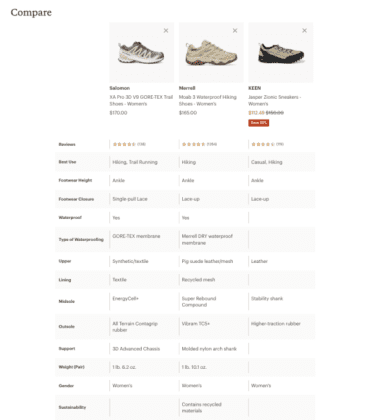
In the past, I’d usually pop into REI in person if I needed something — a new bike helmet, a rain jacket, etc. — but we’re living in different times now. The flagship SoHo location closed here in New York City and now it’s a new era of shopping REI online. I was in for a pleasant surprise. REI has a comparison tool that feels like magic. I’m not sure I’ll ever be able to shop for gear any other way. For example, I compared a few different trail shoes that I was interested in. I’d seen friends and influencers wearing certain pairs, or certain brands, but when it came to shopping for myself, I needed more specs to see how it would fit my needs. Here’s a peek at what it produced on the right.
I especially love how easy REI makes it to find eco-friendly hiking gear. The brand calls out materials and sustainability specs in a really clear and consistent way. It was so helpful in shopping for clothing, especially, but also for other gear made with questionable materials like water bottles, packs, and even tech. It made me feel super secure in my decisions, which wouldn’t normally be the case when shopping for hiking gear — or for online purchases in general, really! Now, onto what I purchased and how it all performed.
My review of REI Co-op and hiking gear
Linnea Tank Top by Kari Traa, $50
I was obsessed with the colors and the cut on this top immediately, and knew that if it worked, it would quickly become my favorite item to wear — and boy, did it work! I love that it is made of recycled materials so that at least if I’m wearing performance fabric, it isn’t made from virgin plastics. This piece fits well, is incredibly comfortable and breathable, and enhances mountain climbing selfies immensely. Really good investment, especially when on sale. I’m now a big fan of the Kari Traa brand overall for their cuts, patterns, and sustainable performance.
Trailmade Barrel Pants – Women’s by REI Co-op, $79.95
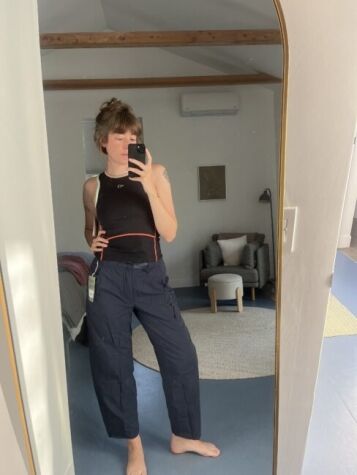
Barrel leg hiking pants. Need I say more? Well, even if I needn’t, I shall. These are by REI’s in-house brand: REI Co-op which means they are The Climate Label Certified. While the nylon (and 4% spandex) that these bad boys are made from isn’t recycled, the pants do meet bluesign criteria since REI uses a PFAS-free water repellent to treat them. These pants are also UPF 50+. I not only wore them hiking many days in a row, I also wore them out to run errands as a crunchier alternative to my LESET Kyoto pants. For the most part, I didn’t need to carry an additional pack with me for shorter hikes since these are replete with pockets of all different sizes, including one that zips closed. I’m normally a size 6, though my weight, especially around my midsection, can vary. I got a small in these, and they worked beautifully, but I could have sized up to a medium for a looser fit.
Hiker Quarter Cushion Socks – Women’s by Darn Tough, $23
I’ve heard from everyone that these are the socks to have. The wool blend and fit reduce blisters by keeping everything in place and breathable. I wore them with my first outing in my new Salomons and they did just that. REI also sells a version of wool hiking socks, which has more wool to nylon and spandex. I can only imagine they hold up pretty well, too. Here’s the comparison.
XA Pro 3D V9 GORE-TEX Trail Shoes – Women’s by Salomon, $170
Salomon are the unofficial street shoe of a certain age of New Yorker. I’ve been using my XT-6s to get around the city, and they hold up even on days where I walk over 20k steps, barely showing wear. I’ve used the XT-6s for some trails as well, but I wanted to try out something even sturdier for hikes where mossy rocks are wet from morning dew, and trails range between sandy and scrambling on large rocks. I decided on this pair after doing some comparisons. They are super stable and can maintain grip even when on wet or slippery surfaces, so I can keep moving without feeling tentative. They’re also super comfortable right out of the box so you’re not battling blisters on your next outing.
Classic Thermal Merino Quarter-Zip Base Layer Top – Women’s by Smartwool, $130
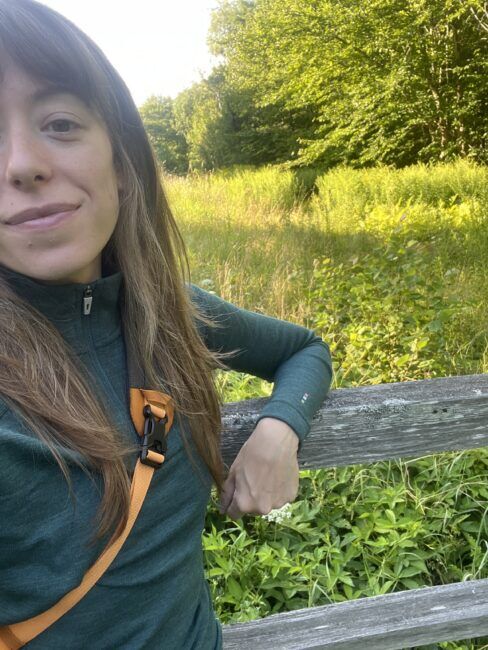
Investment piece! I needed something for the cool early hours or late nights of Maine. Whether it was arriving to the trail before warming up, or for the nights where after a long hike, we decided to drive even further to a seafood shack and have lobster by the water, I wanted something that was neither too heavy nor too bulky. I’m obsessed with the way merino wool performs for breathability and odor resistance. This merino wool is responsibly sourced as well. I got the dark teal heather to bring out the green in my eyes, but there are tons of choices. This is so practical, easy, and comfortable to wear (and carry, when you’re not!).
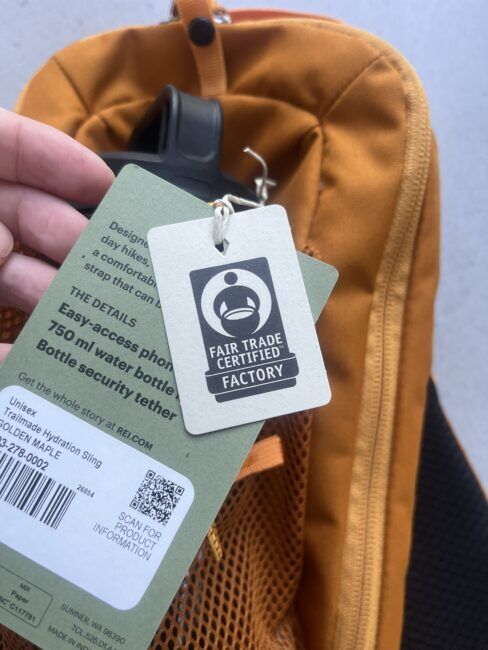
Trailmade Hydration sling by REI Co-op, $69.95
This is such a simple upgrade for someone who prefers to do shorter excursions, allowing you to carry a water bottle and trail snacks and supplies while barely adding any weight. It felt super comfortable, and I didn’t find myself needing to adjust it. Never experienced the dreaded thwap that I often do from purses when I bend or move and it swings around. It was stable and practically undetectable. For those who are looking for two straps and more space for extra layers, sandals, and even more snacks, the Osprey Hydration Pack is awesome without going overboard.
THIS STORY IS IN PARTNERSHIP WITH OUR FRIENDS AT REI
Ashley D’Arcy is the Senior Editor at The Good Trade. She holds an MA in Philosophy from The New School for Social Research and has contributed to esteemed outlets such as The Nation, 032c, and Yale School of Management’s Insights where she’s leveraged her expertise in making complex ideas accessible to a broad audience. In addition to her editorial work, she is training as a psychoanalytic mental health professional and provides care to patients in New York City. Ashley also explores sustainable fashion, clean beauty, and wellness trends, combining thoughtful cultural critiques with a commitment to mindful living.