dailynewsnblog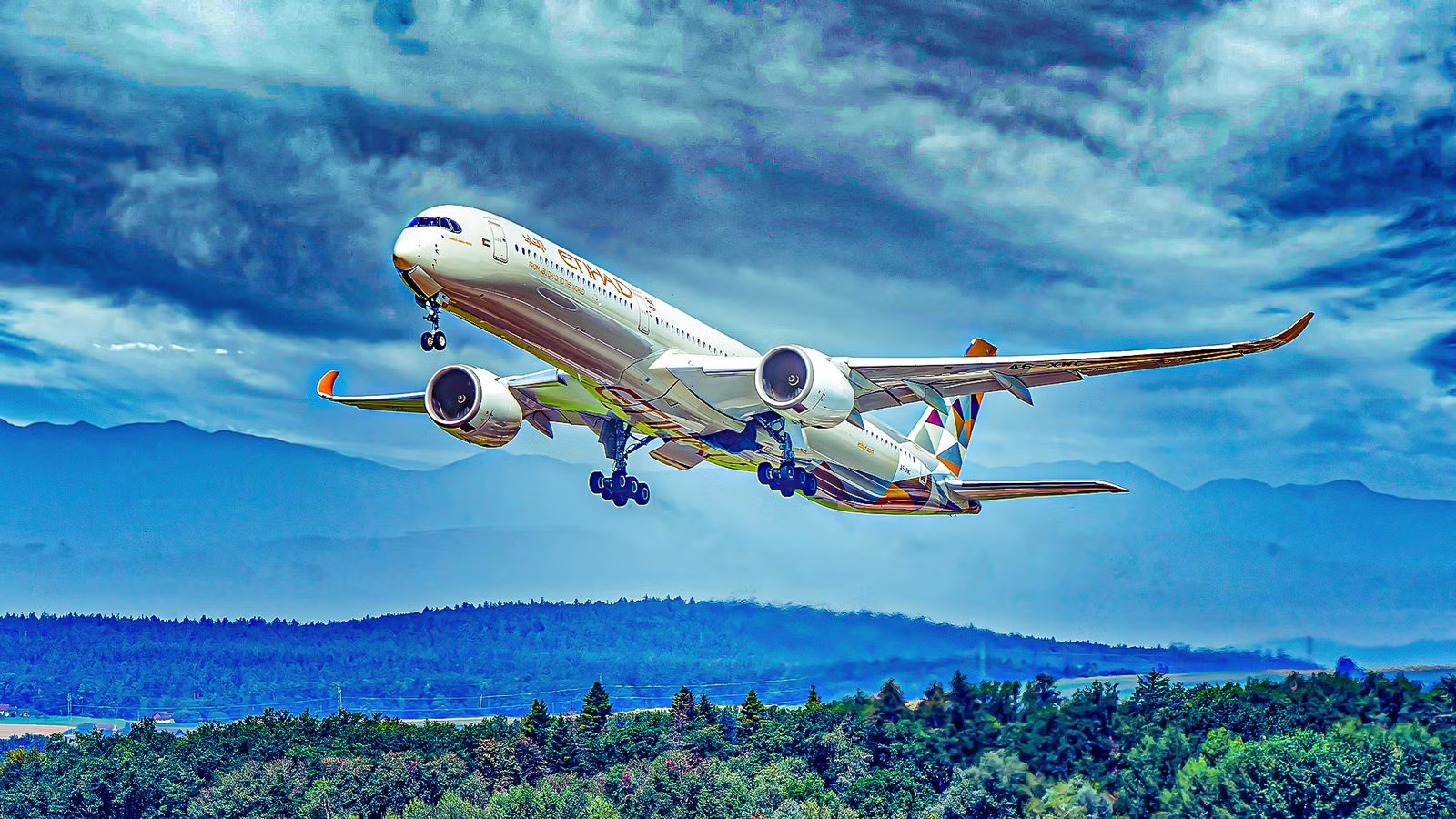
Abu Dhabi-based  Etihad Airways will serve eight destinations across the United States and Canada in 2026, marking the busiest North American network in the carrier’s 23-year history. The airline currently flies to Atlanta, Boston, Charlotte, Chicago, New York, Washington and Toronto, and will add Calgary in late October as its first-ever link between the Middle East and Western Canada.
The airline will offer almost one million round-trip seats to and from North America across 2026, representing an impressive 25.7% increase on 2025, and more than 20% higher than the carrier’s previous peak of over 825,000 seats back in 2017.
Etihad’s Eight North American Routes This Year

The airline will offer a total of 998,282 round-trip seats to and from the US and Canada this year, using a mix of its widebody fleet. Flights from Abu Dhabi (AUH) to its six US destinations —  Hartsfield-Jackson Atlanta International Airport (ATL),
  Boston Logan International Airport (BOS),
  Charlotte Douglas International Airport (CLT),
  Chicago O’Hare International Airport (ORD),
  New York JFK Airport (JFK), and Washington Dulles International Airport (IAD) — will be on board either an Airbus A350 or a Boeing 787-9, as the airline no longer offers Airbus A380 service to the US.
Etihad’s North American Flights (Sep 2026) | ||
|---|---|---|
Airport | Frequency | Aircraft |
Atlanta (ATL) | Daily | A350-1000 |
Boston (BOS) | 6x weekly | 787-9 |
Charlotte (CLT) | 4x weekly | 787-9 |
Washington (IAD) | Daily | 787-9 |
New York (JFK) | 2x daily | A350-1000 |
Chicago (ORD) | 2x daily | 787-9 |
Toronto (YYZ) | Daily | A380 |
Calgary (YYC) | 4x weekly (Begins Oct 2026) | 787-9 |
*Data from Cirium
However, its sole Canadian destination —  Toronto Pearson International Airport (YYZ) — will continue to see a daily A380 service, which has been the case since the superjumbo was first introduced to this route in June 2025. Toronto will soon be joined by a second Canadian destination in Calgary International Airport (YYC), which is scheduled to launch on October 25, 2026, with a four-times-weekly 787-9 service.
A Record Year For Etihad’s North American Capacity

Etihad’s 2026 seat total is the fourth consecutive year it has logged double-digit growth in North America, and a massive 60 times higher than the 16,655 round-trip seats it offered in 2006, the year it first flew to New York. Capacity rose through the airline’s early expansion phase, surpassing 250,000 seats in 2010 and 500,000 in 2014, before peaking at 826,856 in 2017.
However, the airline scaled back its North American operations in the following years, with its annual seat capacity dropping to 706,696 in 2018 and 556,682 in 2019. Plummeting to less than 230,000 seats in 2020, Etihad has steadily rebuilt capacity and is now fulfilling its busiest-ever schedule to the region.
Loading map…
Drag to explore
The carrier will make some key frequency changes during the upcoming northern winter season. This includes trimming Atlanta from a daily service to five weekly flights from December 13 and reducing Chicago’s double-daily to 12 weekly flights from October 25, as well as increasing flights to Charlotte from four weekly to a daily service from December 16.
Where Etihad Could Grow Next In North America

Even with its record capacity, Etihad’s US network is smaller than Gulf rivals Emirates and Qatar Airways, which each serve around a dozen US airports. For example, Etihad has no presence in Florida and has not flown to Texas since flights to  Dallas/Fort Worth International Airport (DFW) ended in 2018, while it is also absent from the US West Coast route since
  Los Angeles International Airport (LAX) was suspended in 2020.
 San Francisco International Airport (SFO) is another West Coast destination previously served by Etihad but dropped in 2017 after three years. Of these three candidates, Dallas/Fort Worth would perhaps be the most likely returnee. The reason Etihad gave for cutting this route was the collapse of its codeshare with American Airlines, but this agreement has since been restored.
A foray into Florida would make  Miami International Airport (MIA) the clear candidate, while services to American’s strongholds at
  Philadelphia International Airport (PHL) or
  Phoenix Sky Harbor International Airport (PHX) could make sense. According to Etihad CEO Antonoaldo Neves, the airline is planning to roughly double its US capacity within five years while adding between three and five new US destinations over that period.