dailynewsnblog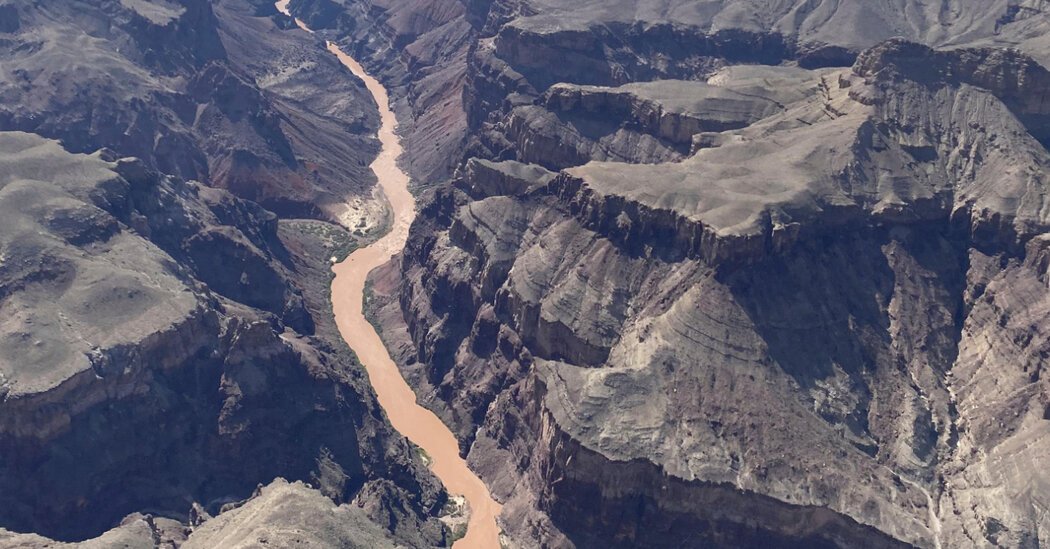
Nearly a mile below the rim of the Grand Canyon, a cluster of century-old stone-and-wood cabins sits tucked along Bright Angel Creek. The cabins make up Phantom Ranch, the only lodge within the canyon, which can be reached only on foot, by mule or by rafting the Colorado River.
It is here, near Phantom Ranch, that rescuers were searching on Monday for people missing or unaccounted for after a flash flood tore through the area on Saturday, including hikers who may have been along the creek, on the North Kaibab Trail or staying at Bright Angel Campground.
One person has been confirmed dead, park officials said on Sunday.
The flood struck a place with a storied past. The outpost began as a tent camp, hosted President Theodore Roosevelt, and was transformed by pioneering architect Mary Jane Colter into an unlikely retreat more than a century ago. It later drew movie stars and other prominent visitors to a part of the canyon where flash floods have long posed a danger.
For most visitors, a trip to the Grand Canyon looks very different. On the South Rim, the park’s most developed area, visitors can drive to Grand Canyon Village, stay in hotels and take shuttle buses to scenic overlooks.
Phantom Ranch is a different experience. It can be reached from either rim, the high ground along the canyon’s edges. From the less visited North Rim, which receives about 10 percent of the park’s visitors, the North Kaibab Trail descends almost 6,000 feet over nearly 14 miles to the ranch. From the South Rim, two trails — the South Kaibab and Bright Angel — lead to Phantom Ranch.
The lodge was once known as Rust’s Camp, after David Rust, who set up a small tent camp there in 1907. A cable tramway — a cage suspended above the river — carried tourists and their mules across the Colorado River. Former President Theodore Roosevelt camped there during a hunting trip in 1913.
Rust’s Camp closed after the Grand Canyon became a national park in 1919. Phantom Ranch opened in 1922, designed by Ms. Colter, the pioneering architect for the Fred Harvey Company and Santa Fe Railroad.
It became something of an exclusive retreat, attracting famous actors, authors and oil and steel magnates, according to the Park Service. In 1967, Senator Robert F. Kennedy of New York and his family reached Phantom Ranch after a four-day, 90-mile rafting trip through the Grand Canyon, according to the National Archives. A swimming pool, built in 1934 to add to the extravagance, proved difficult to maintain and was filled in 1972, according to the Park Service.
The lodge, now owned by the National Park Service and run by a private contractor, can accommodate about 90 people, according to the Park Service. Securing a spot requires entering a lottery more than a year in advance.
That long history has unfolded in a part of the canyon where flash flooding has been a continuous hazard.
The Park Service warns that summer thunderstorms can cause flash floods with little warning. In 1966, Bright Angel Creek and the surrounding areas experienced “catastrophic” flooding after about 14 inches of rain fell around the North Rim, according to the United States Geological Survey.
Last year, the Dragon Bravo fire burned 149,399 acres along the North Rim and forced the North Kaibab Trail to close. As the trail gradually reopened this year, the Park Service warned of an elevated potential of flash flooding and debris flows in the Bright Angel Creek watershed and added flood monitoring, new signage and an evacuation and alert plan.