Opinion: We need to reduce wildfire fuel and zone better


CANADA-FIRE
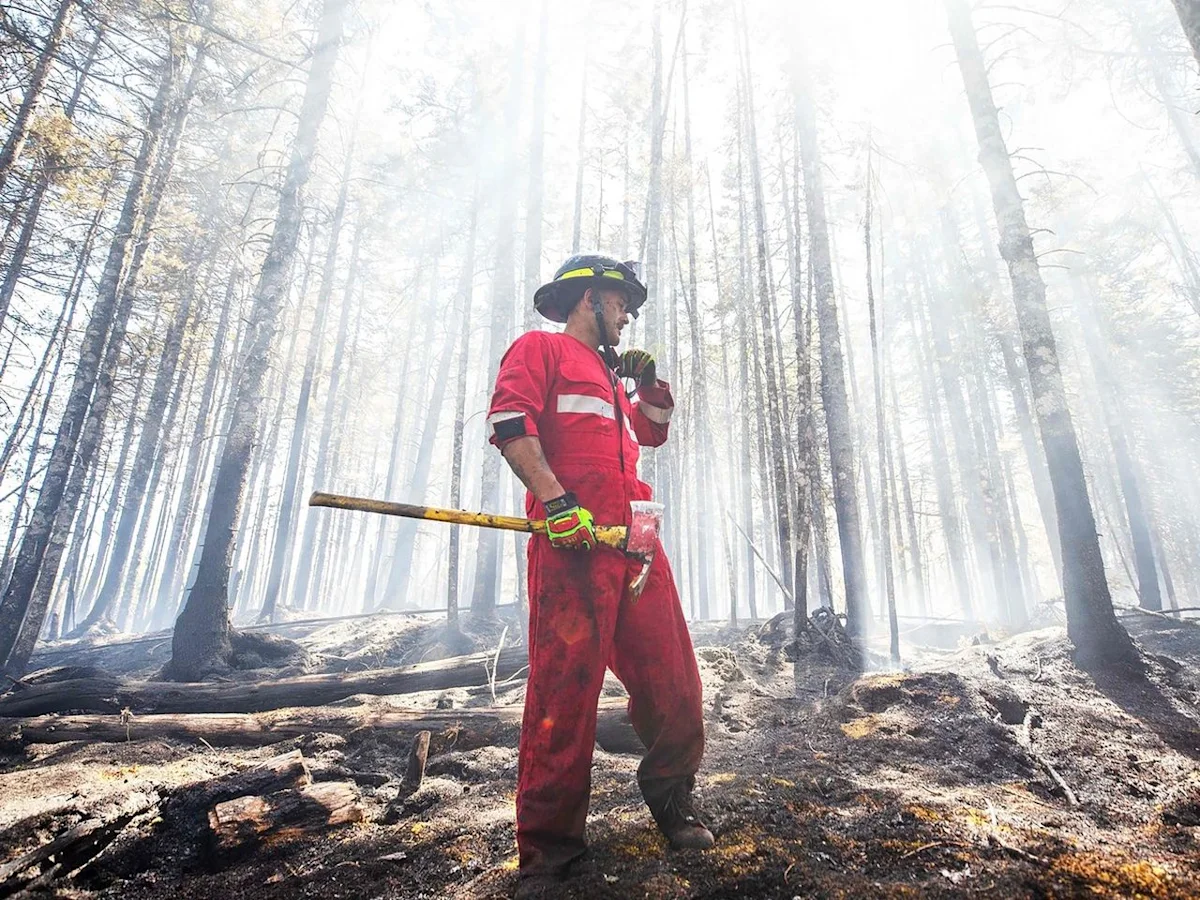
We can stop making it easier for wildfire to destroy our communities. We need to get as good at preventing towns from burning as we are at fighting wildfires. (Credit: HANDOUT/Nova Scotia Government/AFP via Getty Images)

Another summer, another procession of devastated Canadian communities and millions of Canadians and Americans breathing hazardous smoke from fires burning far away. Our firefighters perform extraordinary work under dangerous conditions. But towns and homes still burn.

For about a century, governments across North America have aggressively and successfully fought wildfires. The unintended consequence has been the accumulation of vast amounts of combustible vegetation in our forests and around our towns. Worse, communities have grown long fingers into forested areas as people have built homes in nature and resisted harvesting nearby.

This wildland urban interface (WUI) is where the biggest losses are occurring and where we should focus policy. Canada’s institutions evolved to sustain forests and fight fires. They now need to protect communities from wildfire.

The provinces govern how foresters write sustainable forest management plans for harvesting and replanting to achieve a sustainable harvest level, make timber available for mills, protect sensitive habitat and biodiversity and address Indigenous and social concerns, such as cultural sites, noise, views, herbicides and recreation. Timber doesn’t get cut without an approved plan. There is room for improvement but, overall, it’s a good framework that satisfies broadly accepted ideas about sustainability.

But it wasn’t designed for the wildfire situation we currently face. Its goal is to sustain forests, not protect communities when the forests burn. In fact, in forest management planning, wildfire is generally treated as a forest disturbance rather than a public safety issue.

Provinces can take a decade to update forest management planning — with years consumed by consultations, reviews, objections, revisions and other process. Then it takes more years to change the plans themselves. It all happens at the speed trees grow, which is fine if that’s what matters, but not if the trees are igniting homes, which is what matters now. We need to get wildfire public safety objectives into this process.

But we can’t afford to wait for a new planning cycle or structure. To protect public safety, the provinces should urgently identify communities that are likely to burn and provide guidelines for foresters for reducing fuels. This could mean commercial harvesting, mechanical thinning, removal of understory (the stuff growing under the canopy), prescribed burns including Indigenous cultural burning, and conversion of highly combustible forest types such as pine and fir to slower-burning types like poplar and birch.


These changes cut across multiple ministries and levels of government. Provincial and federal governments need to co-ordinate their work and mobilize resources with the urgency of a wildfire command centre. The Canadian Council of Forest Ministers could do the co-ordinating. If it’s done right, we could start to see tangible benefits within a year.

Who will pay for cutting down trees that are not commercially valuable? Communities might be expected to but many are cash-strapped and can’t. Many of the financial benefits of fewer fires in the WUI would flow elsewhere: governments would spend less fighting wildfires, insurance companies would pay fewer claims, businesses would remain open and families would stay in their homes.

Canada financed much of the Second World War through Victory Bonds. Today we need the financial equivalent: Wildfire Protection Bonds to finance fuel reduction before communities burn. Provincial and federal governments should create the framework and provide a backstop. Financial institutions such as banks and insurers could also issue the bonds. They would pay to finance and verify fuel reduction in communities across Canada. Governments, insurers and lenders would all benefit from lower suppression costs, fewer insurance claims and better protection of mortgage collateral. A portion of those savings could service the interest and principal. The public might even buy bonds, given the stakes.

We also need to stop making the problem worse by changing zoning rules. Cities and towns are approving new developments in areas of extreme wildfire hazard without considering whether those communities would be at risk or could realistically be defended. Wildfire hazard should become a routine consideration in municipal planning, subdivision approvals and zoning decisions, just as flood hazards already are.

Finally, we need to change building codes. A house with an asphalt shingle roof and vinyl siding is basically coated in petroleum. It will catch fire quickly when embers land on it or get into roof vents.

We can stop making it easier for wildfire to destroy our communities. We need to get as good at preventing towns from burning as we are at fighting wildfires.

Philip Green is vice-president for forestry at EarthDaily.


Source link

  • Related Posts

    Wall Street is turning Nvidia’s AI chips into a new futures market: Chart of the Day

    AI spending keeps getting bigger. Figuring out how to price it is still surprisingly hard. Nvidia (NVDA) put an exclamation mark on the scale of the boom this week, forecasting…

    Why AI could be a game ghanger for housing

    Why AI could be a game ghanger for housing Source link

    Leave a Reply

    Your email address will not be published. Required fields are marked *

    You Missed

    Dogs may hold surprising clues to human longevity

    Dogs may hold surprising clues to human longevity

    How Trump’s Deportation Agenda Spreads Overseas

    How Trump’s Deportation Agenda Spreads Overseas

    The 1970s STOL Prototype Duel The US Air Force Canceled Then Quietly Turned Into The C-17

    The 1970s STOL Prototype Duel The US Air Force Canceled Then Quietly Turned Into The C-17

    Ayan Broomfield on Her US Open Style and the Future of Tennis

    Ayan Broomfield on Her US Open Style and the Future of Tennis

    Canada Gazette – Part I, September 26, 2020, Vol. 154, No. 39

    Gametime Promo Code: Save on Tickets in September 2026

    Gametime Promo Code: Save on Tickets in September 2026