dailynewsnblog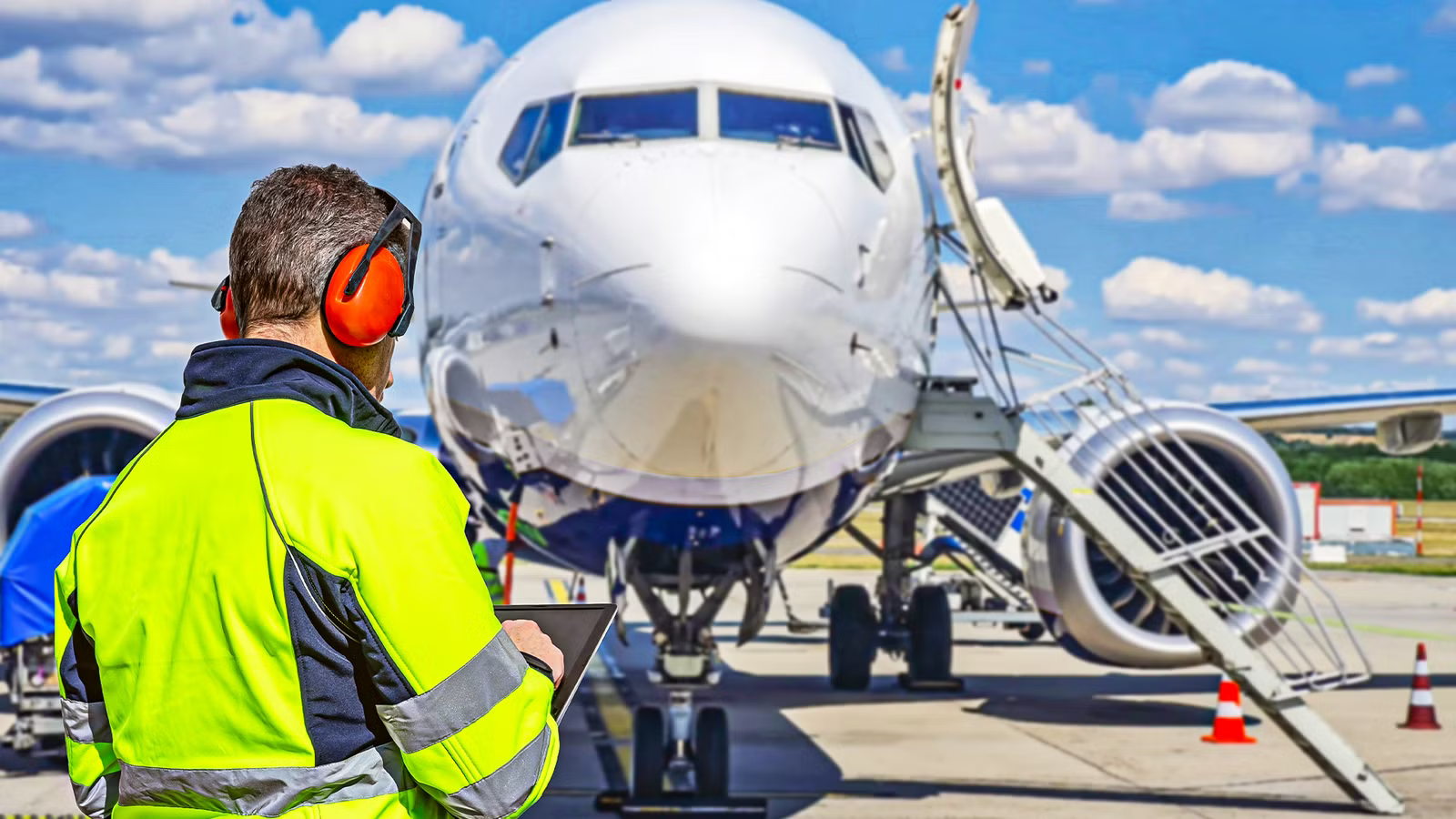
By the time passengers settle into their seats, much of the work required to send an aircraft back into the sky has already taken place outside the cabin. During a typical turnaround, ramp agents, loading supervisors, fuel personnel, catering and cleaning teams, maintenance staff, and other service providers work around the aircraft in a carefully coordinated sequence. Their tasks range from inspecting cargo holds and checking for damage to calculating the aircraft’s final loading condition. The process must be completed within a limited ground window without compromising safety.
Ground operations are not handled by one generic group of employees. Different specialists have separate responsibilities, while a ramp supervisor or turnaround coordinator helps keep those activities synchronized. The International Air Transport Association’s ground operations standards cover aircraft handling, baggage, cargo, fueling, load control, aircraft movement, and other functions because each part can affect the next stage of the turnaround. IATA describes standardization as essential to making these operations safer and more efficient.
Before The Bags Go Aboard, The Aircraft Gets A Closer Look
Ground teams inspect the aircraft for damage or irregularities

One of the first jobs after an aircraft arrives is determining whether anything needs attention before the next flight can be prepared. While passengers may see only the opening of the doors and the beginning of baggage unloading, ground personnel are simultaneously examining areas of the aircraft that are inaccessible from the terminal. IATA’s standardized turnaround procedures call for an inspection of the cargo holds after unloading.
Personnel check whether baggage containers and other loads have shifted during the flight, look for damage, and document problems that could require corrective action. For example, spills have to be handled according to established procedures before the affected area can continue through the turnaround process. A relatively small dent, scrape, or other form of ground damage can become an operational problem if it is not identified promptly. IATA specifically identifies aircraft ground damage as one of the common causes of turnaround delays, alongside missing passengers and untimely ground-handling services.
Before cargo is loaded, the responsible personnel verify information such as the aircraft registration, the condition of the hold, and the relevant loading information. Unit load devices, or ULDs, are inspected for damage before being placed aboard the aircraft. Their configuration and securing arrangements must correspond with the aircraft being handled. This means the loading process is not simply a matter of moving bags from a conveyor belt into an airplane. Each hold becomes a controlled work area in which the condition of the aircraft and the equipment being loaded must be confirmed before the next stage proceeds.
Every Suitcase Has A Place In The Aircraft
Baggage and cargo are loaded and secured according to plan

The baggage carts passengers see near the aircraft represent only one part of a larger loading operation. Ground personnel must determine where baggage and cargo belong, move the material to the aircraft, and ensure that the final arrangement is compatible with the aircraft’s loading instructions. IATA’s turnaround procedures require loading personnel to cross-check information such as ULD gross weights, destination codes, and other load details before loading begins.
Securing the load is a separate, and essential, safety responsibility. ULDs must be restrained appropriately against movement, while loose baggage and cargo have to be positioned according to the applicable loading configuration. The objective is to prevent the contents of the holds from shifting during flight and to maintain the intended distribution of mass throughout the aircraft. Further, IATA says ramp supervisors are responsible for ensuring that baggage is scanned correctly and for addressing left-behind baggage. The same supervisory role includes ensuring that cargo is correctly prepared for bulk loading or placement in ULDs.
These checks are largely invisible from the passenger perspective. A bag’s destination, the aircraft’s loading plan, the condition of the container, and the security of the final arrangement all form part of the loading process. The work also has to remain synchronized with the other turnaround activities. A loading team cannot operate independently of fueling, catering, cleaning, maintenance, or passenger boarding. IATA emphasizes coordination between airlines, airports, and ground service providers because delays or failures in one activity can disrupt the entire turnaround.
Fuel, Catering, And Cleaning Happen Together
Specialized teams work simultaneously around the aircraft

While baggage is being handled underneath the aircraft, several other teams can be working around the same airframe. Fueling, catering, cabin cleaning, and other servicing activities have to be coordinated rather than treated as isolated jobs. Fueling is particularly important because the amount loaded becomes part of the aircraft’s final operating condition. Ground personnel monitor the fuel operation, while load-control functions account for the resulting weight information. Fueling has to take place within established safety procedures while other teams continue preparing the aircraft.
Catering presents a different challenge. Supplies must be delivered to the appropriate aircraft, and the catering operation has to be coordinated with the turnaround rather than obstructing other ground equipment or delaying boarding. Cleaning teams work within the same constrained window, preparing the cabin while other personnel are servicing the aircraft externally. The simultaneous nature of these activities explains why an aircraft can appear to be surrounded by numerous vehicles and equipment immediately after arriving at the gate. Each one has a defined function, and the timing of those functions is interconnected.
Standardization is very important in all operations since ground handling is performed by many different organizations. An airline may rely on contracted ground handlers, airport personnel, specialized fueling providers, catering companies, cleaning contractors, and other suppliers. Without common procedures, like those published by IATA, coordinating all of those groups would become considerably more difficult. A clean cabin, a fueled aircraft, loaded baggage, and a ready galley are separate achievements that have to converge before departure.
The Final Load Has To Match The Numbers
Personnel calculate the aircraft’s final weight and balance

One of the most important unseen stages occurs after much of the physical loading work is finished. Ground operations personnel must establish the aircraft’s final loading condition and communicate the necessary information through the load-control process. IATA identifies load control as a distinct ground-operations discipline, with its own principles, regulatory requirements, qualifications, and documentation. The ramp supervisor’s responsibilities can include tracking passenger numbers, baggage pieces, and fuel quantities while coordinating weight-and-balance documentation with Load Control.
The significance becomes clearer when considering how much an aircraft’s condition can change during a turnaround. Passengers board and disembark, bags are removed and loaded, cargo can be added, fuel is uplifted, and catering supplies are exchanged. Each change affects the aircraft’s mass distribution. Loading therefore has to follow a planned configuration rather than simply filling available space.
After loading is completed, IATA’s standardized procedure calls for a final hold check and completion of the Loading Instruction Report. This creates a documented endpoint for the loading operation rather than relying solely on a visual inspection. This stage also demonstrates why a seemingly minor change can require additional coordination. If the actual number of bags, passengers, or cargo pieces differs from the expected load, the final figures must reflect reality. The objective is not merely to make the aircraft depart with everything onboard, but to depart with the correct information describing its actual condition.
Pushback Is The Final Test Of The Turnaround
Crews confirm the aircraft is ready to leave safely

Finally, before an aircraft can move away from the gate, ground personnel must establish that the servicing and loading work is complete, equipment is clear, and the aircraft can be moved safely. IATA says responsible ground staff assist with aircraft departure and pushback, including connecting the pushback tractor to the nose gear and removing wheel chocks. Personnel working around the aircraft must be trained for the equipment they operate, while particular attention is required around engine intake and exhaust areas and other aircraft danger zones.
The departure sequence also depends on communication. The ramp supervisor or turnaround coordinator has to know when the different service providers have completed their work and whether any irregularity remains unresolved. IATA describes this coordination role as one that monitors team members and service providers, ensures operational safety and load-security checks are completed, and deals with handling irregularities according to applicable requirements.
Only after those activities converge can the aircraft transition from a stationary object being serviced into an aircraft ready for departure. The pushback itself may only take a few minutes, but it represents the culmination of a much longer sequence involving multiple teams. That is why the quietest part of a flight’s departure can be among the most operationally important. Passengers usually notice the moment the aircraft begins moving, but ground personnel have already spent the turnaround establishing that its holds are inspected, its load is secured, its servicing is complete, its documentation is in order, and its surroundings are safe for movement. IATA’s framework reflects the underlying principle: standardized ground procedures exist to make these complex handoffs consistent, safe, and efficient.
Catch what other trackers miss
Emergency squawks, holds, NOTAMs — live signals, no signup.
Open tracker
Catch what other trackers miss
Emergency squawks, holds, NOTAMs — live signals, no signup.
Open tracker