dailynewsnblog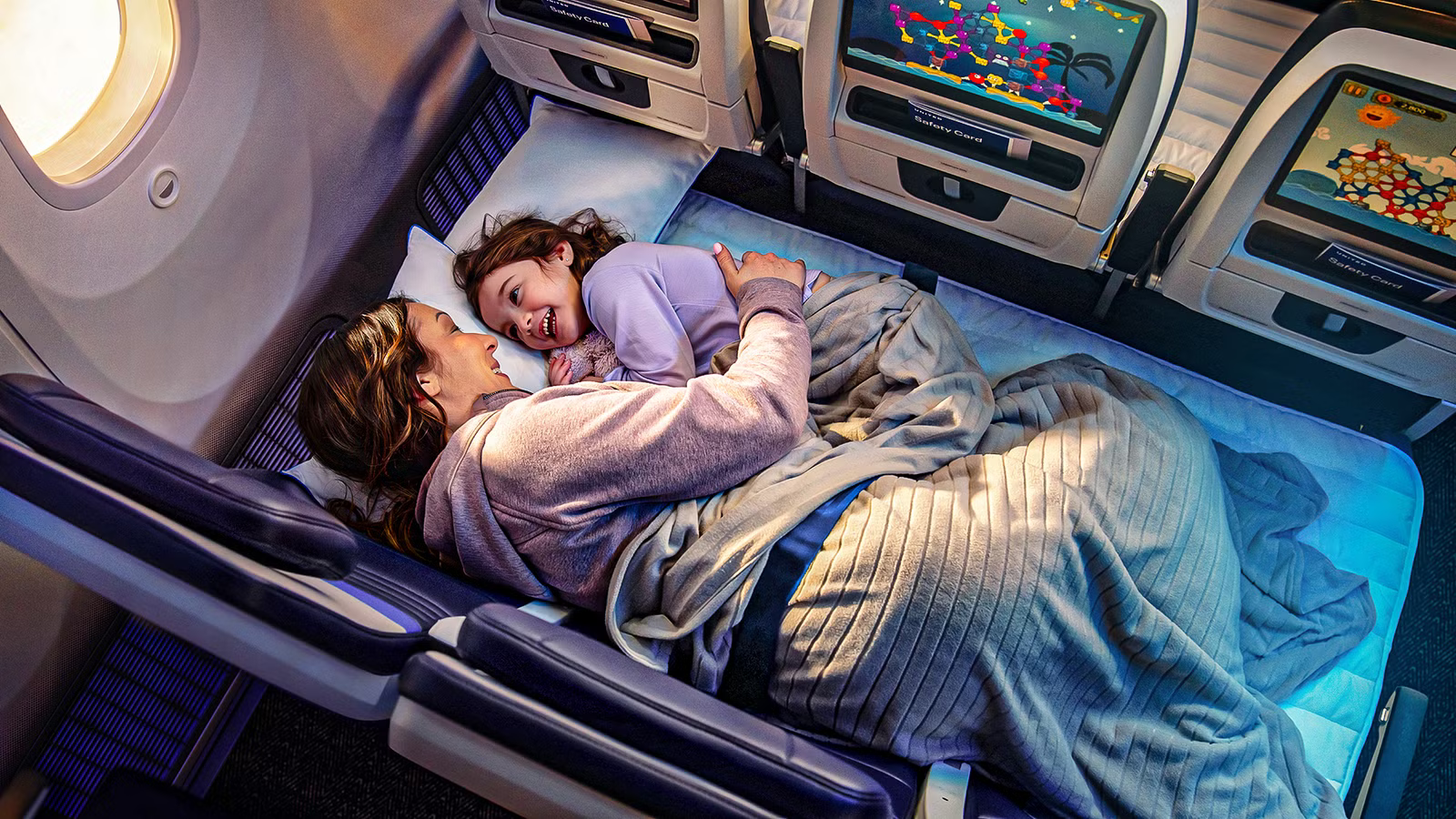
Travelers have historically faced difficult trade-offs between cost and comfort on long-haul flights. A conventional economy class ticket has naturally always been the cheapest option, but the usual lack of space or recline arguably amounts to a non-financial price paid in terms of comfort. On the other hand, business class has been a great option for that extra bit of luxury since its inception in the 1970s, but only for those lucky enough to be able to justify spending the additional money.
Given the clear gap between the two, airlines have adapted their offerings over the years to target passengers with varying levels of price sensitivity. Premium economy has increasingly emerged as a popular middle ground for both customers and airlines. But another option has increasingly emerged in the last decade or so. This does not require flyers to stray out of the economy cabin and fork out so much in doing so, but it does leave them with a bed of sorts to stretch out on during lengthy journeys.
Air New Zealand Pioneered Idea With Skycouch

Air New Zealand first drummed up the idea of offering out space in its economy cabins to those seeking additional room but who may not want or be able to afford an upgrade. Dubbed Skycouch, the product was introduced on some of its  Boeing widebodies back in 2011 and was patented at the time, leaving some peers having to license it from the carrier since.
For the airline, the concept was a simple one. “Skycouch seats are just like standard economy seats,” Air New Zealand notes on its website, “except each has an adjustable leg rest that can be raised or lowered individually.” That meant little adaptation was needed in practice, with physical seats remaining largely the same. Leg rests that could be raised to a 90-degree angle, though, meant a row of three individual seats could effectively be converted to one couch at five feet, one inch (1.55 meters) in length and 29 inches (74 cm) in width.
While premium economy also bridges the gap to business aboard the aircraft, Skycouch can provide an economical alternative for groups of passengers. Offered on its Boeing 777-300ER and Boeing 787-9s today, couples and even small families, say, can access a bit of extra comfort for less per person than several premium or business class tickets. On the side of the airline, Skycouch offers a means of charging a premium on top of standard fares, but it’s something that realistically requires minimal work to implement. Rivals have noticed since too, with others following suit soon after Air New Zealand’s initial rollout.
Air Astana Soon Followed With Economy Sleeper

China Airlines and  Air Astana introduced their own versions of the product in 2014 and 2015, respectively. The Kazakh flag carrier remains the only one of the two to still offer such an option, though the Chinese airline has ditched its Family Couch after just four years due to lackluster demand. In Air Astana’s case, its Economy Sleeper is relatively rare today.
In the absence of premium economy class on its international flights, the airline simply dedicates a row of three seats to the Economy Sleeper category on select flights. Unlike Air New Zealand’s Skycouch, though, the seats in question are not specialized and rather mirror those found in the rest of the cabin. The core idea remains, however, with a mattress, duvet, and pillow provided to create a makeshift bed from the three seats. Air Astana also provides Economy Sleeper customers with additional luggage and amenities, such as a business-class amenity kit, to complement the offering.
Routes where Air Astana Economy Sleeper is offered:
Almaty International Airport (ALA) – Frankfurt Airport (FRA) |
Astana Nursultan Nazarbayev International Airport (NQZ) – Frankfurt Airport (FRA) |
Almaty International Airport (ALA) – London Heathrow Airport (LHR) |
Almaty International Airport (ALA) – Beijing Capital International Airport (PEK) |
Astana Nursultan Nazarbayev International Airport (NQZ) – Beijing Capital International Airport (PEK) |
It had initially offered the service on its Boeing 757 fleet before these were ultimately retired in 2020. Nowadays, passengers will find the option on flights from Kazakhstan’s Astana and Almaty to Frankfurt, Beijing, and London, according to Air Astana’s website. This means availability is limited, as is the case with others that have adopted their own versions of the economy bed concept since.
All Nippon Airways’ Airbus A380 COUCHii

All Nippon Airways (ANA) solely sells its COUCHii fares on Airbus A380-operated flights. With just three in its fleet, that leaves it in relatively short supply, much like Air Astana’s. This has been the case since 2019, when the Japanese carrier took delivery of its first A380. Its COUCHii fare rolled out at the same time, targeting those same passengers who sought a lie-flat product for lengthy flights, but without the bells and whistles of premium tickets.
Catch what other flight trackers miss
Emergency squawks, holds, NOTAMs — live signals, no signup.
Open tracker
Catch what other flight trackers miss
Emergency squawks, holds, NOTAMs — live signals, no signup.
Open tracker
Given COUCHii is only available aboard ANA’s A380s, the product can only be found on its connection between Tokyo Narita International Airport (NRT) and Honolulu Daniel K. Inouye International Airport (HNL). Passengers can opt to reserve either three or four seats on board, which again feature adjustable footrests that can be used to create a larger bed surface. For these, ANA charges varying fees on top of standard economy fares depending on group size and season.
ANA COUCHii fees:
Passengers | Season | Three seats | Four seats |
Four | Low / High | – | ¥13,000 ($130) |
Three | Low | ¥9,600 ($96) | ¥24,000 ($240) |
Three | High | ¥9,600 ($96) | ¥54,000 ($540) |
Two | Low | ¥20,000 ($200) | ¥56,000 ($560) |
Two | High | ¥50,000 ($500) | ¥176,000 ($1,760) |
One | Low | ¥62,000 ($620) | ¥98,000 ($980) |
One | High | ¥172,000 ($1,720) | ¥258,000 ($2,580) |
Based on ANA’s website, charges for COUCHii vary widely whether the booking is for one traveler or four, since it is an optional extra added on top of individual fares. A solo flyer booking out four seats for COUCHii could find themselves paying up to $2,580 for a single journey, for reference, while a group of four would face a mere $130 fee for the same four seats. Air Astana, conversely, incorporates the price of its own lie-flat economy offering into its fares. Either way, passengers should find such prices to be lower than full upgrades by design, with airlines increasingly vying to tailor fares to capture a wider array of people willing to pay at different rates.
Lufthansa Currently Expanding Sleeper’s Row To All Long-Haul

 Lufthansa, through the same thinking, first implemented its so-called Sleeper’s Row in 2021. Here, passengers could book available seats on flights once they were physically at the airport, on a first-come, first-served basis. Unlike at peers, this meant those flying with Lufthansa could nab entire rows and the equipment to convert them into makeshift beds, but only if the space was available at the last minute.
At first, a maximum of three rows were to be offered for this purpose on flights to destinations such as São Paulo, Los Angeles and Singapore, the German carrier wrote at the time. A surcharge of between €159 and €229 ($184 and $265) was to be included per route for those who managed to secure any additional unsold row, it added. Ultimately, this allowed Lufthansa to generate revenue from seats that would have gone empty anyway. For passengers, the idea represented “a further step towards more product diversity in economy class to meet passengers’ wishes for more comfort and individuality,” in the airline’s words.
Cut forward five years to now, and Lufthansa has started to offer Sleeper’s Row on all long-haul flights served by its widebody aircraft. Advanced booking is still unavailable, with the airline opting to stick by the short-notice system. This means that passengers could purchase as late as when they are at the gate about to board. Again, it gives Lufthansa a chance to flog otherwise unused space as a last resort — an idea that has in part made its way to others more recently.
Vietnam Airlines Latest With Sky Sofa

Vietnam Airlines’ Sky Sofa is the latest economy bed offering to have popped up on the market, having been introduced in 2023. This is currently offered on direct routes to Korea, Japan, India, the UK, France, Germany, Australia, Russia, Italy, Denmark, the Netherlands, and the US, as listed online by Vietnam Airlines.
Advanced bookings can be made, with the airline also explicitly advertising a last-minute option, allowing passengers to book any available spare seats at the check-in counter once again. Like its peers, Vietnam Airlines also bases the Sky Sofa charge on multiple factors, including route and fare type.
Vietnam Airlines Sky Sofa charges:
Route / Fare type | Economy Flex | Economy Classic | Economy Lite |
To USA (San Francisco) | $550 | $550 | $650 |
To UK, France, Germany, Russia, Italy, Denmark, Australia, Netherlands | $450 | $550 | $550 |
To Japan, South Korea, India | $250 | $350 | $350 |
Aside from a row to themselves and bedding, passengers who book Sky Sofa are also treated to food and personal amenities “inspired by premium economy standards” depending on route, as the airline writes, further narrowing the gap to its next standalone offering. Vietnam will by no means be the last to implement offerings aimed at this middle ground too.
United Airlines’ Relax Row And Air New Zealand’s Skynest Coming Soon

 United Airlines is set to be the next to join the party, and the first from the US, with its Relax Row scheduled to roll out in 2027. Like at Air New Zealand and ANA, Relax Row seating will be equipped with specialized leg rests that can be folded up for the purpose of creating a wider bed surface. Come 2030, United plans to have fitted 200 Boeing 787 and Boeing 777 aircraft with up to 12 Relax Row sections each.
In the meantime, Air New Zealand will introduce another product aimed at filling the gap between economy and business class. Skynest, as it has been christened, will roll out from late December. Aimed at both economy and premium passengers, this will see space incorporating bunk beds offered out for up to four hours at a time, allowing passengers to leave their seats and sleep mid-flight.