dailynewsnblog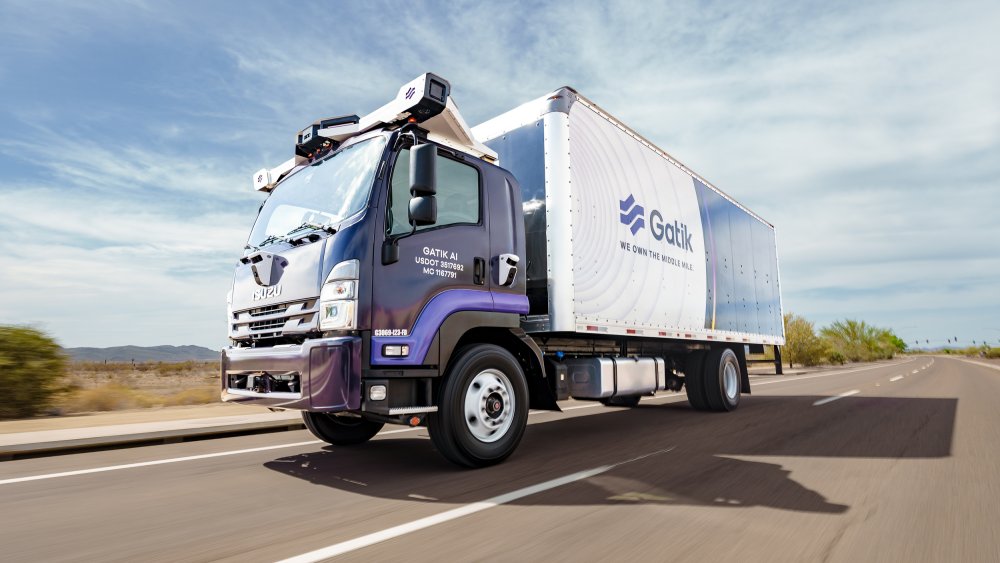
Autonomous trucking provider Gatik raised $200 million in a Series D funding round, giving the company fresh capital to scale its driverless fleet and expand its middle-mile network as demand for autonomous freight gains momentum.
The Santa Clara, Calif.-based company’s trucking network covers the middle mile of the supply chain, moving ambient, refrigerated and frozen goods on high-frequency regional routes between distribution centers and stores for enterprises including Walmart, Kroger and PepsiCo. These routes can often be time-sensitive and essential to stocking store shelves.
The capital will be used to expand Gatik’s commercial operations and fleet, while it continues to invest in technology, infrastructure and its workforce. The self-driving trucking firm says it operates dozens of driverless trucks and is targeting more than 100 by the end of 2026, according to a spokesperson. The company says it plans to expand to “thousands” in the years ahead.
Operating in the metropolitan areas of Dallas-Fort Worth, Phoenix, northwest Arkansas and Toronto, Gatik’s 26- and 30-foot trucks run nearly 24 hours a day. The company has not revealed markets being considered for expansion.
Gatik reports it has booked more than $600 million in contracted revenue and completed 85,000 fully driverless orders. The company touts 99 percent on-time delivery across its operations, which cover up to 400 miles in a single trip.
The funding round is Gatik’s largest to date, led by Qatar Investment Authority and Koch Disruptive Technologies. The Series D brings total capital raised by the company to about $500 million.
“We have built Gatik with real revenue, deep customer demand, and AI-driven autonomous technology proven every day in live supply chains,” said Gautam Narang, CEO and co-founder of Gatik, in a statement. “This round gives us the capital to scale with speed and discipline, serve the world’s largest companies, and define the future of autonomous freight.”
Gatik’s medium-duty Isuzu trucks are powered by its autonomous Gatik Driver system, which is the technology underpinning the company’s move from autonomous trucking pilots to commercial driverless operations.
Designed specifically for medium-duty trucks, the system combines AI with purpose-built, production-grade hardware to handle the demands of regional freight routes, including highway merges, dense urban traffic and dock-to-dock maneuvering. Gatik describes the system as “interpretable,” emphasizing its ability to make and communicate decisions in the complex, repetitive environments typical of middle-mile logistics.
Gatik also uses simulation and synthetic data to develop and validate its autonomous driving software so that its trucks can make test runs without having to physically encounter every scenario on a public road beforehand.
Unveiled in July 2025, Gatik Arena creates photorealistic, sensor-accurate and physics-based environments in which Gatik can reproduce rare or dangerous situations, manipulate variables such as weather, lighting and terrain, and test the behavior of its autonomous system in a controlled setting.
Before launching its newest generation of fully driverless commercial operations last year, Gatik underwent independent safety assessments and regulatory reviews involving the Federal Motor Carrier Safety Administration (FMCSA) and the National Highway Traffic Safety Administration (NHTSA), as well as transportation and public-safety agencies in Texas, Arizona and Arkansas.
Beyond getting over the regulatory hurdles the industry has faced, autonomous trucking has sought to convey a narrative that the sector will further benefit the American consumer the more it expands.
In March, rival autonomous delivery provider Aurora Innovation commissioned a report projecting that by 2035 the sector will result in $9 billion in increased purchasing power for U.S. households through lower transportation costs.
The report, conducted by transportation planning consultancy Steer Group, said shippers would save shippers $5.7 billion in annual fuel costs and generate $9.4 billion in annual safety benefits.
Improved road safety is projected to lead to a 40 percent reduction in insurance premiums, significantly lowering the cost of doing business across the freight sector.
Earlier this year, autonomous trucking provider Waabi raised $750 million in a Series C round, while attracting another milestone-based future investment of $250 million from Uber to deploy robotaxis.
Waabi says it is the largest tech fundraising in Canadian history, with the Toronto-based company expecting it to fuel the advancement of its generative AI platform and support its expansion into robotaxis.
Another major player in the space, Kodiak AI, raised $100 million in a private placement funding in May. The funding followed Kodiak’s debut on the public markets last September.