dailynewsnblog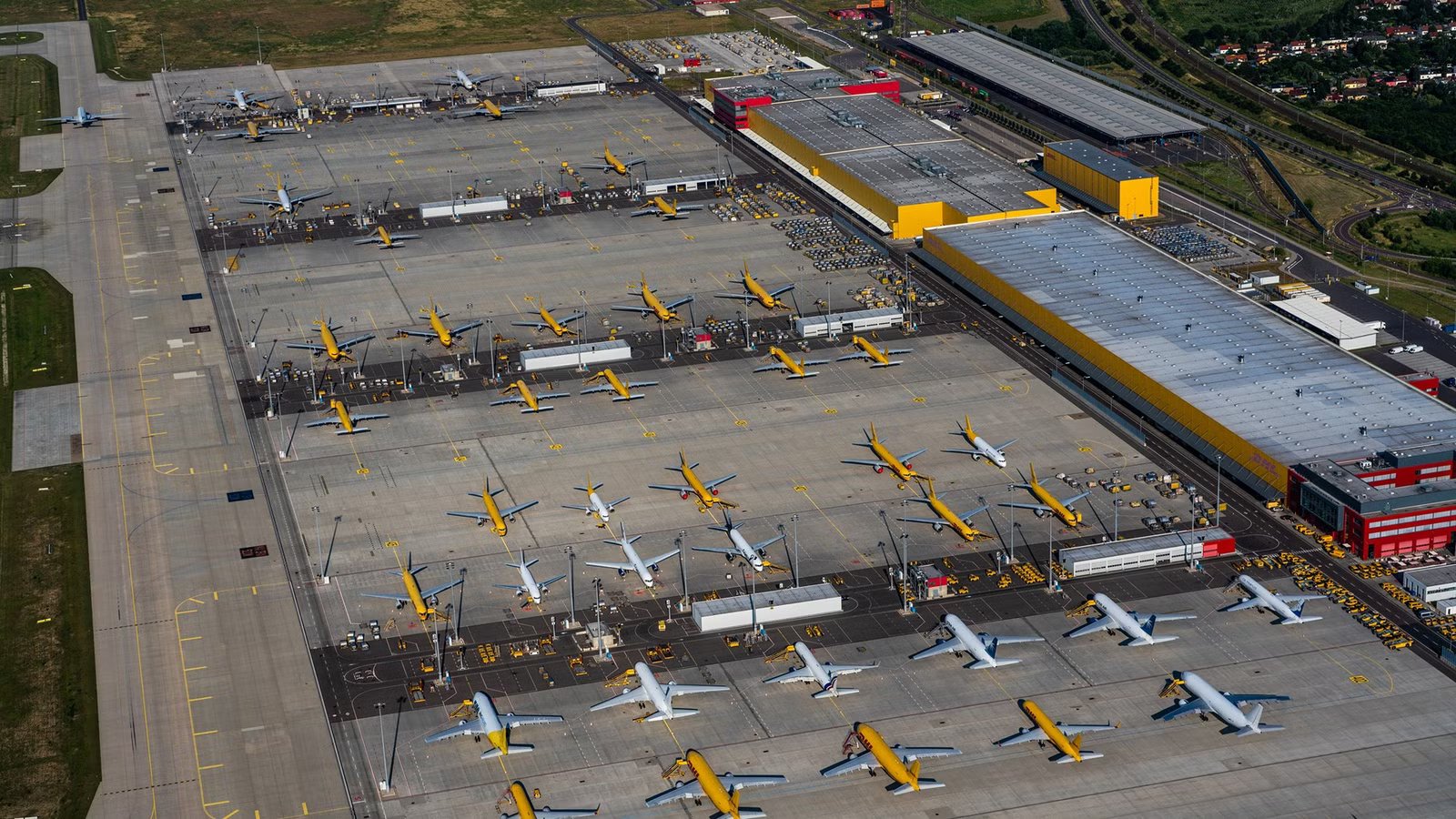
Police officers were deployed to the grounds of Leipzig Halle Airport (LEJ) on August 14, after German investigators discovered a third drone and military explosives that were thought to have been connected to an attempted attack on the east-central German airport. Leipzig is a key airport for cargo operations in Germany, and home to the Antonov.
A drone was discovered in the town of Kabelsketal, which is located just to the west of the airport. It was accompanied by around 1.8 ounces (50 g) of military explosives. This comes just ten days after an unsuccessful sabotage where a bomb was found near a Ukrainian plane at Leipzig airport.
Who Is Behind The Drone Attacks?

As reported by The Guardian, the German Chancellor Friedrich Merz said the government would soon provide information about who they believe are behind the attempted attacks, with Merz reiterating that ‘they will pay for this’. The Chancellor has yet to name the suspect, but added the government is working intensively with security authorities and plans to advise the public of their findings shortly.
There has been widespread suspicion by broadcasters NDR and WDR, including newspaper Süddeutsche Zeitung, that those involved are part of a Russian intelligence group, a claim that Moscow has denied. To date, the German government has avoided suggesting that Russia is involved.
What has been proved over the last few weeks is that Germany has increasingly become a target for attackers, who are ruthlessly planning property damage, which could result in injuries or death.
Third Set Of Suspicious Drones And Explosives Found This Month

Earlier in August, a Ukrainian Antonov plane, which is parked at Leipzig, was found to have been the target of a drone attack. The drone was filled with kerosene, but the explosives failed to detonate. 20 minutes after this first discovery, a second drone collided with a DHL cargo plane that was then forced to abort its landing and diverted to France.
Further inspections of the DHL airplane revealed that there was damage to the tail of the jet, which suggests that there had been a collision with an object. To date, the drone involved has not been found; there is belief that it may have been sucked into the engine during the collision, resulting in it being shredded into unrecognizable pieces.
The most recent drone was found in the town that borders the western edge of Leipzig airport, and has seen the federal criminal police deploy forensic technicians to the area. They have located residues of substances which they believe are highly explosive hexogen, and are considering that the perpetrators may have planned a larger attack than first realised.
Other Suspicious Components Found at Leipzig Halle Airport

Discovered close to the airport, other suspicious components and traces have been found in and around the airport grounds. An antenna has been spotted in a tree, while other electronic parts which could control drones have been located. Witnesses in the area have reported loud bangs on the days of the incidents, and investigators even located a burnt patch of grass and charred metal parts.
Leipzig/Halle Airport is located in Schkeuditz, Saxony, and serves the cities of Leipzig, Saxony, and Halle. It is an airport that can operate 24 hours a day and is a notable gateway for freight-only movements, with the highest number of arrivals and departures for cargo within the European Union. It is DHL Aviation and AeroLogic’s primary European hubs. Further airport characteristics below:
Airport Name | Leipzig/Halle Airport |
|---|---|
IATA Code | LEJ |
ICAO Code | EDDP |
Operator | Flughafen Leipzig/Halle GmbH |
Hub For |
|
Runways |
|
The identification by German investigators in the field west of Leipzig airport has led officials to state that this discovery indicates that there may have been a plan for a larger attack than was previously understood, potentially crippling one of Europe’s most vital cargo airports.