dailynewsnblog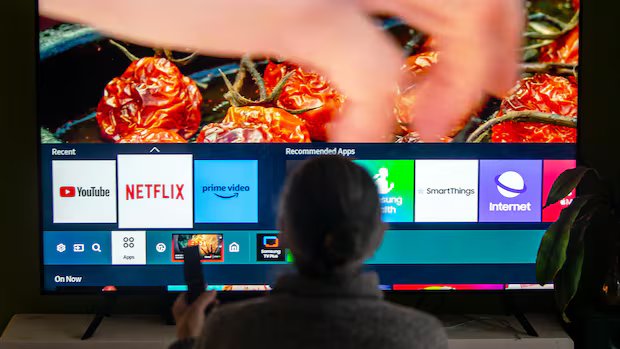
The fight between Canada and the United States on trade isn’t just about dairy, car parts and natural resources. It’s also about what appears on your Netflix homepage.
The Globe and Mail, citing a senior government source, reported Sunday that U.S. negotiators demanded Canada drop requirements for American streaming companies to promote Canadian content, including French-language content.
The federal Liberal government refused.
“We were not prepared to compromise on our sovereignty, the protection of the French language, and our culture,” Prime Minister Mark Carney said in a speech on Saturday after trade talks collapsed.
The demand is the latest in a years-long dispute involving the Canadian government on one side and American streaming giants and the U.S. government on the other. So how did we get here?
Stream Canadian
Ottawa has long required broadcasters to promote and support Canadian content (Cancon), all the way back to song quotas for AM radio stations.
In 1991, the government brought in the Broadcasting Act. The law states that “the Canadian broadcasting system shall be effectively owned and controlled by Canadians” and that the Canadian broadcasting system should “serve to safeguard, enrich and strengthen the cultural, political, social and economic fabric of Canada.”
But decades later, the rising popularity in Canada of streaming platforms such as Netflix, YouTube, Amazon Prime and Spotify raised questions about Cancon and broadcasting rules. Video and audio streaming services were not, for example, required to support and promote Cancon, but their TV and radio counterparts were.
Looking to address the imbalance, the former Trudeau government brought forward a bill in 2022 to update the Broadcasting Act, called the Online Streaming Act.
“Canadian broadcasters have invested in and introduced us to the incredible Canadian programs that so many of us love. We are updating our laws so online streamers have to contribute in a similar and equitable way,” a 2022 government news release said.
The legislation was controversial from the start, with the government and supporters saying it was a necessary evolution of Canada’s media laws in the digital age, while opponents expressed concerns that it was overreach and an attempt to regulate the internet.
American streamers and digital media companies opposed the legislation fiercely.
The bill passed with amendments and became law in April 2023, but the government delegated much of its interpretation — including how much money streamers would have to contribute to Cancon — to Canada’s broadcast regulator, the Canadian Radio-television and Telecommunications Commission (CRTC).
But getting streaming companies to pay up has been a long and confusing saga.
In 2024, the CRTC decided that online streaming services with revenues of over $25 million would have to put five per cent of their Canadian revenues toward the Canadian broadcasting system, such as local radio and television news, and French-language and Indigenous content.

Big streaming companies such as Netflix and Disney Plus launched court challenges, and a Federal Court of Appeal judge said they would not have to make the payments until the court heard the case.
Despite this, in May of this year, the CRTC announced that it would increase the payments to 15 per cent of revenue for online broadcasters.
The U.S.-based Motion Picture Association (MPA), which represents companies like Netflix, Paramount Pictures, Prime Video, Walt Disney Studios and others, was not happy and even called the move a trade violation.
“The Motion Picture Association strongly condemns the CRTC’s decision to impose unprecedented, unnecessary, and discriminatory investment obligations on American streaming services operating in Canada,” MPA said in a statement.
“This burdensome framework unfairly targets global streamers with requirements that directly violate Canada’s obligations” under the Canada-United States-Mexico Agreement.
A few weeks later, the government directed the CRTC to rethink the increase. The government, including Carney, expressed concern that the levy would raise prices.
Ottawa also said it would issue a new policy directive to adjust how the CRTC is implementing the Online Streaming Act.
The MPA welcomed the move, while dozens of Canadian cultural sector organizations asked the government to keep the requirement in place.
In a court document dated July 17, the attorney general’s office said the government intends to eliminate the payments entirely and replace them with taxpayer funding.
Earlier, in June 2025, the government abolished the digital services tax (DST), which required foreign and domestic large businesses to pay tax on some revenue earned from engaging online users in Canada. The government cited trade negotiations with the U.S. for the move.
Money isn’t everything
But the current dispute might not be about funding at all.
The Online Streaming Act also requires online streaming services to make it easier for Canadians to see and access Canadian content on their platforms, including French- and Indigenous-language programming. The CRTC will start a consultation on how best to do that this fall.
Michael Geist, a law professor at the University of Ottawa and Canada Research Chair in Internet and E-commerce Law, writes on his website that the fact the government has backed down on payments while also saying Canadian culture is non-negotiable is telling.
The government appears to be “open to cutting mandated payments for culture and news, but not moving on the power to regulate how culture is distributed and promoted,” he said in a post.
“If true, that represents a significant shift since the cultural sector has long viewed payments as a cornerstone of cultural policy.”

When asked by the Globe and Mail when Ottawa will come back to the table to hammer out a trade deal with Washington, Prime Minister Mark Carney said his delegation won’t accept attitudes that see Canada as a ‘subsidiary’ of the U.S. Carney’s comments come after U.S. Transportation Secretary Sean Duffy said Canada would come back to the table due to its dependence on the U.S. for security.
The Online Streaming Act isn’t the only law in American crosshairs.
Last year, the Quebec government introduced Bill 109, titled “An Act to affirm the cultural sovereignty of Québec and to enact the Act respecting the discoverability of French-language cultural content in the digital environment.” The bill forces streaming giants to add French-language content and make it more easily accessible to users. It became law in December 2025.
But why is the American government so invested in the issue that it could become a sticking point in trade negotiations?
Mariane Bourcheix-Laporte, a postdoctoral fellow in the communication studies and media arts department at McMaster University in Hamilton, said it could be about power.
“The Americans have had, since after World War II, a very strong cultural policy of pushing out American content into the world,” Bourcheix-Laporte, who has worked with the CRTC, said.
“This has been a strategy — a soft-power strategy — for the American government, in parallel to their military strategies and political alliances strategies.”