dailynewsnblog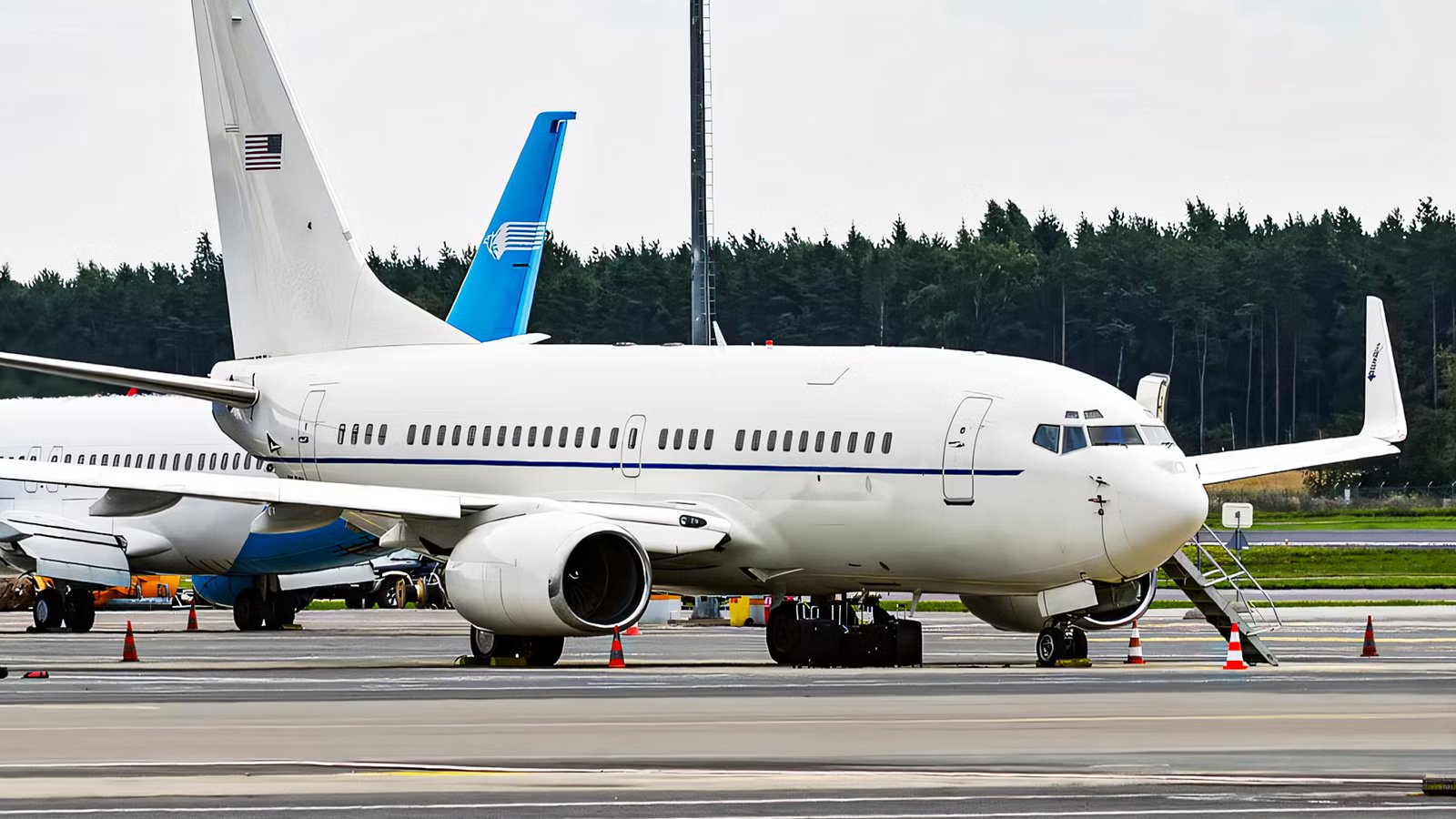
The US Department of Homeland Security (DHS) has traditionally chartered aircraft for various needs, with Immigration and Customs Enforcement (ICE) deportation flights being the most prominent. This arrangement worked well for DHS because it was cost-effective while providing a steady stream of income for operators. However, the Trump Administration has substantially increased deportations and decided the charters aren’t sufficient.
DHS has acquired 10 aircraft for over $460 million to perform ICE deportation flights, an operation dubbed ‘ICE Air’. The 10 aircraft were meant to help ICE increase deportations, yet they have barely flown since delivery. It’s since become a political issue in Congress, with the DHS coming under scrutiny for the high cost of the deportation fleet. In addition, the issues keeping the planes grounded won’t be easy to fix.
The DHS Deportation Aircraft Fleet

ICE has traditionally relied on chartered airliners to operate deportation flights, partnering with carriers like GlobalX, Eastern Air Express, and Omni Air International, and Avelo Airlines was also in the business until recently. The DHS does this because these operations don’t always run at the same frequency, so it can save costs by not paying for planes or crews on its own. Instead, DHS pays to charter aircraft from its partners only when it needs capacity.
However, DHS has said the currently available charter capacity is insufficient for the level of deportations ICE is targeting. As such, the DHS under Kristi Noem drafted a plan to acquire a dedicated fleet of aircraft for deportations, with the department aiming to double its deportation numbers. The DHS entered an agreement to purchase the planes in late 2025, and this plan is moving ahead under Markwayne Mullin, who took over as the Secretary of Homeland Security after Noem was fired in March 2026.
The DHS has selected 10 aircraft for ICE deportation flights, as well as for high-risk charters and emergency response missions. Seven of these are Boeing 737-700s that formerly flew for Avelo, which are configured with 149 seats, while one is a 737 MAX 8 BBJ. Meanwhile, the other two are Gulfstream business jets (one G650 and one G650ER). The 737s, most of which were delivered earlier in 2026, have spent most of their time parked at the DHS, while the DHS has been trying to lease the Gulfstreams to other government agencies.
The ICE Air Fleet’s Lack Of Use

The 737-700s have barely been used ever since they were first delivered to the DHS. The agency says five of the aircraft are currently undergoing maintenance, while the remaining two will begin deportation flights later in August. Meanwhile, the Gulfstreams have also not been utilized. While the 737s are undergoing maintenance, the DHS faces another major issue: it lacks pilots, flight attendants, and security. Without crews to operate flights, the planes remain parked.
Initially, it was believed that the DHS would operate the flights itself, but it’s now looking for private contractors to instead operate the flights. This is an unexpected decision, since the DHS is now spending money to hire staff from another company much like it did before, yet it’s now responsible for the 10 aircraft itself rather than hiring crews and aircraft. This is a significant financial burden, because this effectively means that the DHS has to pay capital costs and for maintenance on these birds.
ICE Air Fleet | |
|---|---|
N471US (Boeing 737 MAX 8 BBJ) | N476US (Boeing 737-700) |
N472US (Gulfstream G650) | N477US (Boeing 737-700) |
N473US (Gulfstream G650ER) | N478US (Boeing 737-700) |
N474US (Boeing 737-700) | N480US (Boeing 737-700) |
N475US (Boeing 737-700) | N701VL (Boeing 737-700) |
It’s currently targeted for the full ICE Air fleet to be operational by July 2027, which means that some of these aircraft will have been on the ground for over a year. Most likely, staffing is keeping them on the ground, especially since the contract to operate the flights hasn’t been awarded. While some of the planes may operate in a limited capacity for now, we’re looking at roughly a year of these aircraft mostly sitting on the ground, which is far from ideal.
The Costs & Operations Of The ICE Deportation Flights

ICE currently works with multiple commercial operators for deportations, which means the fleet size is always changing to meet demand. The roster of companies often changes, and these contracts can be fairly cost-effective. What’s more, it’s a flexible operation since the DHS is only paying for the aircraft that it needs in a given moment without assuming the liability of owning and maintaining a fleet of aircraft. On average, a standard charter costs $8,577 per hour according to ICE, which is actually low compared to market rates for large airliners.
Catch what other flight trackers miss
Emergency squawks, holds, NOTAMs — live signals, no signup.
Open tracker
Catch what other flight trackers miss
Emergency squawks, holds, NOTAMs — live signals, no signup.
Open tracker
The DHS paid $464 million to Daedalus Aviation to procure the planes. A 737-700’s fuel cost per hour typically ranges from $2,500 to $3,900, which is higher than the 737 MAX 8 or the G650. The DHS is contracting out the personnel required to operate the flights, and this can easily cost from $500 to $1,000 per hour depending on the nature of the contract. Government aircraft typically do not pay airport or overflight fees, so the operating costs don’t seem prohibitive at first.
However, beyond the massive sum the DHS paid for these 10 planes, it also has to pay to maintain the fleet, with major overhauls exceeding a million dollars for a 737. What’s more, while the DHS doesn’t need to pay for parking in most cases during normal operations, it does need to pay for storage, as it’s doing right now with many of its planes. In addition, while DHS aims to increase deportations, the aircraft become unnecessary if the agency decreases deportations, yet it’ll still have to pay for them.
The Main Controversies With ICE Air

ICE itself has become extremely politically divisive in recent years, and under the Trump Administration, the agency has been further increasing deportations. On its own, buying a fleet of planes specifically for deportations is polarizing, but then there’s the practicality.
“If you had asked me to write down a list of things ICE needed to do to increase the number of deportations, buying its own fleet of airplanes would absolutely not make the top ten,” John Sandweg, former acting Director of ICE under the Obama Administration, stated to The New York Times.
In addition, the actual way that the program has proceeded has drawn criticism. The speed of the transaction led some to accuse DHS of ‘rushing‘ into the purchase, while the department said the aircraft were urgently needed. These planes are now sitting on the ground because of a lack of qualified staff, leading the DHS to seek a third-party operator; the DHS placed responsibility for the decision squarely on former Secretary Noem, while Noem’s representatives said Secretary Mullin finalized it.
Meanwhile, Daedulus Aviation, which essentially acted as a broker, completed the purchase of the aircraft. The start-up was awarded the contract in a no-bid process, and the contract especially gained attention because of Dr. William Walters, the chair of Daedulus Aviation. He has reportedly donated money in the past to a political action committee tied to Kristi Noem, and during her time as the Secretary of Homeland Security, she also awarded other lucrative contracts to companies owned by Walters. This has led to accusations of favoritism.
ICE Air Deportation Operations

Homeland Security states that over 605,000 people were formally deported from the United States in 2025, and the Trump Administration has set a goal of deporting a million people per year. The agency is currently far behind its deportation goals for the year, but it is still increasing how many people are being removed from the country. Current air operations have conducted as many as 300 deportation flights per month, and the goal is for this to rise.
ICE-chartered airliners primarily transport people to their country of origin and also move people between ICE facilities in the US. ICE also uses chartered airliners to manage capacity acrossregions. Overall, these operations require flexible solutions, especially since their level and scale depend heavily on who’s in the White House.
The DHS has spent hundreds of millions of taxpayers’ dollars to buy planes that have mostly been sitting idle. While they will eventually be used, it’s questionable if this is a more cost-effective solution, and the DHS might not even use all of them to transport detained immigrants. Meanwhile, when the political climate changes again, the DHS will be left with a fleet of costly, depreciating aircraft that will be largely unnecessary, just as they arguably are today.