dailynewsnblog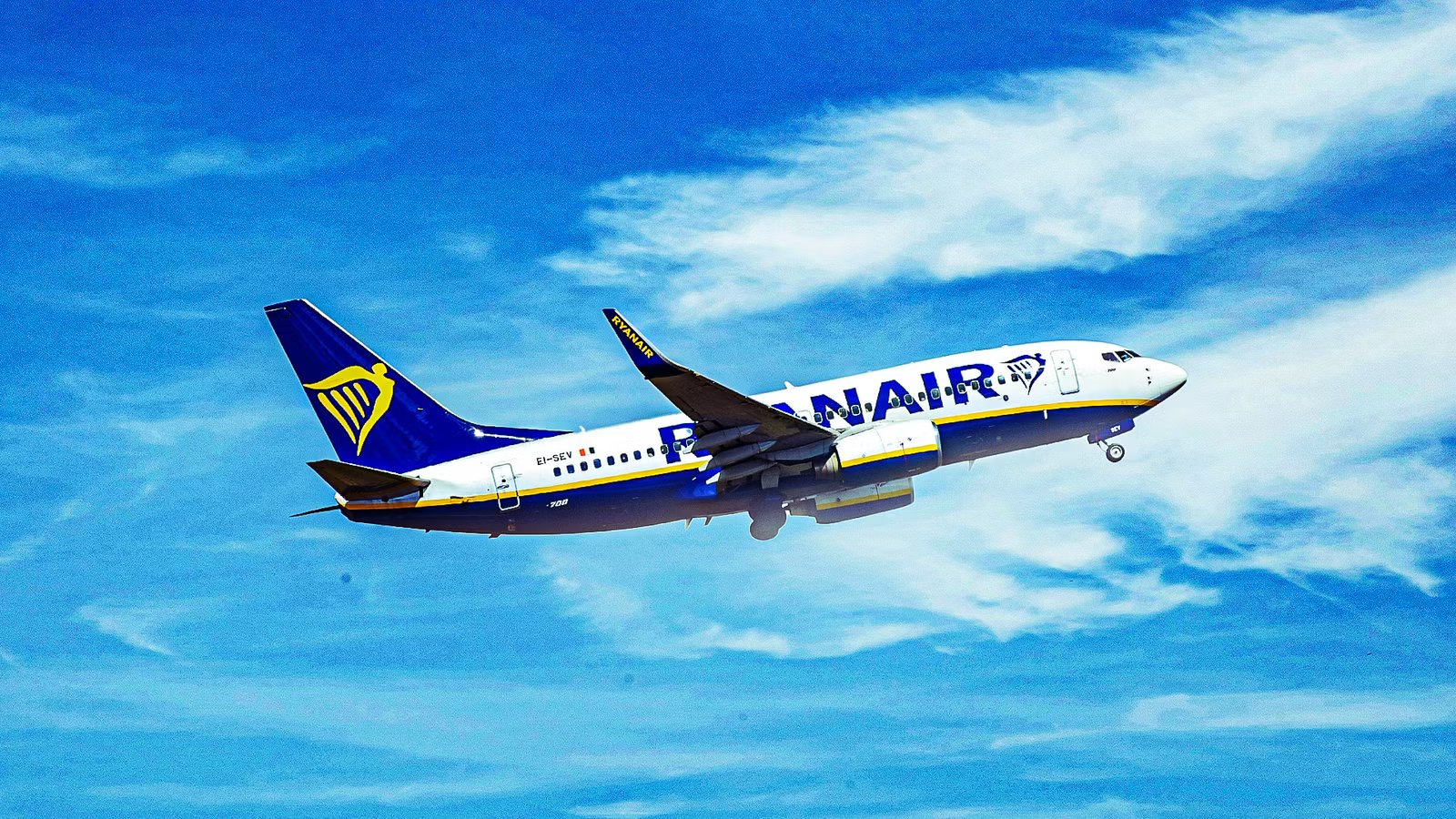
Ryanair has spent decades building one of the world’s most standardized airline fleets, but there is one aircraft that looks almost out of place among the group’s hundreds of Boeing 737s. Hidden inside a fleet of 651 aircraft as of August 1, 2026, is a single Boeing 737-700: SP-RUM, a 27-year-old aircraft operated by the Polish subsidiary Buzz.
Unlike Ryanair’s much larger 737-800s and 737 MAX 8-200s, the aircraft has only 148 seats and is nearly 19 feet (6 meters) shorter than the 737-800. More importantly, its resume has included pilot training, corporate charters, reserve duties, scheduled passenger flights, and holiday charter operations that you can also track with our Simple Flying tracker. So why does Europe’s largest low-cost airline still need such a conspicuous fleet outlier?
Ryanair’s 650-Aircraft Fleet Has One Very Different Boeing

The answer starts with SP-RUM itself. The aircraft is a Boeing 737-73S with construction number 29078, currently operated by Buzz under the Polish registration SP-RUM. Aircraft tracking data from planespotters.net lists it at 27 years old, while aviation photographs and historical records identify it as the former EI-SEV.
That makes the aircraft unusual before it even takes off. Ryanair Group’s March 2026 results showed an operating fleet of 621 Boeing 737s and 26 Airbus A320s. Including all subsidiaries’ aircraft, the total fleet has since grown beyond 650. The vast majority of its  Boeing fleet consists of the 737-800 and 737 MAX 8-200, with SP-RUM standing alone as the group’s only 737-700.
Its unique physical characteristics explain why passengers notice the difference. The 737-700 is 110 feet (33.6 meters) long and currently carries 148 passengers in a conventional 3-3 configuration, compared with 189 seats on Ryanair’s standard 737-800. It is therefore not simply an older version of the aircraft passengers normally associate with Ryanair; it is a smaller variant that provides considerably less capacity per flight.
That would normally make it a poor fit for Ryanair’s high-density model. But the airline has found other jobs for the aircraft, beginning with a role that had little to do with carrying ordinary passengers.
The 737-700 Was Originally Kept For Training And Special Missions

When Ryanair acquired the aircraft in 2015, it deliberately kept its unusual role. The aircraft was used for crew training and was also available for corporate and private charter work, giving Ryanair a flexible platform that could perform jobs for which a standard high-density 737 was less suitable. ch-aviation reported in 2023 that the aircraft was used for crew training, corporate charters and as a spare aircraft for the group’s 737-800 and 737-8-200 fleet.
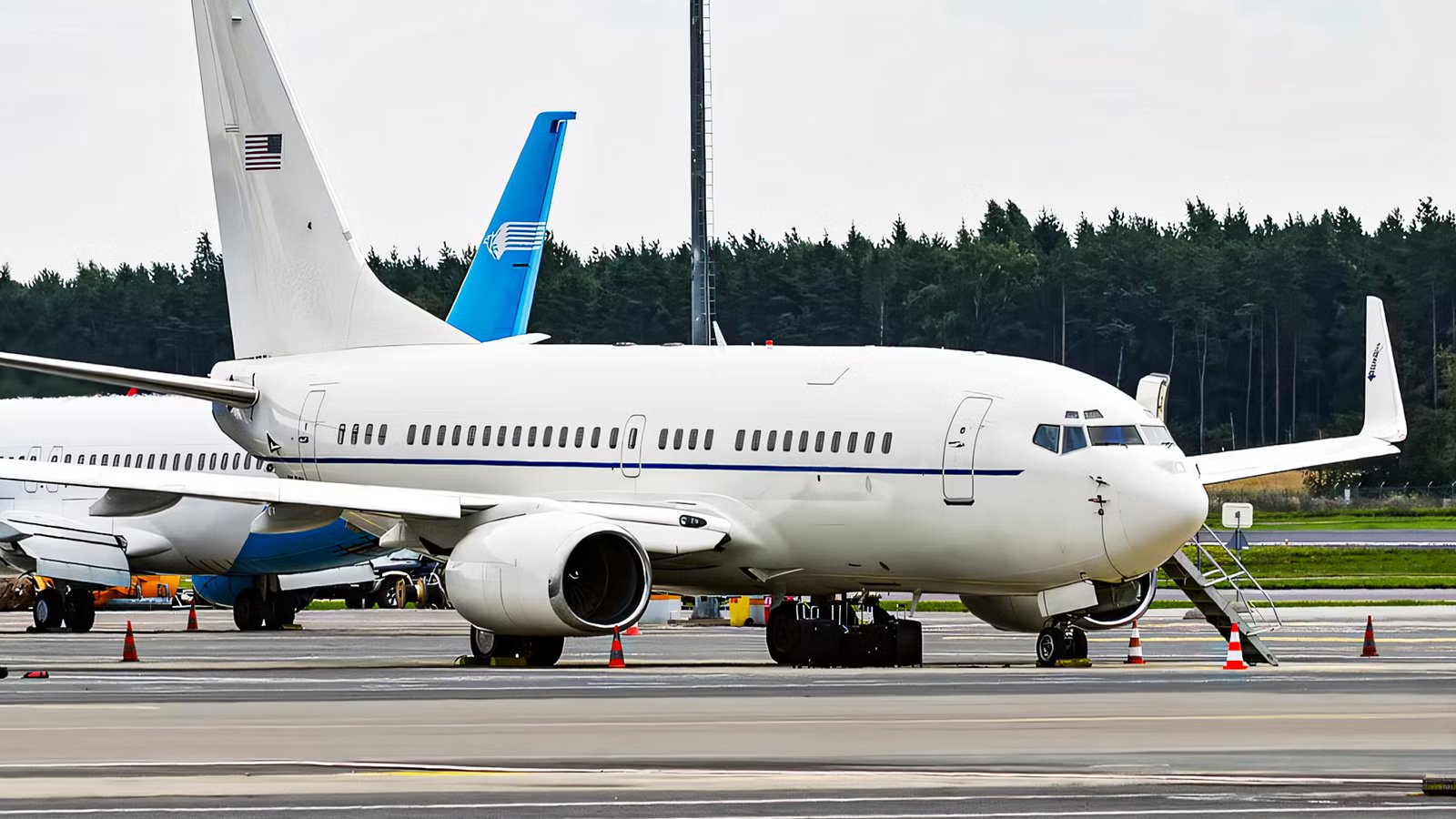
The most famous chapter of SP-RUM’s career came in 2016, when Ryanair turned it into something almost unrecognizable by the airline’s usual standards. The carrier launched a corporate charter service using the 737-700, configured with 60 reclining leather business-class seats in a 2-2 layout, a 48-inch seat pitch, and a range of about six hours. Ryanair marketed the aircraft for corporate groups, sports teams, and other private charter customers.
However, the experiment did not last. Contemporary accounts indicate that Ryanair removed the premium configuration and returned the aircraft to a 148-seat layout, allowing it to be used for more conventional operations while retaining its training and reserve functions. By 2023, the aircraft had therefore become a much more conventional passenger jet again, but it still retained one important advantage: it was already available inside the Ryanair Group.
The unusual Ryanair Boeing at a glance
Feature | SP-RUM |
Aircraft | Boeing 737-73S |
Construction number | 29078 |
First flight | 1999 |
Former registration | EI-SEV |
Current operator | Buzz |
Current registration | SP-RUM |
Passenger configuration | 148 seats |
Cabin layout | 3-3 |
Main roles | Passenger, charter and reserve operations |
Current operating base | Poland |
The aircraft’s next transformation would make its role much easier to understand. Instead of remaining an Irish-registered Ryanair oddity, it was transferred to the group’s Polish operation, where a smaller aircraft could find more specialized work.
Why Buzz Became The Perfect Home For Ryanair’s Outlier

In March 2023, Ryanair transferred its only 737-700 from its Irish AOC to Polish sister airline Buzz, changing the registration from EI-SEV to SP-RUM. The move also coincided with a much more conventional mission for the aircraft. Buzz planned to base SP-RUM at Katowice (KTW) and use it on charter flights for tour operators. Polish aviation publication Fly4free reported that the aircraft had been refurbished into the standard 148-seat layout and was expected to serve Mediterranean destinations from Katowice.
This was an important change because charter operations can use a smaller aircraft more efficiently than Ryanair’s dense scheduled network. A 148-seat jet may be inefficient if it replaces a 189-seat 737-800 on a heavily booked route, but it can be perfectly appropriate when a tour operator needs a smaller capacity allocation. Buzz’s position within the Ryanair Group lets it use the aircraft where demand and contracts justify it.
The distinction is visible in SP-RUM’s recent flying. Rather than being locked to one permanent route, it has moved around the European network, sometimes appearing on scheduled services and sometimes on leisure-oriented rotations. That flexibility is precisely what keeps the 27-year-old aircraft relevant.
From Polish Charters To European Scheduled Flights

SP-RUM’s actual movements show that its role is broader than the original charter plan. In summer 2024, the aircraft operated charter services from Katowice to destinations in Cyprus, Greece, Spain, and Turkey. It subsequently spent time parked at Glasgow Prestwick before returning to service in November 2024.
The aircraft has continued flying in 2025 and 2026. Flightradar24’s aircraft history shows SP-RUM operating services from Katowice to Budapest, Oslo, Kraków, Catania, London Stansted and Brussels Charleroi during January 2026, demonstrating that it can be inserted into ordinary Ryanair Group operations when required.
Catch what other trackers miss
Emergency squawks, holds, NOTAMs — live signals, no signup.
Open tracker
Catch what other trackers miss
Emergency squawks, holds, NOTAMs — live signals, no signup.
Open tracker
More recently, its summer flying has again highlighted the aircraft’s usefulness for leisure markets. Flight Tracking data shows SP-RUM currently operating mostly from Wrocław (WRO) to Mediterranean airports, such as Rhodes, Antalya, and Larnaca, while also providing flights linking WRO and Prague (PRG) with Burgas. The aircraft was therefore not simply preserved as a reserve or training airframe: it was actively moving passengers around some of Europe’s busiest summer holiday markets.
That flexibility helps explain why Ryanair has not simply disposed of the aircraft. But SP-RUM is still not the only major departure from the group’s otherwise familiar fleet philosophy.
Lauda Shows That Ryanair Can Live With Fleet Exceptions

The most obvious comparison is Lauda Europe, another Ryanair Group subsidiary that operates an aircraft type absent from the group’s overwhelmingly Boeing-focused fleet. According to Ryanair’s 2026 annual report, Lauda operates 26 leased Airbus A320s, each configured with 180 seats. The aircraft operate under the group’s wet-lease structure and had an average age of about 19 years as of March 31, 2026.
Planespotters’ August 2026 fleet data similarly lists 26 active Lauda Europe A320s, with an average age of 18.7 years. This means the Ryanair Group can maintain a substantial fleet of an otherwise non-standard aircraft type when there is an operational reason to do so.
The difference is that Lauda’s Airbus fleet is a strategic subfleet, whereas SP-RUM is a single survivor. The 26 A320s represent a significant operating platform; the 737-700 represents a single aircraft that can be moved around whenever its capacity, availability, or specialist role makes sense. Ryanair’s 2026 annual report even states that the leased aircraft in Lauda and the group’s other leased Boeing aircraft are used to provide flexibility during the aircraft delivery program.
That puts SP-RUM into perspective. Ryanair is not abandoning standardization. Instead, it has demonstrated that standardization is a means to an economic end. When one aircraft can continue earning money without requiring an entirely separate fleet infrastructure, keeping it may be more rational than removing it simply because it is different. Another reason to keep this outlier is that both the Boeing 737-700 and 737-800 require the same type rating (Boeing 737 NG type rating)
The 737-700’s Future Is Really A Question Of Utility

In the future, Ryanair’s growing modern fleet will make SP-RUM difficult to justify as a conventional fleet aircraft. The group expects to have around 800 narrowbody aircraft as its Boeing 737 MAX 10 deliveries progress, alongside the retirement of older jets. That will further widen the gap between the 1999-built 737-700 and the newer, larger and more fuel-efficient aircraft becoming the backbone of the group.
But SP-RUM’s value has never depended on fitting neatly into that backbone. Its smaller 148-seat capacity can be useful for charter operations or flights where a larger 189- or 197-seat aircraft would provide more capacity than required, while its long history within Ryanair means the group already knows how to deploy and maintain it. Recent operations from Poland, including leisure flights to Mediterranean destinations, show that Buzz can still find practical uses for the aircraft rather than treating it solely as a historical curiosity.
For passengers, that makes SP-RUM one of the more intriguing surprises in the Ryanair Group fleet. A booking with Buzz can occasionally result in a 737-700 rather than the 737-800 or 737 MAX 8-200 most travelers would expect, bringing a shorter fuselage and a noticeably smaller cabin into an otherwise highly standardized operation. For aviation fans and planespotters, its continued presence is even more remarkable: after more than 27 years, the aircraft remains an active part of one of Europe’s largest airline groups.
SP-RUM’s future will depend less on whether Buzz can continue finding work that suits its unusual capacity. When Ryanair’s MAX 10 fleet grows, and older aircraft leave the group, the case for retaining a single 737-700 will become harder to make, but not necessarily impossible. For now, its survival reminds us that even Europe’s most standardized low-cost airline can make room for one aircraft that breaks the rules.