dailynewsnblog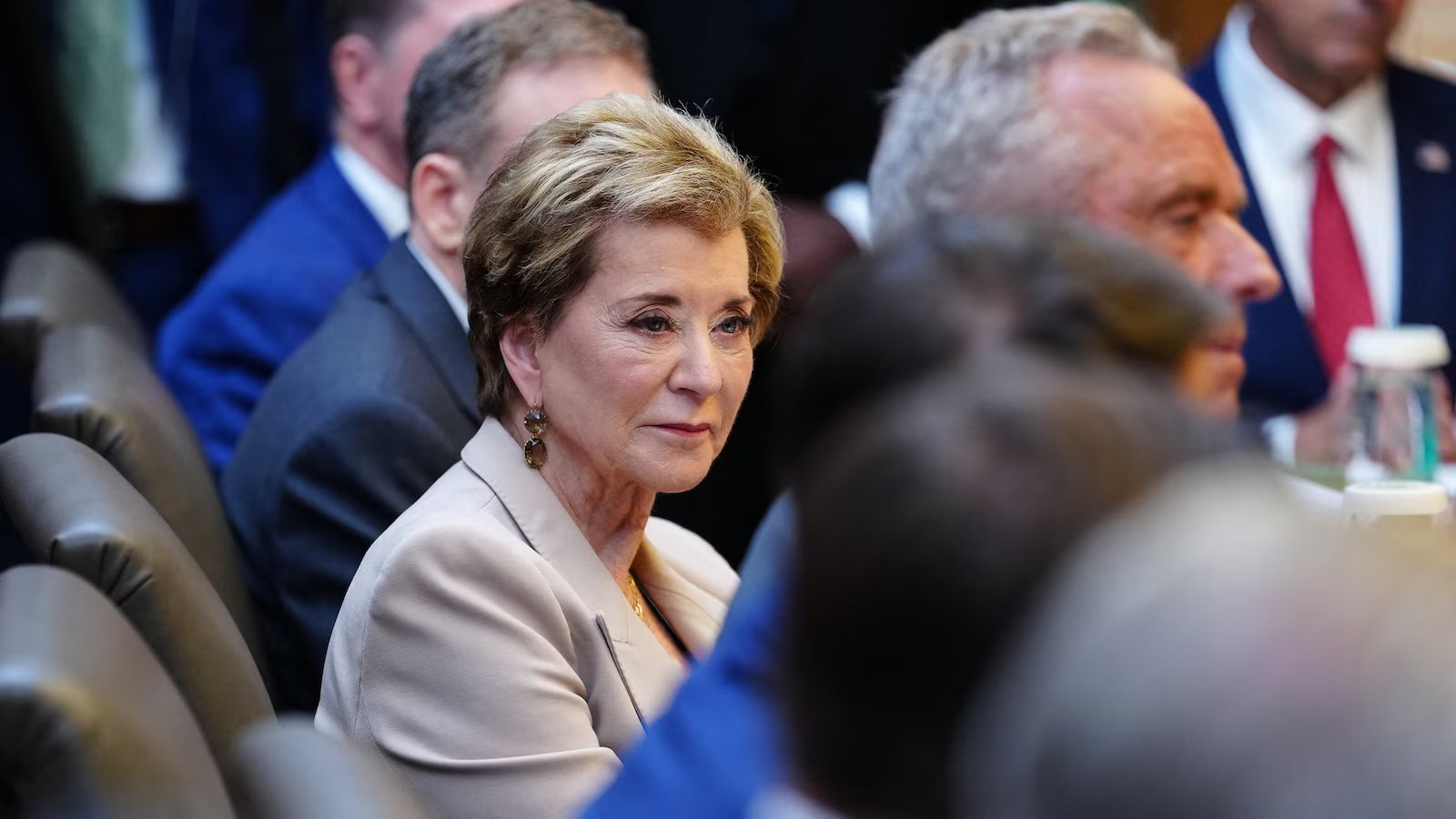
With hundreds of thousands of students returning to classrooms this week, President Donald Trump and Department of Education Secretary Linda McMahon hosted a “Back to School” event at the White House on Monday.
But the “wins” the administration is celebrating include highlighting their efforts to shut the department down as well as progress on bolstering school choice.
The event in the Rose Garden on Monday afternoon was headlined by Trump, McMahon and supporters of these efforts. The event touted the president’s education reforms from the Working Families Tax Cuts Act and McMahon’s continued actions to return Department of Education responsibilities back to the states.

Secretary of Education Linda McMahon attends a Cabinet meeting hosted by President Donald Trump at Camp David in Maryland, July 31, 2026.
Aaron Schwartz/AFP via Getty Images
McMahon discussed the president’s commitment to putting parents “back in the driver’s seats where they rightfully belong” and “defending parental rights like never before.”
“At his direction, we are working hand in hand with the Department of Justice to ensure no school district ever has more power over a child than their own parents,” McMahon noted.
Parental rights advocate Tiffany Justice praised the administration for prioritizing choice in education.
“President Trump has always been crystal clear: every parent has the fundamental right to direct their children’s education,” Justice told ABC News in a statement. “Under his leadership, and with Secretary Linda McMahon at the helm, this administration is putting parents firmly in the driver’s seat — expanding real school choice so families, not bureaucrats, decide what’s best for their kids.”
Monday is the first day back for public school students in Washington, D.C., and other major school systems.
Trump touted his policies around education, especially tax credits and more access for school choice. The administration has prioritized school choice — a growing practice that allows public education funds to follow students to the schools or learning environments families choose — and urged families to leave what they contend are failing public schools amid historic learning loss and lagging test scores for students.
School choice has become a buzzword in education circles over the years and can simply mean putting parents in charge of their child’s education. However, some education advocates contend that it helps to gut public school funding and funnel resources to private schools.
Removing federal bureaucracy and Washington oversight from education was a campaign pledge for Trump that McMahon has called her “final mission.” The president directed McMahon to put herself out of a job by dissolving the department using all necessary steps permitted by law.
Since her confirmation, McMahon has partnered with several agencies that can co-manage the department’s responsibilities and severely gutted the department’s workforce by slicing its staff nearly in half.
For more than a year, the Education Department has urged states’ governors to opt-in to the school choice model within the president’s tax law. The tax law provides a charitable donation incentive for individuals and businesses to fund scholarship awards for students to cover expenses related to K-12 public and private education starting in 2027.
The agency has also handed out more than two dozen unrestricted waivers to states, gifting them millions of federal dollars and dropping certain federal requirements so that fewer strings are attached to the aid they receive from the government.
While the White House argues that most American students and families will be eligible to benefit from its school choice program and will benefit from lower costs, critics fear that the provision within the president’s megabill could defund or harm the traditional public school system.

Students walk past Widener Library at Harvard University in Cambridge, Mass., Nove. 19, 2025.
Reba Saldanha/Reuters, FILE
As the agency is reoriented to restore power to local communities and families, education experts stress that education is already a local-level issue in the U.S. On average, state and local education agencies provide about 90% of public school funding across the country.
Meanwhile, conservatives argue that the tax law provides more options for families — not less. Education Policy Analyst Colleen Hroncich previously told ABC News there has been an “uptick” in frustrated families who have chosen alternatives to traditional public education, such as public charter, private, home and microschooling.
Hroncich, of the libertarian think-tank the Cato Institute’s Center for Educational Freedom, noted that there was a rise in popularity for these options during the COVID-19 pandemic because of school closures.
At the event, Trump also touted some of the policies that he put into place to enact changes in curriculum and issues related to gender in schools.
“So immediately upon taking office, I signed an executive order to ban critical race theory, and to ban transgender ideology from public schools. That was a big deal. We banned men from playing in women’s sports. That was so easy to do,” Trump said.
He also highlighted First Lady Melania Trump’s Fostering the Future initiative, thanking his wife for “helping transform the lives of children and young people aging out of the foster care system.”