dailynewsnblog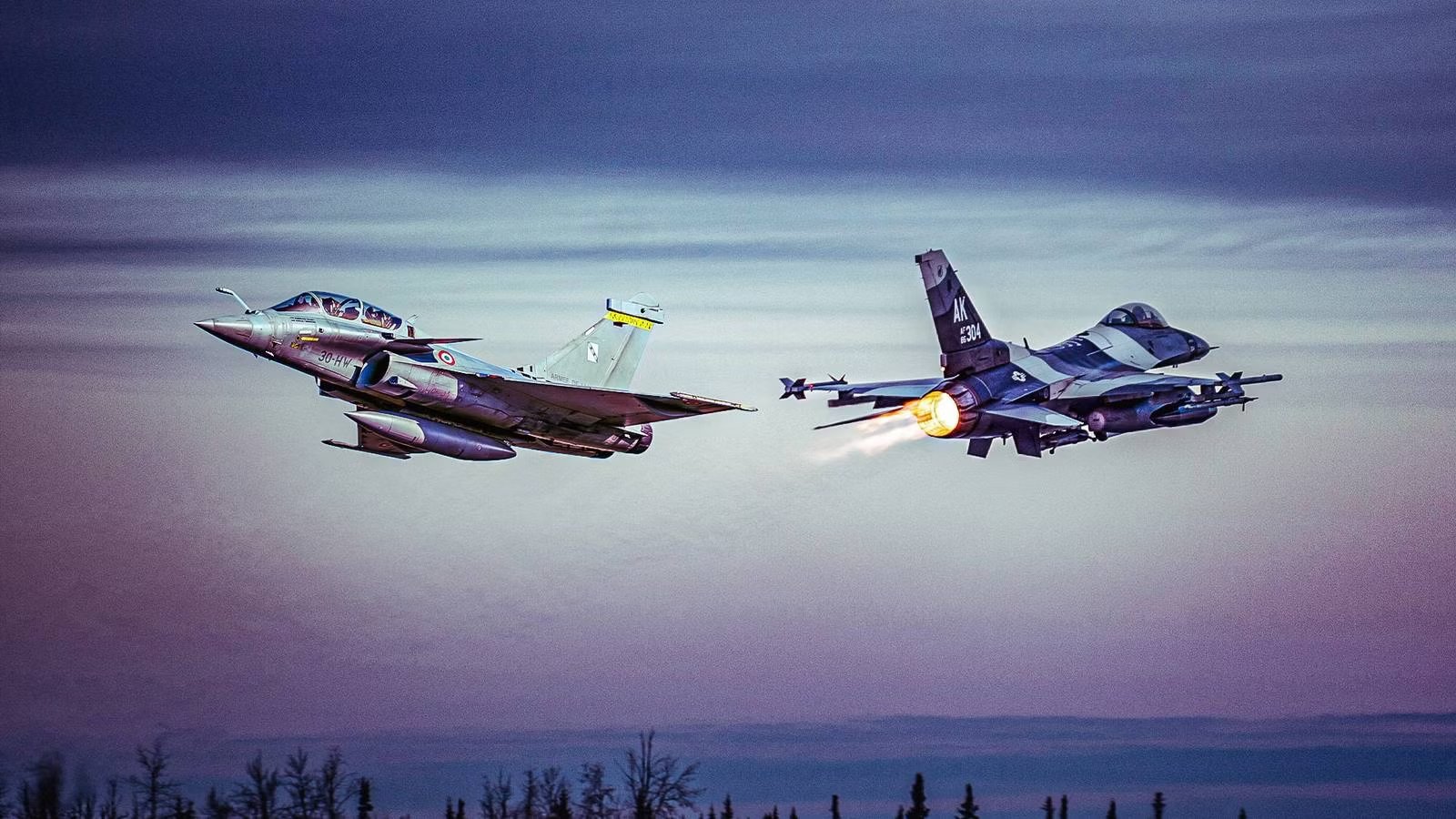
Five fighter jet designs are still rolling off assembly lines today, years after their first prototypes ever left the ground. This list ranks those five production lines by the exact size of that gap, from a 37-year-old Russian-designed airframe that only go back into production in India after a five-year stoppage, up to an American design now flying after 54 years since its maiden flight and still being built new in St.Louis. Along the way, it names the specific factory, contract, and delivery milestone behind each one, and flags the one line on this list that isn’t actually continuous.
That last distinction matters more than it sounds. Not every jet here has been in constant production since its first flight; one line went completely dark for years before restarting under a new contract, which is a very different story than a factory that never stopped. The numbers below come from the manufacturers themselves, Lockheed Martin, Dassault Aviation, Saab, and Hindustan Aeronautics, plus Boeing’s own production disclosures for the one American jet old enough to beat them all. By reaching #1, you’ll know which fighter has now been in production longer than any other Western jet still on the assembly line.
Su-30 Family: A 37-Year-Old Design Getting A Restarted Production Line
HAL’s Nashik line went dark for five years before restarting for 12 more jets

The Sukhoi Su-30’s lineage traces to a prototype, then designated Su-27PU, that first flew on December 30, 1989. By the time the definitive Su-30 configuration entered Russian service in 1992, Hindustan Aeronautics had already begun preparing to build the type under license in India, where the aircraft would evolve into the uniquely Indian Su-30MKI. Rather than a standard Russian Flanker, the MKI combined the Su-30’s airframe with canards, thrust-vectoring AL-31FP engines, and a multinational avionics suite blending Russian, Indian, Israeli, and French technology. That Nashik line ran for the better part of 30 years, eventually turning out 222 Su-30MKIs, before finally falling silent in 2020-2021 after the last jet on contract had been delivered.
Thirty-seven years after that first flight, the same facility is starting up again. According to The Economic Times, HAL is reviving Su-30MKI production at Nashik under a roughly INR 11,000 crore ($1.3 billion) contract signed in December 2024, covering 12 new jets to replace airframes lost in accidents over the years. The first is expected to roll out in 2027–2028, with all 12 delivered by 2029, and this time more than 50% of each aircraft will be built from Indian-made components, as documented by Defence.in, a far higher domestic share than the original run ever carried.
That 37-year figure is misleading if read as continuous production, and it’s exactly why this entry sits last on the list. For roughly five of those years, Nashik’s line wasn’t running at all; it only exists again today because of a fresh contract written to replace crash losses, not to expand the fleet. It’s a real production line coming back to life, but it’s a restart, not an unbroken run, and that distinction is what separates it from every other jet below.
Saab Gripen: 38 Years From A Prototype To A Second Country’s Assembly Line
It is now being built in Sweden and Brazil simultaneously

The first Saab JAS 39 Gripen prototype, serial number 39-1, made its maiden flight on December 9, 1988, with test pilot Stig Holmström at the controls, as documented by Afterburner.com.pl. Less than two months later, that same prototype crashed on landing after a pilot-induced oscillation traced to its fly-by-wire software, an inauspicious start for a jet that wouldn’t actually enter Swedish service until 1996, nearly eight years later.
38 years after that shaky debut, the design is being built on two continents at once. On March 25, 2026, Saab, Embrarer, and the Brazilian Air Force unveiled the first Gripen E ever produced outside Sweden, assembled at Embraer’s Gavião Peixoto plant. As documented by migflug.com, the aircraft is part of Brazil’s 36-jet order, 28 single-seat F-39E models and eight twin-seat F-39F models, with the full program expected to run out toward 2032, while the original Linköping line that built prototype 39-1 keeps turning out jets for Sweden and other export customers in parallel.
That overlap is the point of contrast with the Su-30: Sweden’s line never went dark between 1988 and now, and Brazil’s plant is a genuine second production line built through a technology-transfer deal, not a revival of a stopped one. That makes Gripen the first jet on this list where a “decades-old design, still in production” comes without an asterisk.
Dassault Rafale: 39 Years From A Demonstrator To A 233-Jet Backlog
The 300th Rafale rolled out in 2025, with deliveries still accelerating

The Dassault Rafale’s timeline starts with the Rafale A technology demonstrator, which first flew in 1986, a full 15 years before the production-standard jet entered French Navy service in 2004, another two before French Air Force service in 2006, and a full 29 years before Dassault delivered its first export jet to Egypt in 2015.
39 years after that first flight, the pace has only picked up. On October 7, 2025, Dassault Aviation announced the delivery of the 300th Rafale, a jet built under a program that now involves roughly 400 French companies. The company’s own year-end figures show 533 total firm orders from France and eight export customers, with 233 aircraft still to be delivered, and production rates are planned to climb to four aircraft a month in the years ahead, faster than at any point since that 1986 demonstrator flight.
Measured against that acceleration, the demonstrator that flew in 1986 looks less like ancient history than the opening chapter of a program that’s still gaining speed. Simple Flying has tracked Dassault’s order and delivery totals year over year, and by some counts the Rafale was already outproducing Russia’s entire Su-27 family, Su-30 included, even before this latest 300-jet milestone.
F-16 Fighting Falcon: 51 Years, And The Line Just Moved To A Third State
The world’s only active F-16 line just finished two new NATO fleets

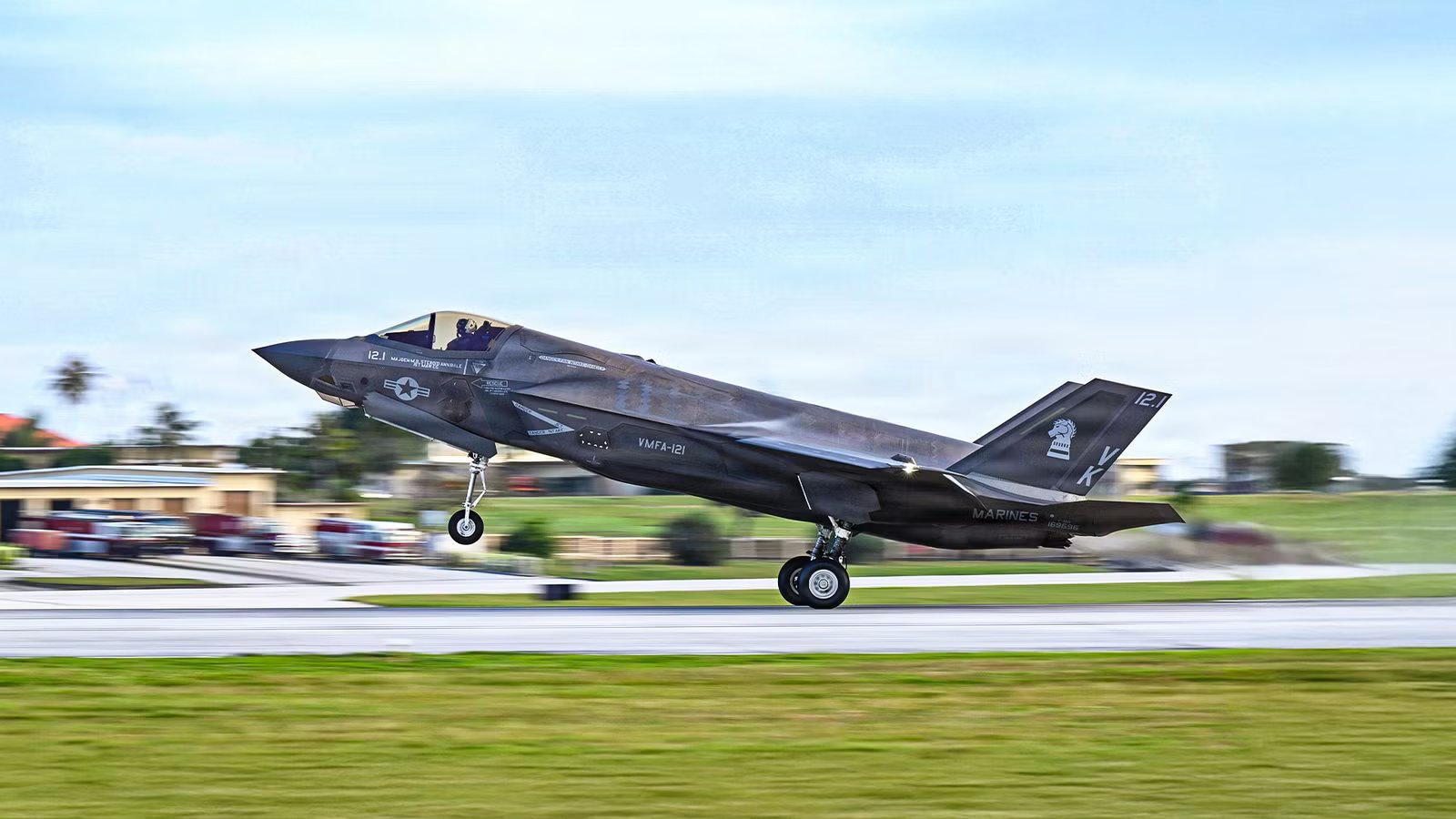
The prototype YF-16 rolled out at Fort Worth, Texas, on December 13, 1973, and made its first flight on January 20, 1974, according to TWZ. That flight marked the start of a 44-year production run at that single Texas plant, which eventually produced roughly 3,620 jets, first under General Dynamics and later under Lockheed Martin, before the last Iraqi Air Force F-16 rolled out in November 2017, making room for F-35 production on the same floor.
51 years after that maiden flight, the F-16 line has just moved. Lockheed opened a new plant in Greenville, South Carolina, in 2021, and on December 15, 2025, Lockheed Martin announced it had completed all F-16 Block 70 aircraft for the initial fleets of Bulgaria and Slovakia, calling Greenville “the world’s only active F-16 production line.” The facility now supports over 1,500 jobs and a supply chain of more than 530 suppliers across 12 countries, building on the momentum of the first Block 70 jet, which rolled out of Greenville in late 2022, as documented by Air & Space Forces Magazine, with at least 128 more already on order.
A jet whose prototype flew during the Nixon administration is still landing brand-new NATO contracts, which says as much as about the F-16’s continued relevance as the production numbers do. Simple Flying’s count of every fighter type in the Air Force’s active inventory shows just how large the F-16’s global footprint remains even 50 years later, which is part of why Lockheed Martin keeps finding customers willing to fund a factory for a 51-year-old design.
F-15 Eagle: 54 Years From The YF-15A To A Brand-New Line In St.Louis
The longest gap on this list, and it’s still growing

The McDonnell Douglas YF-15A first flew on July 27, 1972, and the type entered US Air Force service in 1976. More than 1,500 F-15s remain in service worldwide today, with the record of no airframes lost in aerial combat that kept the design in demand long after most of its 1970s contemporaries had retired.
That continued demand is exactly why the line never had to restart the way the Su-30’s did. 48 years after the YF-15 maiden flight, the newest variant, the Boeing F-15EX Eagle II, took its own maiden flight on February 2, 2021, as documented by skiesmag.com. The Eagle II was built on the same production hot line that Saudi and Qatari export orders had kept alive in the years in between. By March 2026, airdatanews.com reported  Boeing having 90 F-15EX jets in various stages of production at its St. Louis facility, working toward an assembly rate of two aircraft a month by late 2026, with the Air Force’s order book standing at 98 jets and room to grow toward a program of record of 144.
That 54-year gap, the longest of any jet on this list, happened for a precise reason. The Air Force chose the F-15EX specifically because it could ride an existing export line rather than fund a new one, the exact same logic that reopened Greenville for the F-16 and kept Nashik’s contract alive for the Su-30. For a broader look at how the type still measures up against its rivals today, Simple Flying’s comparison of the Eurofighter Typhoon against the F-15, F-16, and F/A-18 is a useful next stop.
Catch what other trackers miss
Emergency squawks, holds, NOTAMs — live signals, no signup.
Open tracker
Catch what other trackers miss
Emergency squawks, holds, NOTAMs — live signals, no signup.
Open tracker