dailynewsnblog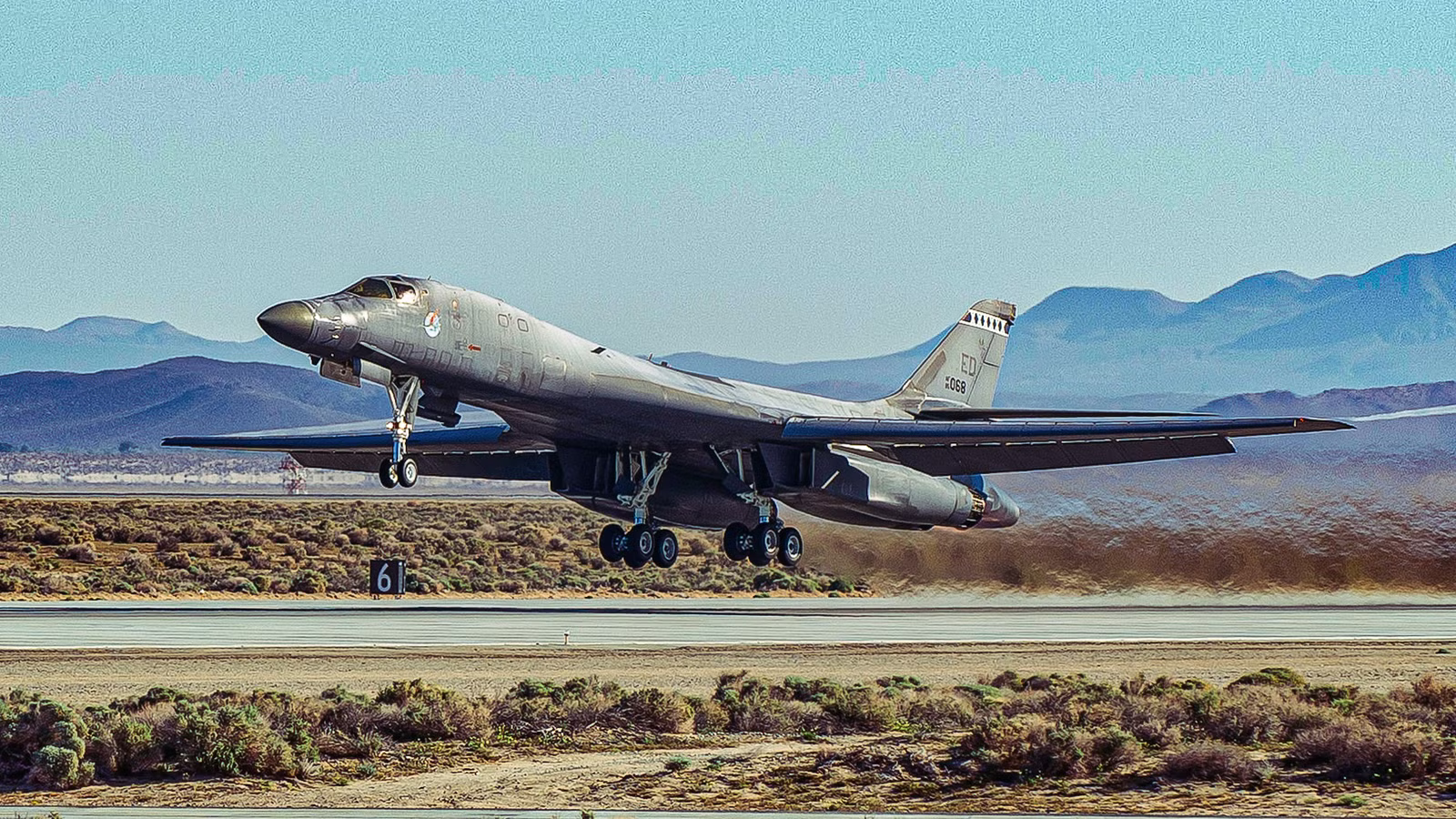
The US Air Force (USAF) has been aggressively pursuing its ‘Divest to Invest’ fleet modernization strategy for years. One of the big-ticket platforms that was slated to be sunset by 2030 was the Rockwell B-1B Lancer supersonic bomber. This aircraft was originally built to be a part of the nuclear deterrent Triad forces but evolved after the fall of the Soviet Union to become one of the best close air support aircraft in the inventory. Now, with recent battle losses and delayed procurement of next-gen planes, the service has decided to retain it much longer.
A series of upgrades valued at almost $350 million aims to have the fleet of B-1s retrofitted over the next four to five years. This program is essentially a stopgap due to the combined high expenditure of standoff cruise missiles in Operation Epic Fury, destroyed jets, and delays to the  Boeing B-52 Stratofortress upgrade.
The introduction of Northrop Grumman’s new sixth-generation B-21 Raider has been proceeding relatively on schedule but cannot fully assume the capability gap that will be left after the B-1 and the NG B-2 Spirit are retired for some years. The USAF is already committed to increasing production of the B-21 by 25% and is discussing further expansions while also allocating $1.7 billion to modernizing the B-2 fleet. Still, the B-1 is a tried and true asset that provides real combat value that is needed now.
The Cost Of Epic Fury

The original Air Force divestment plan accounted for peacetime attrition and not combat losses. Since 42 aircraft were destroyed in OEF and the strategic missile stockpile was critically depleted, measures are being taken by the USAF and other service branches to fill capability gaps. There will be 44 ‘Bones,’ as the B-1 is known, upgraded under the recently approved service life extension plan for the fleet. That will allow them to continue functioning as frontline bombers until at least 2037 and potentially on to 2040.
During OEF, the Lancers proved their combat value once again, which solidified the decision to retain the 1980s vintage bombers. All three platforms of the crewed bomber fleet flew combat missions in OEF. B-2s struck hardened command nodes and, later, nuclear facilities with ordnance like the GBU-57 Massive Ordnance Penetrator. The B-1s and B-52s fired AGM-158B JASSM-ER cruise missiles after launching from Diego Garcia or other Gulf-region bases.
The War Zone’s independent tracking found the United States had flown more than 13,000 sorties and lost 39 aircraft outright, with 10 more damaged after the initial 39-day air campaign, which has since risen to 42. Iran’s retaliatory missile and drone salvos against US bases across the Gulf forced American and allied Patriot and THAAD batteries into sustained, high-volume engagements from the campaign’s first days.
Current estimates from sources like the Center for Strategic and International Studies estimate that between 60% and 50% of the counter-ballistic missile stockpile was consumed during this phase. Although that does not directly equate to the need for more bombers, it does have a dramatic impact on the planned ‘Pivot to the Pacific’ in terms of total force mission readiness.
Pivot To The Pacific

The depletion of the counter-ballistic missile stockpile is requiring a massive ramp-up in low capacity assembly lines and the reallocation of resources that would otherwise be used to advance other programs. That also has an impact on standoff munitions like the Joint Air to Surface Standoff Missile or Long-range Anti-ship Missiles that are crucial for aircraft operating in the Pacific Theater. At the same time, the Lockheed Martin F-35 Lightning II fleet is experiencing a massive software upgrade bottleneck.
The B-1 solves these problems thanks to the overlapping mission capability it provides by virtue of being a single high-payload platform with very long range. The B-1 Lancer has the largest payload capacity of any bomber in the Air Force, and while it was made to fly supersonic, it also has a very long range when flying in more conservative configurations. Its swing-wing design allows the pilots to choose between maximum power and an aggressive aerodynamic profile, or fuel efficiency and push the wings forward to save gas.
OEF expended tens of thousands of gravity-guided precision munitions, highlighting severe vulnerabilities in the U.S. long-range missile magazine. Because the Pacific presents a highly contested Anti-Access/Area Denial environment against near-peer adversaries, gravity bombs are unviable. A flight of four B-1Bs can deliver nearly 100 stealthy, autonomous anti-ship missiles from over 200 miles (322 km) away. That critically compresses adversary reaction times and directly offsets the tactical constraints of smaller fighter jets.
The B-1 By The Numbers

The Indo-Pacific theater is characterized by immense geographic expanses. The B-1B can take off from secure, long-range staging grounds like Guam, Hawaii, or the continental US. It can transit thousands of miles unrefueled and strike targets while flying completely outside the range of adversary theater ballistic missiles. The B-1 Lancer carries 75,000 lb (34,019 kg) of munitions, which is almost 1.5 times that of the B-2 Spirit and about 10% more than the B-52.
Thanks to a huge bomb bay and its external pylons that are currently being modernized for integration with new weapons, the B-1 can also carry virtually any weapon in the Western military arsenal. At the same time, it can cruise at Mach 1.2, which is hundreds of miles per hour faster than either of the other two bombers. Even when the F-35 fleet achieves full capability, which could be as long as 2031, it will not be a substitute for the same capabilities offered by the B-1.
The F-35 faces severe combat radius limitations, requiring a massive, highly vulnerable fleet of aerial refueling tankers to strike targets. That will require the Air Force to wait for full-strength squadrons of the B-21 Raider to achieve readiness. In the meantime, the Lancer offers an extremely flexible platform with performance and capabilities that match the needs of the US military and its allies right now.
Payload: Size Matters

In a Pacific conflict, overwhelming enemy naval air defenses requires firing dense missile salvos simultaneously. Transitioning to the vast, water-dominated Indo-Pacific theater requires the B-1B to morph from an overland “close air support truck” into a rapid, long-range maritime standoff platform. Fortunately, a single B-1B can carry 24 AGM-158C LRASM or AGM-158 JASSM-ER inside its internal bays.
The steadily growing fleet of F-35 stealth fighters is meant to be the tip of the spear in the Pacific, but integration of advanced weapons and general mission readiness has been very low due to technological issues. As a result, these exquisite Joint Strike Fighters are not the most reliable standoff strike platform. Similarly, the planned upgrades to bring the B-52 fleet up to the new ‘J’ standard are speculated to be slipping by as much as 3 years, which would leave a direct capability gap in the strategic bomber fleet.
The B-52 fleet is starting a massive, multi-year conversion to swap out vintage engines for modern commercial turbofans and install advanced active electronically scanned array radars. This overhaul temporarily takes a substantial percentage of the B-52 fleet offline. Because the B-2 Spirit fleet is small and tailored purely for stealth nuclear/conventional penetration, the Air Force relies on the conventional B-1B to shoulder the active daily deterrence and surge capacity.
Stopgap For The Strike Fleet

The B-1 acts as an effective operational stopgap for the B-52 while the fleet undergoes its complex B-52J conversion because it delivers high-volume combat mass and speed today. Until the new B-21 Raiders arrive in sufficient numbers to take over primary strike roles, discarding or over-relying on the aging B-52 fleet while mid-upgrade would leave a severe deficit. The B-1 absorbs the operational tempo, keeping the US strike fleet healthy.
At seven to ten deliveries a year, reaching even the 100-aircraft minimum B-21 fleet size will extend into the mid-2030s. The B-1 modernization centers on the Load Adaptable Modular Pylon, a Boeing-designed external hardpoint system that reactivates six weapons stations on the Lancer’s fuselage that had sat dormant since the Cold War. Restoring those stations lets a B-1B carry up to 12 additional munitions externally on top of the roughly 24 it already carries internally.
LAM raises the B-1’s total payload capacity from an estimated 75,000 lb (34,019 kg) to as much as 113,000 lb (51,255 kg). The upgrade also positions the Lancer, the only aircraft in the US bomber fleet capable of breaking the sound barrier, as a near-term hypersonic weapons carrier. This will also make it an effective pilot to test weapons data that can be applied to the B-21 fleet later on.
The extension buys the Air Force flexibility, not certainty. As the B-2 fleet is being extended, the Air Force Global Strike Command has stopped naming a hard retirement date altogether. Top brass have told reporters only that the Spirit will remain in service “as long as it’s needed.” The modernization dollars now being spent on 44 Lancers and 19 Spirits are buying a bridge to the future to tie the fleet with the B-21 and the B-52J, but just how far that bridge will span is as yet unclear.