dailynewsnblog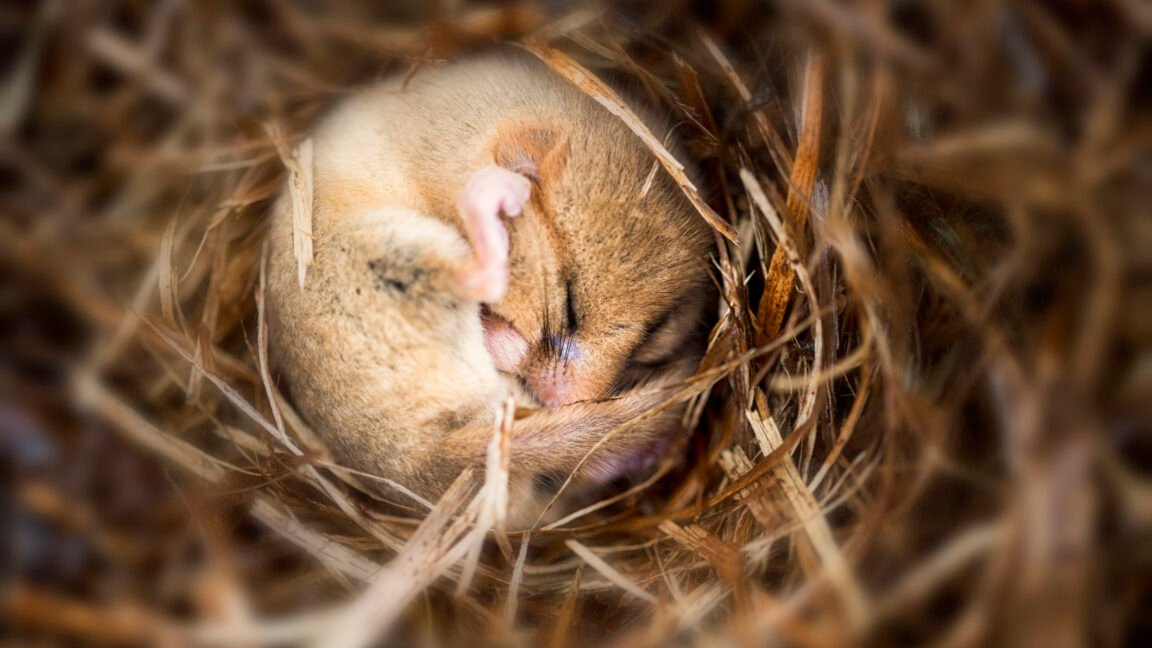
The most important thing about QIH, though, is that it can be switched on and off at will. In Tanaka’s experiments the mice spent 48 hours in the hibernation-like state and then woke up.
For their synapses, these 48 hours worked like Thanos’ snap.
Synaptic purge
To find out how many synapses are lost during QIH, Tanaka’s team implanted tetrodes, bundles of fine electrodes, into the hippocampus of freely moving mice. These let them record individual neurons firing. They found that activity dropped by about 70 percent once hibernation set in.
The brain tissues of some animals were imaged with a technique called serial block-face scanning electron microscopy before hibernation, during it, and days after returning to consciousness. It turned out the hibernation eradicated more than half of the synapses—in principle, this should erase most of the memories. “If you accept that memory traces reside in the efficacy of individual synapses, if you lose more than half of the synaptic connections, of course what you’d expect is impairment of the memory afterwards,” Tanaka says. But the team found no such impairment.
Before hibernation, the mice had been trained on two standard memory tasks. One was contextual fear conditioning, in which an animal learns to associate a particular box with a mild electric shock. The second was a plus-maze task in which the mouse learns to navigate its way to a reward. Performance in both tasks depends on memories stored in the hippocampus, which the team confirmed by creating a lesion in the region after training, which caused the memories to disappear.
When other mice, ones that were put into QIH, were aroused, though, they performed on these tasks just as well as the mice that did not hibernate. “What we found in these two different behavioral paradigms is the memory was completely intact,” Tanaka claims.
The survival of these memories through the purge of the synapses was also confirmed by brain activity recordings. Place cells, hippocampal neurons that fire when an animal occupies a particular spot, still fired in the same locations after arousal. And a decoder that read out the population activity could reconstruct where the mouse was just as accurately as before.