dailynewsnblog
So nearly half a decade after the onset of the Ukraine War, the Western launch market has not changed much. Ariane 6 has made a difference for Europe, but for the rest of the commercial launch industry, a holding pattern remains as Falcon 9 backstops all.
What about the next generation?
Vulcan and New Glenn are heavy lift rockets, but beyond them, a new generation of US medium-lift vehicles is in development.
The smallest is Stoke Space’s Nova rocket, which is intended to be fully reusable with a capacity of up to 7 tons to low-Earth orbit. Stoke’s chief executive, Andy Lapsa, has been careful not to release a target date publicly. However, during a recent visit to the company’s factory in Kent, Washington, company officials told Ars that they hope to deliver the flight version of the first stage to the launch site in Florida for testing this fall. A launch seems possible during the first half of 2027 if things go well.
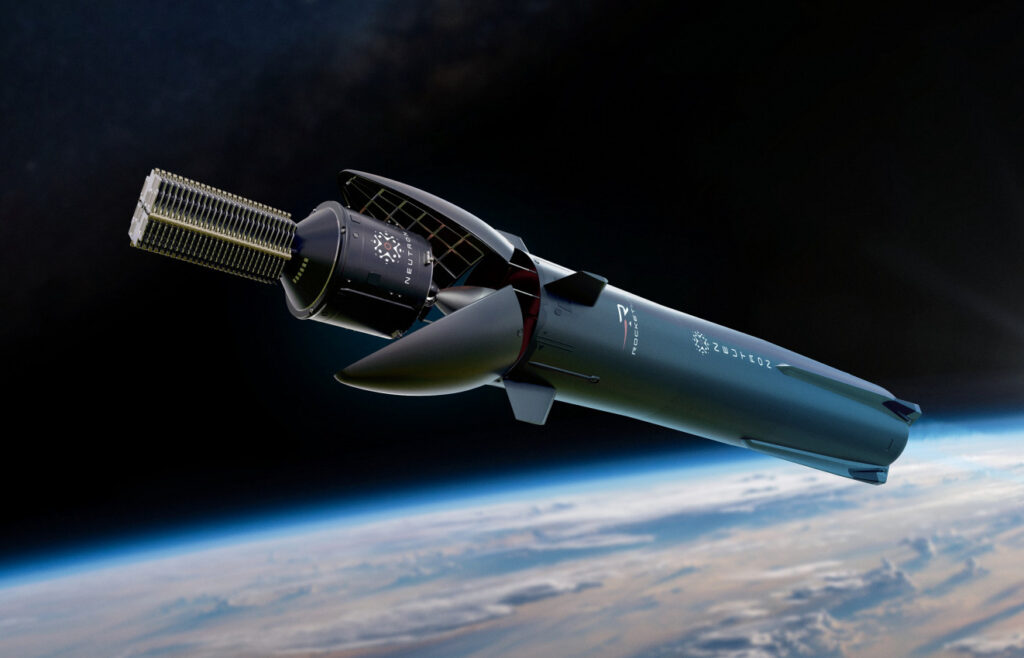
Rocket Lab’s Neutron vehicle can loft 13 metric tons to low-Earth orbit in a reusable model and 15 tons in expendable. This vehicle’s launch target, which was once the year 2024, has slipped multiple times. According to its latest guidance, the company plans to ship Neutron to its launch site in Virginia before the end of this year. A debut launch in 2027 seems plausible but not guaranteed.
Since being acquired by Google billionaire Eric Schmidt, Relativity Space has been making steady progress on the large Terran R vehicle, which is intended to have a reusable mode lift capacity of 23.5 metric tons and 33.5 metric tons in expendable mode. Given recent progress with Terran R, a debut launch is plausible within the next 12 months, but since this is such a big rocket, there may be additional delays.
Credit:
Rocket Lab
Rocket Lab’s Neutron rocket is shown in this rendering delivering a stack of satellites into orbit.
Credit:
Rocket Lab
Finally, Firefly and Northrop Grumman are developing the Eclipse rocket, which will have a lift capacity of 16 metric tons. Less is known about progress on this rocket, and it will most likely arrive later than the other vehicles on this list.