dailynewsnblog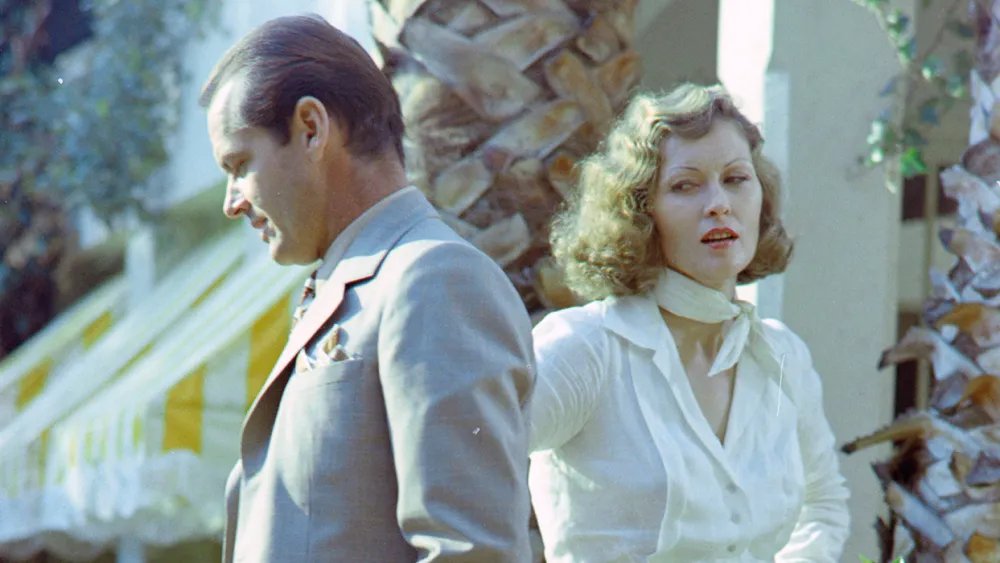
Fashion and film are forever intertwined and over the decades Women’s Wear Daily has been on the set, in the director’s chair and inside the costume closet, documenting fashion’s ongoing relationship with Hollywood.
Beginning in the ’60s, as the film industry entered its “New Hollywood” era, fewer restrictions gave directors more artistic freedom. New York and other cities attracted a cohort of creative directors looking to bring the realistic grit and glamour of city life to the big screen. Before film sets were heavily restricted, WWD’s photographers and editors were often on the scene, encountering actors before they became famous, on their way to becoming stars or, sometimes, on their way out.
Fashion in film has always reflected what people wore — or dreamed of wearing. Iconic films like “Bonnie and Clyde,” featuring Faye Dunaway in looks dressed to kill; “Taxi Driver,” with Robert De Niro in Army fatigues and Cybill Shepherd in a fashionably on-trend Diane von Furstenberg wrap dress, and “The Great Gatsby,” for which Ralph Lauren provided looks for Robert Redford and the entire male cast, continue to influence style today.

“Bonnie and Clyde Syndrome,” WWD, Sept. 14, 1967. Drawing by Stephen Stipleman/Fairchild Archive
Dunaway’s Bonnie became a legend for her fashion sensibility — courtesy of costume designer Theadora Van Runkle. In 1967, WWD coined it the “Bonnie and Clyde Syndrome.” “The clothes are divine,” Dunaway noted at the time, highlighting one of fashion’s most revisited trends.
When WWD editors Karin Winner and Jean Cox interviewed costume designers Edith Head — already legendary in the business — and three rising stars — Anthea Sylbert, Theoni Aldredge and Van Runkle — for the article “Hollywood’s Designers” in 1975, it had film and fashion on its mind and so did the costume designers. Here is what the three rising stars had to say.
The following interviews are redacted from “Hollywood Designers,” WWD, Sept. 17, 1975.
Theodora Van Runkle — costume designer “Bonnie and Clyde”
LAUREL CANYON, Calif., — Theodora Van Runkle, although convinced she’s “astrologically meant for films,” hasn’t worked for a year. “Everything they offered me is cops and robbers. I want now to do only films that are potential works of art,” explains the costume designer, who launched her career with “Bonnie and Clyde.”
Although her most recent film, “Godfather Part II,” earned her an Academy Award nomination, she complains that much of her work in it was cut out. “[Director Francis Ford] Coppola is capable of doing fantastic things with women, but he’s an Italian chauvinist who lives in a man’s world. There were 7.5 hours in the movie and most of the stuff that went had to do with women.” Coppola’s attitude, she feels, is typical in a male-dominated film industry.
Nevertheless, she finds men, including Marcello Mastroianni, whom she calls”a male Garbo,” easier to dress than women. “It’s rare to get a difficult man. But when you do, he’s really tough.”

“Hollywood Designers,” WWD, Dec. 17, 1975. Fairchild Archive/WWD
Faye Dunaway gets rave reviews because “she loves the feel of the best against her flesh, has the all-time great, eloquent body and is a great student who asks how women held themselves in a particular time. Most actresses couldn’t care less.” But after doing several Dunaway films, including “The Arrangement,” “The Thomas Crown Affair” and “Place for Lovers,” Van Runkle says she turned down “The Three Musketeers” because she didn’t want to be labeled “Faye’s designer.”
“Mame,” which won Van Runkle another Academy Award nomination, was one of her “most difficult” films. “Lucille Ball was tall and very large. She has beautiful legs and feet, but she’s older. I had to put three foundations in every garment.”

Lucille Ball photographed in her Waldorf Towers suite in New York City in 1974. Pierre Schermann/Fairchild Archive
Pierre Schermann
One thing that makes Van Runkle cross is stars who refuse to wear her designs. In “Myra Breckinridge,” she designed everyone’s clothes but Mae West’s, who insisted on Edith Head. “Raquel Welch refused to wear the silver-fox chubbies. She said she was too small to carry them. She doesn’t realize she comes across as a giantess on the screen.”
Jacqueline Bisset in “Bullitt” also refused Van Runkle’s clothes. “A lot of stars,” she explains, “want to look hot for the moment. They don’t realize that the movie will be on television years later.”
A graduate of Beverly Hills High School, Van Runkle was illustrating ads for the May Co. and Bullock’s before she met costume designer Dorothy Jeakins at a seminar.
Theoni Aldredge — costume designer “The Great Gatsby”
BEVERLY HILLS — Costume designer Theoni Aldredge is shuttling between her home in New York and Hollywood, where she’s supervising the wardrobe of “Harry and Walter Go to New York,” starring James Caan. It is the seventh film for this predominantly theater designer.
Aldredge, who picked up an Oscar this year for her work in “The Great Gatsby,” says there’s no difference in designing for the theater and for film. “Clothes are clothes. You just don’t have to worry about them lasting for four years when it’s a film.”

Theoni Aldredge attends the premiere of “The Great Gatsby” at the Loews State Theatre in New York City on March 27, 1974. Fairchild Archive/WWD
Penske Media via Getty Images
The Greek designer, who’s done 90 Broadways shows, opera and TV, says, “Clothes are very important to the actor. Lots of them ask to wear the clothes home so they can get used to them. A costume that stays a costume isn’t helping anybody; you have to feel you’ve lived in something to be comfortable in the role.”
Men, says Aldredge, worry just as much as women about appearance. “Don’t ask me about Rex Harrison. I don’t like working for people who do a solo. But Robert Redford never complained about anything. He tried the clothes on and that was that. What it really comes down to is people with healthy bodies who have healthy minds — they are the easiest to fit.”
A master of period films, she frankly admits, “Contemporary films are tougher. Everybody knows what fashion is, and before you’re through, it’s no longer in fashion. With period clothes, the audience doesn’t know as much and you can get away with a little more.”
The star system as she has seen it evolve has changed. “We went through an era of not-so-handsome men — the anti-hero. Now there are Redfords and Caans. In New York, I’d go see a Dustin Hoffman picture, but in the Midwest, if it were a Redford picture versus a Hoffman picture, they’d go to the Redford one.
“I’m looking at old films now — that’s my passion. Whether they were supposed to be rich or poor, they were dressed expensively. Jean Harlow…There she was in a satin dress no matter what part she had.”

Mia Farrow costumed by Theoni Aldredge and Robert Redford wardrobe by Ralph Lauren on the set of “The Great Gatsby” in 1973. Fairchild Archive/WWD
Fairchild Archive/Penske Media
The glamour potential of female stars is there, Aldredge contends, but “I know a lot of theater people that no one would give the time of day to because they are no-names. There are 12 girls — dancers and singers — on Broadway in ‘Chorus Line’ [which she designed], and I look at them and say each one could be a star if someone would give them a break. They have the guts and the charisma.”
The impact of the costume designer sometimes carries off-screen, she says. “The Gatsby look is still going strong in Europe. It lasted here for two years. But costume designers are secondary, remember; we are not money people, right? Because we are idiots,” she laughs. “A lot of people have asked me whether I’d like to do a commercial collection, but I can’t imagine doing clothes, drawing for someone I don’t even know, who could be size 6 or 16.”
For “Harry and Walter,” Aldredge describes the clothes as pure period ’90s. “You can’t relate to them — all those long dresses down to the floor with a slight bustle in the back. No one will wear that look, but it’s a pretty era. I love the property (about a trio of ex-cons who get into the wealthy society of New York) and I know we’re going to have fun. And that’s all I’m going to do for the rest of my life. Life’s too short to do otherwise. Perhaps I can be just as happy at home knitting.
Anthea Sylbert — costume designer “Chinatown”
BEVERLY HILLS — Costume designer Anthea Sylbert is currently stumped by a herd of apes. The task handed out by director Mike Nichols is for a modern-day version of “Tarzan.” With “Chinatown,” “Shampoo,” “Carnal Knowledge,” “Heartbreak Kid” and “Fortune” to her credit, Sylbert admits this is the most difficult assignment to date.
“How to make the apes convincing, with the right amount of moisture in the nostril and glaze in the eye — that’s the dilemma.The best ape job I’ve seen was in ‘2001,’” Sylbert says.
But most of Sylbert’s highly acclaimed work has been in period pictures. “People producing modern films do not want to spend money on fashion,” she contends. “They figure it’s probably cheaper to go out and buy it. Think in terms of period films ‘hello, this is ’42.’ That ruins the whole feeling.”

Costume designer Anthea Sylbert and Julie Christie prepare for filming during production of “Shampoo” in Los Angeles on April 2, 1974. Fairchild Archive/WWD
Fairchild Archive/Penske Media
Sylbert continues, “There are very few people around who have the fashion presence of the ’30s and ’40s. The glossy romanticized lifestyle of years ago doesn’t exist, and don’t forget those films were films about rich folk — everybody came down to dinner wearing tuxedos.
“In the ’60s, everybody decided it was wrong to be glamorous. Now nobody wants to be seen anywhere — except for Jack Nicholson. He loves to go out, wear good clothes. He likes being a movie star. I get the impression with most of today’s stars, they want to make $1 million, but they don’t want to have to be a movie star.
“Faye [Dunaway] is one of the few who makes an effort. If she goes to a public function, I think she really tries to look the part, plus she has a good sense of fashion.
“I think part of the problem is that very few people know who they are, so they can’t capitalize on personal style. Faye knows how to pull herself together. I think Sally Kellerman has a wonderful thing about her — so does Michelle Phillips and Anjelica Huston.”

Faye Dunaway speaks with WWD after the premiere of her new film “Bonnie and Clyde” in New York, 1967. Nick Machalaba/WWD
Penske Media via Getty Images
Sylbert has spent five years dressing the new stable of status stars.
“The thinner, small-busted women are easiest to fit, obviously,” she laughs. Julie Christie is “short in the leg, but you fix that. Jeannie Berlin’s size made it difficult, but again, there are ways. And Cybill [Shepherd]…well…she vaguely reminds me of Joe Namath.”
As for the costume designer’s role, Sylbert points out, “Remember: Our function is not to create fashion, but to create a character. I always insist they wear the proper shoes for the right posture and stance. Underwear is very important too. If Stockard Channing wears silk satin panties, because I know you feel better in them and it could affect her performance. In ‘Heart-break Kid,’ I made Cybill wear cotton ones.”
Costume design in film, says Sylbert, can “popularize” fashion, but not set it. “If you design a film thinking about the impression your costumes are going to make, then you’re in trouble. If the character is fashionable, fine. Above all, we create atmosphere and mood. We are to let the audience know what she or he is all about even before they open their mouths. My last consideration is fashion.
“‘Bonnie and Clyde’ didn’t set trends. The timing was right. The great fashion movies were in the ’30s and ’40s; the ’50s started a descent, but we’re getting better.”
From our vantage point, the collaboration of fashion and film, has had its moments through the years — no one would deny that — but we’ll wait on next year’s awards season to make the final call.