dailynewsnblog
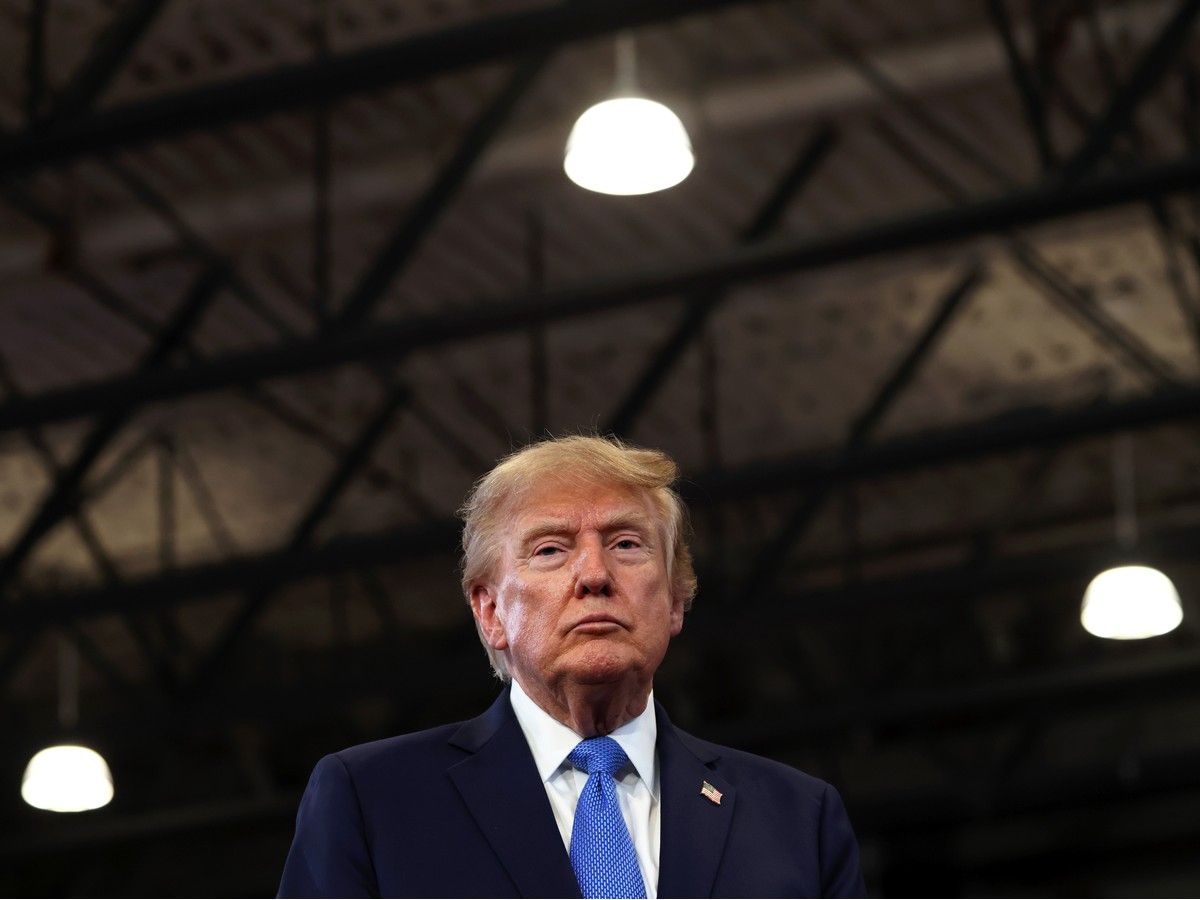
The latest arbitrary deadline to a gratuitous threat made by an untrustworthy president falls this week when Aug. 19 arrives and the U.S. does or does not introduce 50 per cent tariffs on a package of Canadian goods.
The degree to which this seizes Mark Carney might be indicated by the fact the prime minister chose to spend a week vacationing in Italy rather than nibbling his nails as the minutes ticked down. Sure, his aides say he stayed in close contact with Ottawa, but anyone who’s spent any time in Italy knows that distant crises always seem somewhat less desperate when considered over a cappuccino while pondering a statue or two in a pleasant piazza.
Italians tend to take a relaxed view of life thanks to their long history of ups and downs and knowledge that, whatever the disaster, life goes on. Empires, dictators, wars and calamities come and go; Italy is littered with the remnants of fallen worlds testifying to the foolishness humans can get up to, but also to the ability to recover from the madness of others.
If any of this crossed Carney’s mind while he sought a break from his duties, he might also consider that the reputation of one of his predecessors benefits not from something he did, but something he didn’t do. When Jean Chrétien is being toasted by Liberals as a successful and well-remembered leader, his refusal to join the U.S. in its ill-fated crusade in Iraq is a leading reason.
Canada preferred to be friends with the U.S. just as much then as it does now, but was sentient enough to understand that joining it in bad ideas and self-defeating ventures wasn’t a requirement. American President Donald Trump’s misguided tariff war is just such an example. Whatever the temporary pain, Canada would be far better off in the long run avoiding any sort of agreement that lets Washington claim the slightest victory in its attempt to bully concessions out of Ottawa.
Better to walk away, let the White House do its worst and deal with the consequences. That will inevitably be the result under this administration in any case. Whatever piece of paper negotiators wave should a last-minute “deal” be reached won’t be worth the ink wasted on the signatures. As long as Trump is president the U.S. can’t be trusted to keep its word. A quick-fix tariff accord could be signed at breakfast and broken before lunch.
Until its leadership changes, any agreement with the U.S. is a recipe for ongoing uncertainty. Even if Republicans suffer defeat in November’s mid-term elections, the president’s ability to sow confusion will remain considerable until 2028, and likely longer given the time it would take to re-establish America’s reputation as a reliable country.
It’s difficult to know just where the current talks lie. Official pronouncements, strategic leaks and expert analysis are all over the map. Canadian negotiators Dominic LeBlanc and Janice Charette are reportedly hopeful agreement can be reached, but they’d have to say that or they’d be useless in their jobs, no matter how senseless U.S. demands might be. Nothing that comes from the mouth of U.S. Trade Representative Jamieson Greer gives cause to believe their hopes will be fulfilled.
While LeBlanc and Charette have repeatedly trekked to Washington for discussions, Greer has seen no need to return the courtesy. Reports on discussions, opaque as they’ve been, suggest the U.S. has not moved an inch in its list of demands, while showing no material interest in accommodating Ottawa’s rival concerns. Many of the demands, if the reports are accurate, are grotesque in their reach: special rights to Canadian minerals, required purchases of U.S. technologies, guaranteed access to Canadian resources, all of which represent a surrender of Canada’s right to do as it pleases with its assets.
The brazenness of the attempt at a shakedown cries for Ottawa to write off the talks as pointless. Instead, the game plan appears to consist of devising a formula squishy enough to placate Washington while minimizing the immediate damage. Canada’s team seems deep into efforts to find concessions able to soothe delicate American sensibilities without triggering outrage among Canadians already fed to the teeth with the U.S. leadership and its ongoing obnoxiousness.
Carney has managed to retain his popularity with voters to date. Liberals remain well ahead of Conservatives in opinion polls, and Carney enjoys a wide lead over opposition leader Pierre Poilievre. But his standing is based largely on belief in his ability to handle the U.S. challenge, a level of trust that could quickly erode if he’s seen as responding with weakness to U.S. belligerence.
In any case, Trump cares more about attention than popularity; his infatuation with himself is self-generated and immune to human intervention. He’s safe in his job for two more years and unable to run again; Carney needs public support more than Trump does and has to show reason for Canadians to provide it. Demeaning the country in the name of momentary economic gains is not a road to renown.
Charette reportedly informed Greer that Canadian hostility towards Washington could force Canada to retaliate to any new tariffs, and that Ottawa couldn’t “rein in or control” premiers set on taking a tough line on talks. The U.S. seems weirdly preoccupied with the boycott of U.S. alcohol, which represents a tiny fraction of imports to Canada; it may be the dispute’s outcome will rest on the ability to talk Premier Doug Ford into allowing California wine and Kentucky bourbon back on the shelves of Ontario liquor stores.
If that’s the case, more power to Ford. There is no such thing as an agreement with Donald Trump, his word is worthless and Canada will have to deal with the end of reliable and sensible trading rules with the U.S. now or later. If something has to be done, it’s just as well to get on with it. Now’s as good a time as any to inform Washington Canada is uninterested in further pointless discussions, and let ordinary Americans get back to bearing the brunt of their president’s expensive obsession.
National Post