dailynewsnblog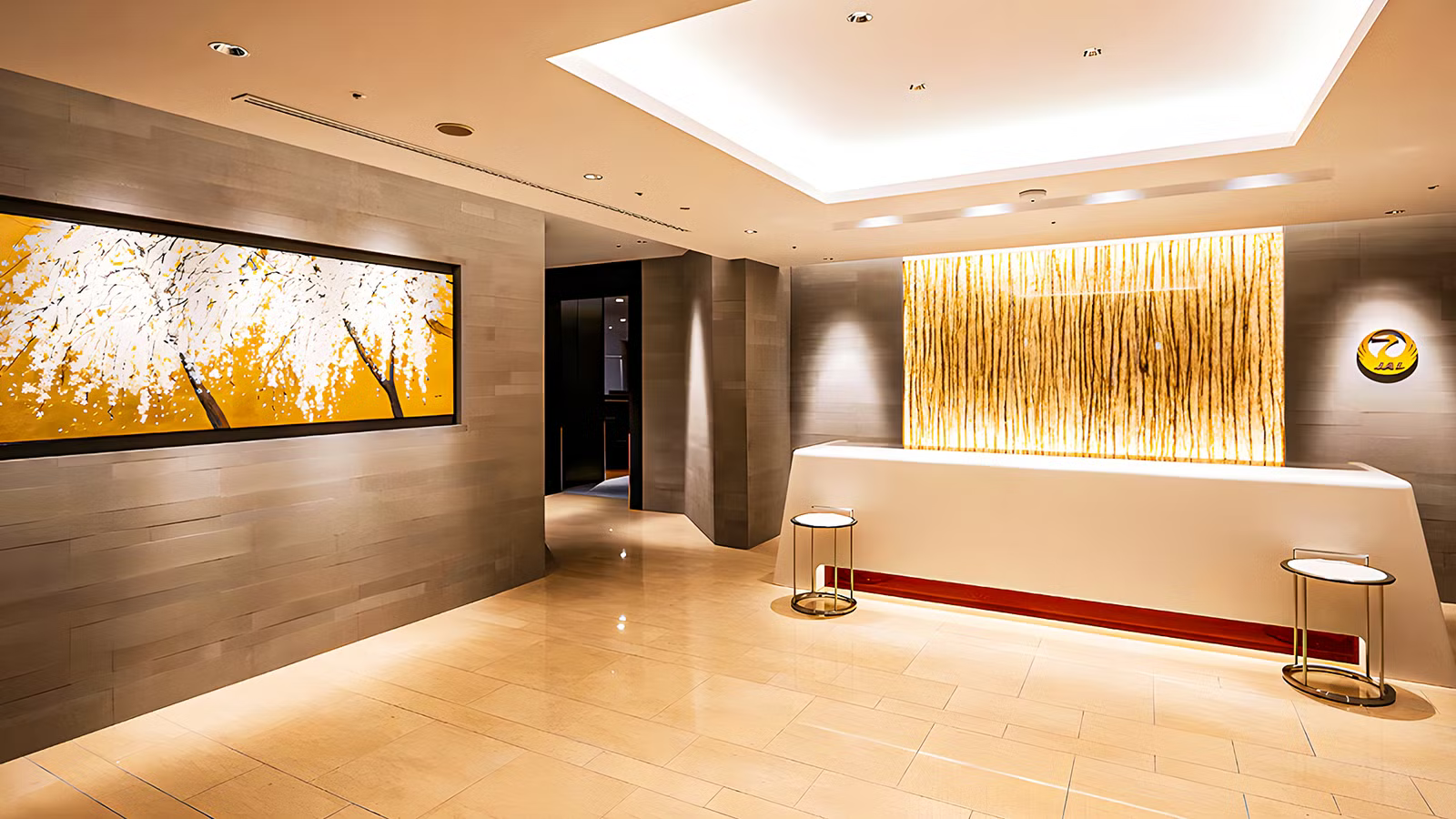
Premium economy across long-haul airlines remains an unpredictable mixed bag. Sometimes there will be minor seat recline tweaks with minimal added benefits, and sometimes, a product can turn out to be something that rivals business class. Extra legroom and priority boarding are standard on most carriers, but the line between a basic main cabin upsell and a genuine mid-tier experience for many starts at the lounge entrance. Paying hundreds or thousands of dollars more than standard economy fares does not guarantee a space away from crowded airport terminals, leaving many travelers surprised when their mid-cabin ticket is rejected at the door.
So, which carriers view airport lounges as a core component of the mid-tier experience, and which treat it as a strictly guarded revenue boundary? A small, highly concentrated group of operators, led by Japanese flag carriers Japan Airlines (JAL) and All Nippon Airways, (ANA) alongside European and South American outliers like  Scandanavian Airlines (SAS) and LATAM Airlines, include business lounge access as a standard ticket benefit. These airlines stand out from even the biggest global giants such as
  Emirates, Qantas,
  Lufthansa, and every major US legacy carrier that enforce strict exclusion rules or relegate lounge privileges to paid add-ons.
Leading The Way In Japan

JAL and All Nippon Airways(ANA) are most definitely leading the way among global network carriers by extending complimentary airport lounge access to international premium economy passengers. Even as most major airlines treat airport lounges as exclusive sanctuaries reserved strictly for business and first class passengers or high-tier frequent flyers, Japan’s two flagship carriers still treat pre-flight lounge entry as a standard component of the mid-cabin product. However, while this generous approach sets a benchmark for passenger comfort on long-haul transpacific and Eurasian routes, it operates under very specific operational boundaries that highlight just how selectively airlines grant ground privileges.
Detailed in the carrier’s rules and regulations, JAL grants its premium economy passengers access to flagship JAL Sakura Lounges across major Japanese airports like  Haneda Airport (HND) and
  Narita Airport(NRT), alongside partner lounges worldwide. This policy even extends to full-fare Flex Y economy ticket holders, though JAL strictly enforces caveats. Access is restricted to the departure airport, carries no guest allowance, and explicitly excludes passengers who receive same-day upgrades at the airport. Similarly, ANA admits premium economy travelers on ANA-operated international flights to its dedicated business lounges at Haneda, Narita, Osaka Kansai, and Honolulu, as well as select partner lounges across Asia, Europe, and North America.
Including business class lounges as a default ticket perk, JAL and ANA use ground privileges as a powerful competitive differentiator to capture high-yielding international travel demand. Crucially, because these two carriers remain the prominent exception rather than the global rule, travelers moving beyond the Japanese market face a vastly different landscape of restrictions and paid add-ons.
Standing Out From A Crowd Of Add-Ons

Outside of Japan, SAS and South American carrier LATAM lead the short list of regional exceptions that bundle lounge access into mid-tier tickets. However, with JAL and ANA extending complimentary entry across their entire international long-haul networks, European and South American operators have decided to restrict these privileges to specific cabin tiers, regional flight corridors, or dedicated hub locations.
Catch what other flight trackers miss
Emergency squawks, holds, NOTAMs — live signals, no signup.
Open tracker
Catch what other flight trackers miss
Emergency squawks, holds, NOTAMs — live signals, no signup.
Open tracker
SAS includes lounge privileges for passengers booked in SAS Plus, its premium economy product, granting entry to SAS Lounges across three main Scandinavian hubs in Copenhagen Airport(CPH),  Oslo Gardermoen Airport(OSL), and Stockholm Arlanda Airport(ARN), alongside select
  SkyTeam partner lounges in Europe and North America. Across Latin America, LATAM stands as the sole major operator providing complimentary lounge entry for premium economy passengers. This benefit applies exclusively to international flights at five primary hub cities: Santiago, Bogotá, São Paulo, Buenos Aires, and Miami. By contrast, regional rival Avianca excludes mid-tier passengers from its lounge network. Niche long-haul carriers like Italian operator Neos also bundle lounge access into Boeing 787-9 Dreamliner premium economy fares, while Asiana Airlines offers business class lounge entry at
  Incheon International Airport (ICN) for travelers in its Economy Smartium section.
These regional operators maintain complimentary entry to strengthen market share on competitive regional and transatlantic routes, however, most global network carriers reject free lounge access entirely. Instead, a growing tier of European and North American airlines monetizes their lounge capacity by offering paid add-ons and discounted entry passes specifically tailored to mid-cabin travelers.
Access Comes For A Fee

Recognizing that mid-tier travelers are willing to spend extra for pre-flight comfort, several major international carriers offer a pay-per-entry model rather than complimentary lounge access. Instead of opening lounge doors by default, airlines like  Air Canada, the Lufthansa Group, and
  Air France monetize their airport ground space by selling discounted or conditional lounge passes exclusively to premium economy passengers, as outlined by Lounge Pair. The strategy allows carriers to generate incremental ancillary revenue while keeping a tight lid on lounge crowding during peak travel hours.
Air Canada permits travelers booked in premium economy to purchase a single-visit pass to its Maple Leaf Lounges for CA$49 ($36 USD) during the online booking process or up to 24 hours prior to departure. Similarly, Lufthansa Group carriers (Lufthansa, SWISS, and Austrian Airlines) allow premium economy ticket holders to buy access to their business lounges, with prices typically ranging between €39 and €49 ($43 to $54 USD) depending on the airport location. Air France also offers paid lounge access to mid-cabin passengers at check-in or at ticket counters, though entries remain subject to space availability and fees vary significantly between outstations and its main Paris Charles de Gaulle hub.
These airlines have moved from complimentary access to an à la carte pricing model, which creates a lucrative middle ground that appeals to value-seeking travelers. However, while this paid model offers a clear pathway into the lounge for a modest fee, the world’s largest legacy megacarriers reject even paid access options, maintaining an absolute barrier between mid-tier tickets and their airport lounges.
Need To Pay A Little More To Get In

Long-haul business class fares generate the highest revenue per square foot for network airlines as noted by the Wall Street Journal and Forbes. Seats regularly sell at four to six times the price of standard main cabin tickets, so few airlines want to give up the opportunity to boost revenue through this product tier. Generally, airport lounge real estate at high-density hubs is constrained, so opening doors to mid-cabin passengers, who occupy up to 40 seats per widebody aircraft, would instantly double foot traffic during peak departure windows. Overcrowding dilutes the quiet environment and premium dining that five-figure business class passengers pay to access, threatening the airline’s most lucrative revenue stream.
It is a rather defensive operational strategy that is strictly enforced by major operators across the US, Australia, and the Middle East.  American Airlines, for example, offers priority baggage and fine dining in premium economy on long-haul routes from
  Dallas/Fort Worth International Airport (DFW) and
  Miami International Airport(MIA), but excludes these passengers from its Admirals Clubs and flagship lounges unless they hold elite AAdvantage status or purchase a separate pass. Qantas follows identical logic on transpacific flights between
  Sydney Kingsford Smith Airport (SYD) and
  Los Angeles International Airport(LAX), loading its mid-tier cabin with multi-course meals while reserving international business lounges exclusively for business class ticket holders. Even Emirates, which spent hundreds of millions of dollars retrofitting its Airbus A380 fleet with an all new premium economy segment, draws a firm line at its Dubai concourse lounges, refusing entry to mid-cabin fares.
Travelers flying premium economy are increasingly unbundling their ground experience, rejecting the airline-operated facilities in favor of independent credit card lounge networks or pay-per-use lounges. This dynamic shifts the competitive battlefield entirely into the air, meaning that airlines will now need to compete on actual seat dimensions and onboard soft product rather than ground privileges.
What Is Actually Worth It?

For passengers evaluating whether to buy a mid-tier ticket on an inclusive carrier like JAL or pay an à la carte lounge fee on Air Canada, the financial decision often favors unbundling the ground experience entirely. When a business class suite can cost three to four times a premium economy seat, paying $45 for an independent lounge pass or using credit card lounge access bridges the ground-comfort gap at a fraction of the fare markup.
For example, a traveler flying transatlantic between London and New York can purchase a premium economy seat for $1,200 and add a $50 independent lounge pass, resulting in an end-to-end trip cost under $1,300. By contrast, a business class ticket on the same route routinely exceeds $4,000, creating a $2,700 price premium for a lie-flat bed and complimentary dining. On transpacific routes out of Tokyo or Honolulu, booking Japan Airlines or ANA provides that same $50 ground value for $0 in extra fees, giving Japanese carriers a distinct edge among cost-conscious corporate managers and self-funding business travelers.
As more travelers realize that independent ground access costs less than 5% of the fare gap between premium economy and business class, airline loyalty programs face a new challenge. The final open question for network operators is whether this consumer shift will force carriers to introduce dedicated mid-tier lounge spaces or unbundle lounge access completely across all cabin classes.
A New Lounge Type May Arise?

Denying lounge access protects business class yields in the short term, but it creates an operational friction point between an elevated inflight cabin and a standard terminal experience and that is a reality that long-haul network carriers need to grasp. Deciding whether to open lounge doors or keep them firmly locked will ultimately determine whether premium economy remains a simple seat upgrade or evolves into an end-to-end mid-tier travel ecosystem.
The true test of this commercial divergence will play out across major widebody delivery streams through 2028. As international carriers take delivery of hundreds of new Airbus A350-1000and 777-9aircraft over the coming years, some will feature expanded premium economy sections offering up to 40 seats per jet, if not even more. If Japan Airlines and All Nippon Airways maintain their complimentary access policies while expanding international widebody frequencies, competing Asian and European network operators may have to swiftly reevaluate their strict exclusion rules to prevent high-yield passengers from defecting on key long-haul routes.
Now is the time to see whether carriers will eventually resolve this tension by creating a new category of dedicated mid-tier lounges, giving passengers something that sits between crowded departure gates and flagship business suites. Until then, the lounge door is the industry’s ultimate boundary line, separating full-suite business class luxury from the rest of the aircraft.

![Air Canada & Air Transat Are Launching These 5 New Transatlantic Routes Soon [Map]](https://dailynewsnblog.com/wp-content/uploads/2026/08/797-air-transat-airbus-a330-ross-howey-photo-_-shutterstock.jpg)