dailynewsnblog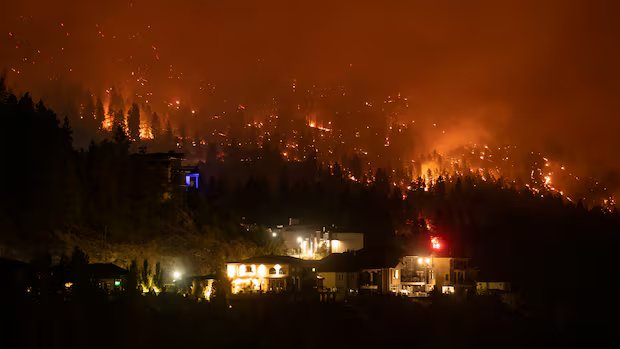

Listen to this article
Estimated 4 minutes
The audio version of this article is generated by AI-based technology. Mispronunciations can occur. We are working with our partners to continually review and improve the results.
The number of homes lost in British Columbia due to out-of-control wildfires is yet to be tallied — but with weeks left in the peak of fire season, hundreds of structures across the province have been burned.
In Summerland, B.C., where a fast-moving fire forced the evacuation of thousands of people across the region, the mayor has warned evacuees to “brace for what’s not there.”
With wildfires becoming more destructive, there are calls from experts to make it mandatory for homeowners and builders to implement FireSmart principles into their designs.
FireSmart is a program that teaches the public about ways to mitigate the impact of wildfire near homes, and provides funding for retrofits and building upgrades to make homes more resilient to fire.
Mike Flannigan, a professor of wildland fire at Thompson Rivers University in Kamloops, B.C., said it’s time those lessons go from recommendations to rules.
“If you’re in a high-risk location, we should be making some FireSmart principles mandatory,” he said, arguing the recommendations only work if they are applied consistently.
“You could be FireSmart and your neighbour isn’t. Then a rain of embers comes down — their house catches fire and then your house catches fire.”
What makes a property less likely to burn?
Rachel Woodhurst, a FireSmart program lead based in Salmon Arm, B.C., describes the principles as “giving your property the best chance to still be standing when you return.”
“Cleaning your gutters, keeping your lawn short, making sure your roof doesn’t have debris, and certainly what we’re choosing to landscape,” she said.
For example, while juniper and cedar hedging are popular in B.C. to create shade and privacy, they’re highly flammable, making deciduous plants a safer option in areas prone to fire. FireSmart also recommends spacing out trees to slow the spread of fire, and pruning them to create a two-metre clearance from the ground up to the lowest branch.
It also advises keeping firewood and fuel sources away from homes and sheds, and investing in garden sprinklers and roof-watering systems.

Some communities that have been devastated by fire have taken those lessons to heart in their rebuild.
After being threatened by fire in 2003, the District of Logan Lake undertook intense local efforts to make the community more fire resilient, and eventually became Canada’s first FireSmart community.
The preparation worked — it credited its mitigation efforts with saving homes from a subsequent fire in 2021, despite the fire coming within feet of homes.
The Municipality of Jasper, Alta., took similar action after a devastating fire in 2024, adopting new urban design standards based on guidelines from the national FireSmart program.
The measures mandate that homes are built with non-combustible roofs and siding instead of highly flammable material like cedar shingles, previously a popular choice for the mountain town.
Other communities have struggled to implement mandatory fireproofing.
After its devastating wildfire in 2021, the Village of Lytton initially adopted bylaws requiring fireproofing measures. They were later rescinded because of concerns over costs and potential delays.

Woodhurst said that while calls to urgently alter the B.C. Building Code may seem out of reach, action can be taken at a more local level.
“A strata or regional district or municipality could absolutely put in a bylaw for what people are landscaping,” she said.
Future of program uncertain
As experts highlight the need for wider adoption of FireSmart principles, the future of the program itself is unknown.
According to the Union of B.C. Municipalities, the province has provided more than $175 million for FireSmart since 2018.
In February of this year, only $25 million in funding for the program remained — money set to be distributed based on who needs it most.
The province has not commented on whether it will fund the program — though in its 2025/26-2027/28 service plan, the Ministry of Forests commits to wildfire mitigation, which includes the use of the FireSmart program.