dailynewsnblog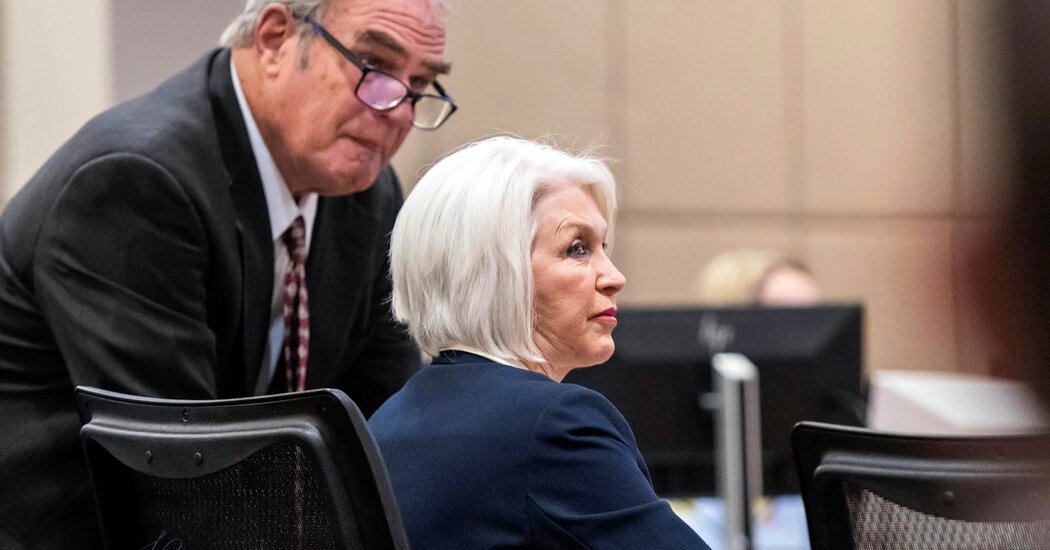
As President Trump fumed late last year over Colorado’s imprisonment of Tina Peters, a convicted election denier, a White House special assistant organized an urgent “brainstorm call.”
The goal, outlined in an email sent to officials at five federal agencies, was to “prioritize Colorado for the purposes of ensuring grants and federal support are in line with administration priorities,” the assistant, Emily Underwood, wrote on Dec. 15.
“Please come prepared to discuss immediate actions that your department or agency can take with respect to Colorado,” Ms. Underwood added.
The next day, the Department of Transportation and the Department of Energy, whose representatives were invited to the brainstorm, announced they were canceling hundreds of millions of dollars in federal grants for Colorado projects.
State officials say the email, which was revealed in a federal court hearing on Tuesday, is the clearest evidence yet that the Trump administration marshaled government resources to retaliate against Colorado over its use of mail-in ballots and its conviction of Ms. Peters, a county clerk who was found guilty in a plot to tamper with voting machines after the 2020 election.
The email, which was first reported by The Denver Post, does not mention Ms. Peters, and it has not been publicly released. Its contents were read aloud in a Denver courtroom as part of a Colorado lawsuit against the Trump administration, and The New York Times reviewed a copy of the hearing transcript.
Judge R. Brooke Jackson of U.S. District Court expressed shock at the revelation.
“I’ve never seen anything like it,” Judge Jackson said of the email, according to the transcript. “I’ve never even imagined something like it. The very idea that the president of the United States or the executive office of the president would target a state because they don’t feel that the state and its administrators are in line with the current administration’s priorities is phenomenal.”
A spokeswoman for the White House denied that the email had anything to do with Ms. Peters and declined to comment further on the record. She referred questions about the Colorado grants to the Office of Management and Budget, which did not immediately respond to a request for comment.
Colorado officials say the timing of the memo speaks for itself.
Days before the brainstorm session, Mr. Trump announced a symbolic pardon for Ms. Peters, whose state conviction fell outside the president’s clemency powers. Then, just hours after Ms. Underwood sent the meeting invitation, Mr. Trump attacked Colorado’s Democratic governor, Jared Polis, over Ms. Peters’s incarceration, calling him “a weak and pathetic man” in Oval Office remarks.
What followed amounted to an all-out assault on the Democratic-run state. Along with the transportation and energy funding cuts, the Trump administration dismantled a leading climate and weather research center based in Boulder, rejected Colorado’s pleas for disaster assistance, threatened its food stamp program and vetoed a pipeline project intended to provide clean drinking water to the state’s eastern plains.
As the showdown unfolded, Colorado’s attorney general, Phil Weiser, filed a lawsuit against Mr. Trump and his administration, alleging a “revenge campaign.”
After resisting Mr. Trump’s haranguing for months, Mr. Polis — over objections from the state’s clemency board — commuted Ms. Peters’s nine-year sentence in May.
In a statement on Friday, Mr. Weiser said Ms. Underwood’s email “proves what we have long suspected.”
“The White House orchestrated an unconstitutional scheme to weaponize the federal government to attack and punish Colorado for its lawful decisions over elections and our criminal justice system,” Mr. Weiser said.
A spokeswoman for Mr. Polis, Ally Sullivan, said the court system should “provide relief to Colorado” if federal funding was rescinded because of political retribution.
“We have seen the very real impacts from the actions of the federal government against Colorado, and would hope that the president and administration would put people ahead of politics,” Ms. Sullivan said.
In the Tuesday court hearing, Judge Jackson ordered the federal government to turn over additional communication from the White House, a step the administration’s lawyers had opposed.
“The executive office of the president and the president himself are elected to serve all the people and all the states, not just the states that voted for one side or the other, not just the states that line up perfectly with priorities, but all the people,” Judge Jackson said. “In fact, there’s an oath that’s taken to that effect.”