dailynewsnblog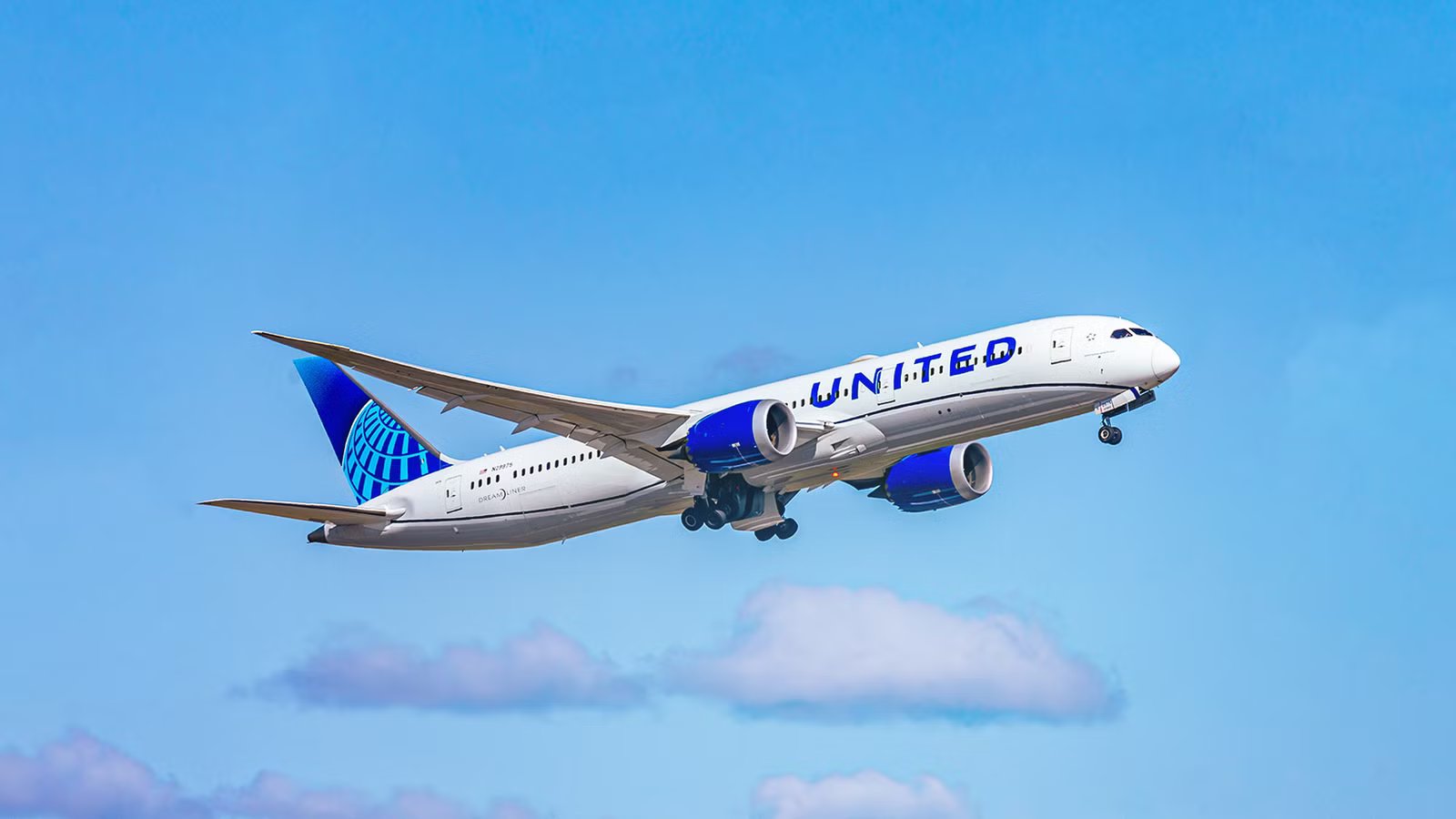
Reducing the number of seats on a widebody airliner is an unusual strategy at a time when airlines are trying to maximize revenue from every departure. Yet that is exactly what  United Airlines has chosen to do with its newest Boeing 787-9 Dreamliners. Beginning October 24, the carrier will introduce its new “Elevated” interior on flights from
  Houston George Bush Intercontinental Airport (IAH) to São Paulo, Tokyo-Narita, and Sydney, with London Heathrow following on January 5, 2027. The redesigned aircraft eliminates 35 seats compared to United’s standard 787-9 in favor of a dramatically larger premium cabin.
Airlines have traditionally increased profitability by adding seats and spreading operating costs across more passengers. United’s latest configuration pursues the opposite objective. Instead of maximizing passenger volume, it maximizes the share of travelers willing to pay for premium products. By dedicating nearly half of the aircraft to premium seating, introducing a new Polaris Studio product, and deploying the aircraft on some of its most lucrative long-haul routes, United is making a calculated bet that fewer passengers can produce significantly higher revenue than a fuller economy cabin ever could.
How Removing Seats Can Generate More Revenue

The most striking feature of United’s Elevated 787-9 is indeed the decision to remove 35 passenger seats from an aircraft that already represents a substantial investment every time it departs. Fuel, crew costs, airport charges, and maintenance expenses remain largely unchanged regardless of how many passengers the aircraft carries. That means the lost capacity must be offset by significantly higher revenue from the remaining seats. Specifically, the elevated Dreamliners carry 222 passengers compared to the typical 257.
United 787-9 Cabin Configurations | ||||
|---|---|---|---|---|
Aircraft | Polaris Seats | Premium Plus Seats | Economy Seats | Total Seats |
Elevated | 64 | 35 | 123 | 222 |
Standard | 48 | 21 | 188 | 257 |
United believes the tradeoff is achievable because of the aircraft’s revised cabin mix. The Elevated 787-9 contains 99 premium seats across Polaris and Premium Plus, representing approximately 45% of total capacity. On the standard 787-9, premium cabins account for roughly 27% of the aircraft. Rather than adding more economy seats to lower the average cost per passenger, United is allocating additional cabin space to products that generate substantially higher fares on international routes. The strategy reflects a broader shift in airline economics. Premium travelers typically generate far greater revenue than leisure passengers seated in economy, particularly on flights lasting 10 hours or more where comfort, privacy, and flexibility command significant price premiums. Filling fewer seats at higher average yields can therefore outperform filling more seats at lower fares, even if the aircraft departs with fewer passengers overall.
United’s recent financial results suggest the airline has confidence in that approach. The carrier reported an 11% increase in premium revenue during 2025, reinforcing demand for higher-end products despite broader economic uncertainty. That performance provides a financial foundation for sacrificing economy capacity in exchange for additional premium seating, especially on long-haul routes where business travel and high-value leisure demand remain strong.
United Is Creating A New Premium Tier, Not A New Class

The centerpiece of the Elevated cabin is not the expanded Polaris cabin itself, but a smaller group of eight seats positioned at the front of business class. Known as Polaris Studio, these bulkhead suites offer about 25% more personal space than a standard Polaris seat and include a larger privacy door, an oversized entertainment screen, additional storage, and an ottoman designed to accommodate companion dining. Importantly, the remaining 56 Polaris suites retain the airline’s standard business class design, making the Studios a distinct product rather than a fleet-wide upgrade.
Instead of reintroducing an international first class, United has chosen to create what amounts to a premium tier within business class. Customers who have already purchased a Polaris ticket can upgrade to a Polaris Studio for a flat fee of $499, depending on availability. That pricing model allows the airline to generate additional revenue from passengers who are already paying its highest standard fare, while avoiding the cost and complexity of operating a separate first-class cabin.
Many carriers have concluded that traditional international first class occupies valuable cabin space that can often generate stronger financial returns when converted into larger business class cabins. Airlines including Emirates and Singapore Airlines continue to invest in true first-class products, but those cabins are typically limited to flagship aircraft and select routes. United, by contrast, is positioning Polaris Studio as an enhanced business class experience that offers many of the same privacy and comfort features without creating an entirely separate cabin. From a commercial perspective, the model gives United greater flexibility. The airline can capture additional premium spending from travelers seeking its best onboard product while maintaining the simplicity of selling a single Polaris cabin. Rather than dividing demand between business and first class, it is encouraging passengers to spend incrementally more within the same cabin, increasing revenue without adding another service class to manage.
Why Houston Is The Next Ideal Launch Point For The Elevated 787-9

United’s decision to base the next Elevated 787-9 flights in Houston is closely tied to the role that IAH plays within its international network. As one of the airline’s largest hubs, Houston provides extensive connectivity across the United States, Latin America, and the Asia-Pacific region, allowing United to funnel premium travelers from dozens of domestic markets onto long-haul departures. That broad feed makes it easier to consistently fill a larger premium cabin than would be possible from a smaller gateway. The first destinations also reflect markets where premium demand is well established. Flights will serve major business centers across several continents while also attracting high-end leisure travelers willing to pay for additional comfort on journeys lasting more than 10 hours. London Heathrow, which joins the schedule in January 2027, is one of the world’s most competitive and lucrative premium business markets, making it a logical addition once more Elevated aircraft enter service.
Launching the aircraft from Houston also signals that the Elevated interior is intended to become part of United’s mainstream long-haul strategy rather than a niche product reserved for a handful of prestige routes. By placing the aircraft on diverse services spanning South America, Asia, Australia, and Europe, the carrier is testing the concept across different passenger mixes while showcasing its newest premium offering at one of its most important international gateways. The aircraft debuted on routes from San Francisco International Airport (SFO).
What The Elevated 787-9 Reveals About United’s Long-Term Strategy

United’s redesigned 787-9 is about more than introducing a new cabin. It signals a broader shift in how the airline intends to deploy its long-haul fleet. Rather than measuring success by the total number of seats onboard, United is placing greater emphasis on revenue generated from each section of the aircraft. The Elevated configuration reflects a strategy that prioritizes premium demand over maximum passenger volume, accepting a smaller cabin if it produces stronger financial returns.
The additional Polaris and Premium Plus capacity creates more opportunities to sell products that command substantially higher fares than economy, while the eight Polaris Studio suites introduce another layer of revenue through optional upgrades. The objective is not simply to carry fewer passengers but to increase the average value of each customer onboard. The strategy also aligns with broader changes in international travel demand. Premium leisure travel has remained resilient, and airlines have increasingly found that travelers are willing to pay for greater privacy and comfort on flights lasting 10 hours or more. Corporate demand remains important on key routes, but high-end leisure passengers and loyalty program members have become an increasingly valuable source of premium cabin revenue. That diversified customer base gives airlines greater confidence to dedicate more space to higher-yield products.
Catch what other flight trackers miss
Emergency squawks, holds, NOTAMs — live signals, no signup.
Open tracker
Catch what other flight trackers miss
Emergency squawks, holds, NOTAMs — live signals, no signup.
Open tracker
If the Houston rollout performs as expected, the Elevated 787-9 is likely to influence future fleet planning beyond these initial four routes. The aircraft demonstrates that United sees premium density, rather than cabin density, as the more important measure of long-haul profitability. Instead of asking how many passengers fit on a Boeing 787-9, the airline is increasingly focused on how many premium travelers it can attract. That represents a fundamental change in fleet strategy and one that could shape future cabin designs across United’s international network.
Fewer Seats, More Ambition

United’s Elevated 787-9 represents a deliberate shift toward maximizing the value of each flight rather than the number of passengers onboard. By removing 35 seats, expanding premium capacity to nearly half the aircraft, and introducing the Polaris Studio concept, the airline is betting that demand for higher-end travel will continue to outpace the economics of adding more economy seats.
The Houston deployment marks the first large-scale test of that strategy across a diverse group of long-haul markets spanning South America, Asia, Australia, and Europe. Those routes will reveal whether a smaller cabin with substantially greater premium capacity can consistently deliver stronger financial performance than a more traditional configuration. Given United’s recent growth in premium revenue, the airline appears confident that the additional space devoted to Polaris and Premium Plus will more than offset the reduction in total seating.
Whether other carriers adopt a similar approach remains to be seen, but the broader direction is already becoming clear. As premium products continue to evolve and travelers place greater value on privacy, comfort, and personalized service, airlines are increasingly redesigning aircraft around revenue potential rather than maximum capacity. United’s Elevated 787-9 may ultimately be remembered less for the 35 seats it removed than for the new long-haul business model those empty spaces helped create.