dailynewsnblog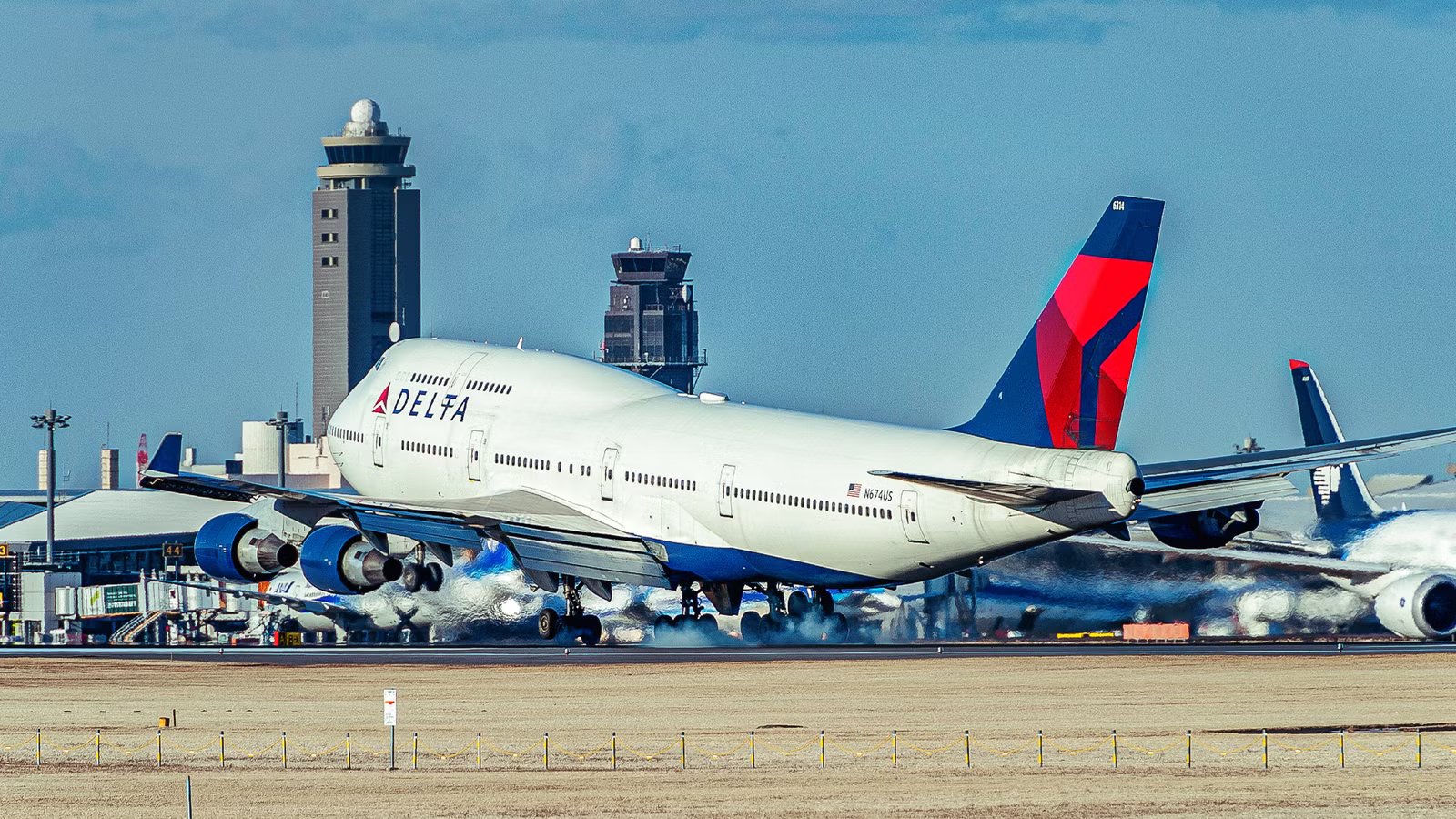
The 2008 merger between  Delta Air Lines and Northwest Airlines was the first to create one of the US’s current ‘mega legacy carriers.’ Delta Air Lines and its contemporaries today have hubs spanning the entire country while operating over 1,000 mainline aircraft each.
The main benefits of these mergers were scale, including network size, and all three legacy carriers have largely used the hubs that they inherited from their mergers to their advantage, enabling further growth and boosting relevance in more markets. One of the biggest exceptions, however, came with Northwest’s hub at Tokyo Narita International Airport.
Northwest had traditionally been heavily focused on its Asia network, competing primarily against United Airlines to be the dominant US airline across the Pacific. Ever since the merger, Delta has attempted to still be competitive in this market space, but has moved away from the Narita hub, slowly de-prioritizing it and then pulling out of Narita entirely in 2020.
The Hub Structure Of The New Delta Air Lines In 2008

Going into the merger, Atlanta-based Delta had hubs in Atlanta, New York, Cincinnati, Salt Lake City, and Los Angeles, while Northwest Airlines brought hubs in Memphis, Detroit, Minneapolis, and Narita. In addition, the carrier often labeled Amsterdam and Paris as hubs, but these were joint venture hubs dominated by joint venture partners KLM and Air France.
Narita, on the other hand, was a fully Northwest operation with a large number of US-bound flights and intra-Asia routes. Memphis was dehubbed after the merger due to the decline of the city’s economy as well as its proximity to Atlanta, while Cincinnati was also eventually dehubbed in favor of Detroit. After the merger, Delta also began pursuing hubs in Boston and Seattle, with some success.
As a whole, Delta’s network changes were primarily from growth and rationalizing some elements of the hub structure to remove redundancy, but the Narita hub was different because, to an extent, the carrier still has not added back the lost capacity. At the time of the merger, Northwest served 19 cities from Narita, but in the 2010s, Delta slowly cut away at the hub until pulling out of Narita entirely.
The US routes were mainly replaced by services to Tokyo Haneda Airport, but Delta also cut services to many Asia-Pacific destinations. This includes Beijing, Guangzhou, Busan, Guam, Palau, Manila (which will be returning in 2027 from Los Angeles), Saipan, Singapore, and Bangkok. As of 2026, Delta still does not fly to most of these cities.
The Seattle Strategy For Asia-Pacific Flying

The Narita hub made sense in the 20th century, when the longest-ranged Boeing 747-200s couldn’t reliably fly routes longer than New York to Tokyo. Northwest would have all of its US services stop in Narita, and passengers would then transfer to flights bound for other Asian destinations.
However, aircraft like the Boeing 747-400 and 777, along with the later Airbus A350 and 787, could fly nonstop from the US to most cities in Asia, making the stop in Narita redundant. While this helped fill the intra-Asia flights, the US hubs had much greater connecting feed as well. Delta had already operated a hub in Los Angeles, which has a strong local market for Asia travel, but also heavy competition.
Delta Air Lines Long-Haul Destinations Served From Seattle In 2026 | |
|---|---|
Amsterdam Schiphol Airport (AMS) | Seoul Incheon International Airport (ICN) |
Josep Tarradellas Barcelona–El Prat Airport (BCN) | Shanghai Pudong International Airport (PVG) |
London Heathrow Airport (LHR) | Taipei Taoyuan International Airport (TPE) |
Paris Charles de Gaulle Airport (CDG) | Tokyo Haneda Airport (HND) |
Rome Fiumicino Leonardo da Vinci International Airport (FCO) | |
In 2012, it elected to begin building Seattle as its primary hub for transpacific flights, inheriting former Northwest services to Beijing, Narita, and Osaka, while later adding Shanghai, Haneda, Seoul, Hong Kong, and most recently, Taipei. Not all of these services stuck around, but Delta committed to Seattle for trans-Pacific flights, while also growing its domestic and European network from its new hub. Operating smaller widebodies nonstop from Seattle to Asia proved more lucrative.
As such, Delta quickly built a much larger domestic network in Seattle compared to the US network out of Narita. In recent years, Delta has experienced difficulties competing with Alaska Airlines and foreign carriers out of Seattle, and is therefore planning to grow its trans-Pacific network out of Los Angeles as well. It’s already added Hong Kong, and Manila will be coming in 2027, while Singapore is also rumored to be returning as a nonstop.
Replacing Narita With Seoul

Delta has replaced its intra-Asia operations out of Narita with nonstops from the US, but there’s still a large number of Asian cities that have lost service on Delta metal. The reason for this is that, for all intents and purposes, Delta has replaced its Narita hub with a hub in Seoul, except that the intra-Asia flights are now operated by fellow SkyTeam member Korean Air, rather than using widebodies with the Delta livery.
This is possible due to the metal-neutral joint venture that became effective in 2018. As part of their joint venture, Delta and Korean Air coordinate schedules, pricing, and codeshare on each other’s flights, while also sharing revenue. They essentially act as one airline across the Pacific.
Delta Asia Spokes 2026 | Hubs Served From |
|---|---|
Hong Kong International Airport (HKG) | Los Angeles International Airport (LAX) |
Seoul Incheon International Airport (ICN) | Detroit Metropolitan Wayne County Airport (DTW) Hartsfield-Jackson Atlanta International Airport (ATL) Minneapolis-St Paul International Airport (MSP) Salt Lake City International Airport (SLC) Seattle-Tacoma International Airport (SEA) |
Shanghai Pudong International Airport (PVG) | Detroit Metropolitan Wayne County Airport (DTW) Los Angeles International Airport (LAX) Seattle Tacoma International Airport (SEA) |
Taipei Taoyuan International Airport (TPE) | Seattle-Tacoma International Airport (SEA) |
Tokyo Haneda Airport (HND) | Detroit Metropolitan Wayne County Airport (DTW) Hartsfield-Jackson Atlanta International Airport (ATL) Honolulu Daniel K. Inouye International Airport (HNL) Los Angeles International Airport (LAX) Minneapolis-St Paul International Airport (MSP) Seattle-Tacoma International Airport (SEA) |
This allows Delta to still sell one-stop tickets to destinations like Singapore or Bangkok, but with a layover in Seoul and a segment operated by Korean Air. To the carrier, it makes essentially no difference whether the second leg is flown by a Delta or Korean Air jet, except that codesharing with a partner costs less money. In recent years, Delta has been practically allergic to adding new long-haul and ultra-long-haul routes if a destination can be conveniently served by partner airlines.
However, customers in the US are increasingly seeking out nonstops to major international destinations, while the carrier’s latest contract with its pilots mandates a one-for-one increase in widebody flying relative to any capacity growth by foreign partners. As such, the airline is increasing its US-to-Asia nonstops, with the Seoul hub filling in the gaps that were previously served by Narita.
Switching To Tokyo Haneda Airport

In short, Delta was able to fully replicate its intra-Asia network out of Narita with Korean Air’s operations out of Seoul after their joint venture agreement went into effect, and Delta also benefited from not having to operate these flights with its own metal. The cities with the highest demand got their own nonstops from the US.
The 2018 joint venture agreement officially rendered Narita redundant within Delta’s network, relegating it to just a spoke airport. However, Delta also had a better airport with which to serve Tokyo directly. Upon Narita’s opening in 1978, the Japanese government moved all international flights away from the older Haneda Airport, but in 2010, it began permitting foreign carriers to serve Haneda again on a limited scale.
Haneda is closer to the city center than Narita, making it more desirable, but it’s also a slot-controlled airport. As such, Delta had to build up its Haneda operations slowly, as it had to wait for the Japanese government to release and award slots, while rivals American Airlines and United Airlines still serve both airports. Today, Delta serves Haneda from Atlanta, Detroit, Honolulu, Los Angeles, Minneapolis, and Seattle.
While its Tokyo network is smaller than rivals, it lacks a major Japanese partner, which makes Tokyo less important to Delta than American and United. Delta has recently announced that it will be returning to Narita in 2027 with a single daily flight from Seattle, but in all likelihood, this is due to a lack of slots at Haneda. If Delta could, it almost certainly would have added a second daily flight to Haneda, but has to return to Narita instead.
United’s Narita Operations

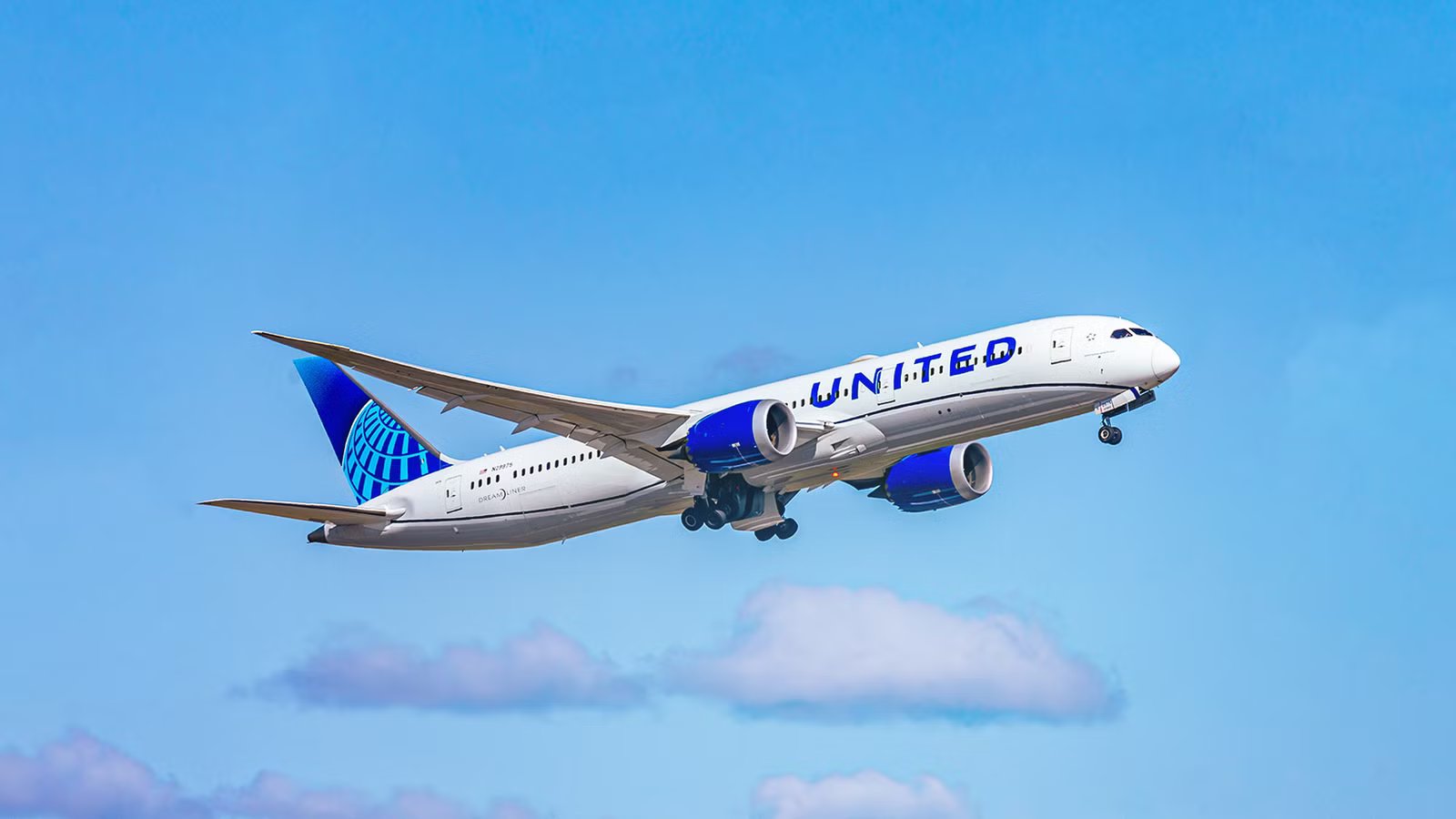
Similar to Northwest, United Airlines also formerly had a significant intra-Asia operation out of Narita due to aircraft range limitations. These routes went away as the carrier began taking new Boeing 787s that could serve destinations like Singapore nonstop, but United still serves Narita nonstop from the US alongside its newer Haneda routes due to its joint venture with All Nippon Airways.
Haneda is primarily for origin & destination traffic, whereas Narita is for additional Asia-Pacific connections. Within the past few years, however, United has begun adding new flights within Asia out of Narita again, using Boeing 737s to serve Cebu, Kaohsiung, Koror, Saipan, and Ulaanbaatar.
Naturally, these are destinations that can’t be economically served nonstop from the US with a widebody, but the major reason why United has begun these routes is due to issues with its Guam hub. Travel demand to Guam remains significantly down from pre-COVID levels, while United operates crew bases and specially configured 737s out of this hub located thousands of miles away from the mainland.
Rather than operate half-empty 737s out of Guam or move planes and crews to the mainland US, United has instead opted to move some of its 737s to Narita. It’s notably operating routes that are not currently served by All Nippon Airways(ANA) , and it’s also allowed the carrier to operate direct flights to destinations not served by any other US airline. United still relies on nonstop flights from the US to serve Asia, while the Narita operations today are mainly a creative use of assets.