dailynewsnblog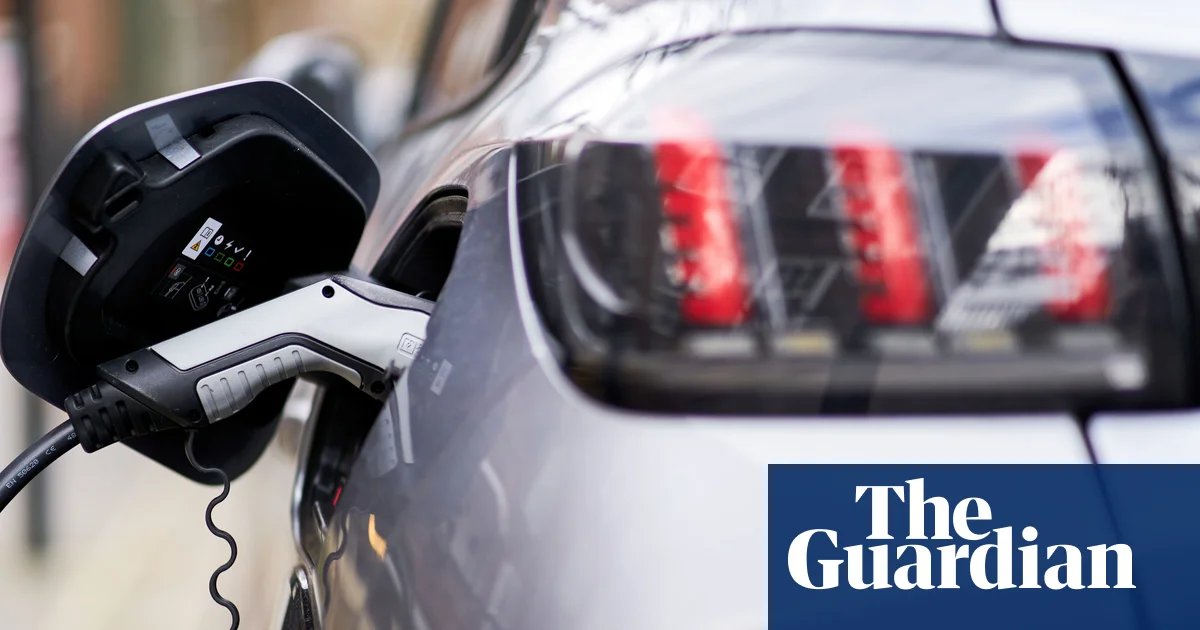
Andy Burnham’s government has said it will look at cutting electric vehicle sales targets, in proposals that could add millions of tonnes a year to the UK’s carbon dioxide emissions.
The government launched a consultation on Friday on cutting the target for new EVs to as little as 50% of all new cars in 2030, down from 80% under existing rules. The consultation will include several options, including leaving the headline target unchanged, or cutting it to 70%, 60% or 50%.
The decision to consider weakening one of the UK’s key climate policies was announced hours after the country recorded its hottest day of the year so far – and the fifth hottest ever – after five heatwaves that scientists have said are almost certainly worsened by global heating caused by carbon emissions.
Several homes burned down in the West Midlands, the UK’s traditional automotive centre, in grassfires on Thursday that may have been worsened by drought.
Electric car sales have soared by 29% in the UK this year, but the automotive industry has said the sales targets, known as the zero emission vehicle (ZEV) mandate, are putting too much pressure on manufacturers. They say the mandate forces them to sell electric cars at discounts, and have threatened job losses or even UK factory closures if the rules do not change.
The government said it needed the targets to “remain pro-business and grounded in the real world”.
Heidi Alexander, the transport secretary, said: “It’s right we keep targets under review to ensure they’re practical and back British industry. The end goal hasn’t changed – but we need to take business with us on the journey.”
The changes are strongly opposed by climate campaigners and by the electric car charging industry, which has plans to spend billions of pounds to install charge points across the country.
The switch to EVs is the single biggest contributor to cutting UK carbon pollution in the next decade, according to the government’s Climate Change Committee.
Under the existing rules, carmakers need to sell an increasing proportion of pure electric cars every year or face fines. The targets tighten from 33% this year to 80% in 2030. The sale of new petrol and diesel cars is then due to be banned from 2035.
Ami McCarthy, the Greenpeace UK head of politics, said weakening the rules would be “a wrong turn for drivers, energy security, our climate and the economy”.
“Both the Iran war and this summer’s extreme weather have shown once again why we’re better off cutting our dependence on fossil fuels. This mandate is one of the most powerful policies we have to bring down planet-heating emissions, which is the only way to stop more deadly heatwaves in future. Burnham can’t fulfil his promise of tackling the cost of living crisis and reindustrialising Britain without the green economy. So why put on the brakes now?”
It would be the second time that the Labour government has watered down the targets after it last year added loopholes called “flexibilities” to the original rules. The loopholes allowed more plug-in hybrid EVs, which combine a polluting petrol engine with a smaller battery, to count towards the mandate, as well as permitting carmakers to catch up with more battery car sales in later years.
Extending the flexibilities to 2034 will also be considered in the consultation, which will run until 23 October. Van sales targets are also likely to be changed.
after newsletter promotion
The most extreme change proposed, cutting the headline rate to 50%, could reduce electric car sales by as much as 5.8m, according to analysis by the Energy and Climate Intelligence Unit thinktank. It added that the changes would make the 2035 ban much harder to achieve, with some carmakers already lobbying for it to be delayed.
Colin Walker, the ECIU head of transport, said: “Proposing to water down the UK’s biggest climate policy the day after temperatures hit 38C, and a summer of heat and drought that risks the UK having its worst ever harvest, may seem strange to the increasing number of people concerned by images of homes on fire, and the security and affordability of the food we eat.”
Households will also bear a financial cost, because electric cars are much cheaper to run over their lifetimes. The US-Israel war on Iran has pushed up petrol prices, helping toincrease demand for electric cars across Europe.
In the first seven months of the year electric cars accounted for a quarter of sales in the UK. That will easily be enough to avoid fines this year when accounting for the flexibilities, according to estimates by the New Automotive thinktank.
Mike Hawes, the chief executive of the Society of Motor Manufacturers and Traders lobby group, said: “The automotive industry is fully committed to a zero-emission future, investing billions in new technologies, products and incentives. However, with the ZEV mandate conceived under vastly different conditions, this welcome review is a timely opportunity to adjust the transition so it works for all.”
The charging industry has reacted with despair to the prospect of further changes. The industry’s lobby group, ChargeUK, has commissioned polling by YouGov that suggested slowing the transition to electric cars would be relatively unpopular. Fifty-three per cent of respondents said they believed the transition should continue at the same pace or be accelerated, while 37% said it should be slowed down.
Delvin Lane, the chief executive of InstaVolt, a company installing ultra-rapid chargers, said: “Ultra-rapid charging investment doesn’t happen on the back of uncertainty. We’ve invested hundreds of millions of pounds into the UK’s charging network because government policy gave us a clear runway to plan against. Softening the mandate at this stage risks spooking exactly the private capital that’s been building the infrastructure this transition depends on.”