dailynewsnblog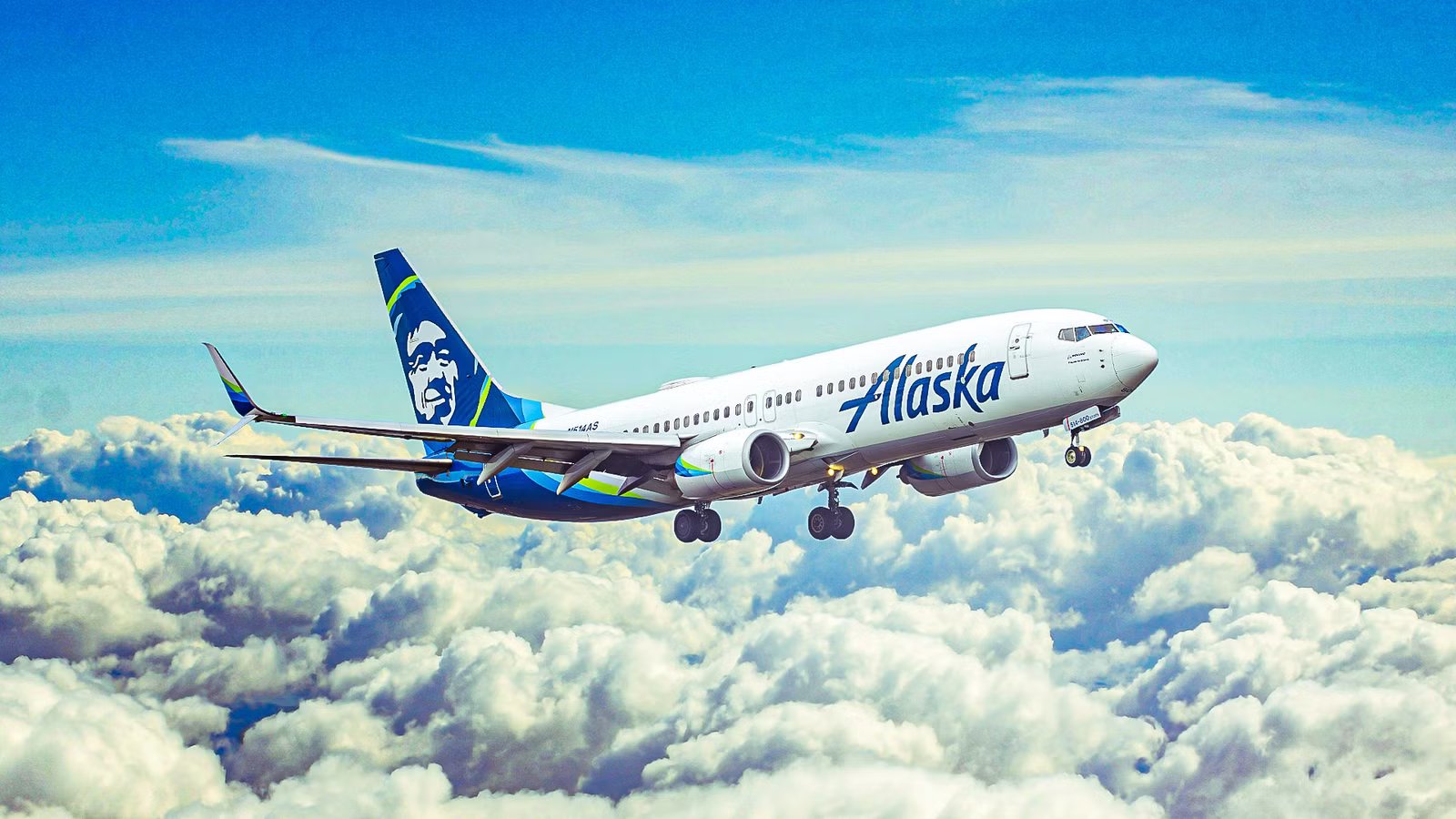
 Alaska Airlines announced on July 21 that Hawaiian Airlines’ 19 Boeing 717s will be replaced by Hawaiian-branded Boeing 737-800s on Neighbor Island inter-island routes starting in 2028. The 717 fleet, which averages approximately 24.5 years old and operates roughly 160 daily segments linking Honolulu to Maui, Kauai, Kona, and Hilo, is one of the oldest active commercial jet fleets in the United States. Boeing stopped manufacturing the 717 in 2006, and only two operators worldwide still fly the type.
The aircraft Alaska selected to replace it is not new either. The 737-800 first entered service in 1998, making it a 25-year-old design replacing another 25-year-old design. Alaska chose it over the 737 MAX, the Airbus A220, and the Embraer E195-E2 for reasons that have more to do with fleet commonality, aircraft availability, and operational simplicity than fuel efficiency or technological advancement. Here is why a carrier with 105 new 737 MAX 10s on order chose a previous-generation aircraft for one of the most demanding flying environments in its network.
What Alaska Announced And Why The 717 Is Going

On July 21, 2026, Alaska Airlines announced that Hawaiian Airlines’ 19 Boeing 717-200s will be replaced by Hawaiian-branded Boeing 737-800s on Neighbor Island routes starting in 2028. The 717 fleet currently operates approximately 160 daily segments linking Honolulu to Kahului, Lihue, Kona, and Hilo, forming the backbone of inter-island travel across the Hawaiian archipelago. The fleet has an average age of approximately 24.5 years, making it one of the oldest active commercial jet fleets in scheduled US service.
The 717’s operational viability has been declining for several years. Boeing ceased 717 production in 2006 after building only 156 aircraft, and the global fleet has shrunk steadily as operators retire the type. Only two carriers still fly the 717 in scheduled service: Hawaiian and Delta Air Lines. The Rolls-Royce BR715 engines that power the aircraft are becoming increasingly difficult to source replacement parts for, and the shrinking operator base means fewer aircraft available for component harvesting. Maintenance costs rise as the support chain contracts, and the economics of keeping a 25-year-old aircraft in high-cycle service deteriorate with each passing year.
The 717 was designed as a high-frequency regional jet and has served Hawaiian’s inter-island operation well for more than two decades. It carries 128 passengers in a two-class configuration across flights that last between 20 and 45 minutes. The aircraft’s size was well-matched to the inter-island market when Hawaiian was operating it alongside competition from go! and Island Air, both of which have since ceased operations. With those competitors gone and Hawaiian holding the dominant position on Neighbor Island routes, Alaska concluded that the 717’s 128-seat capacity was no longer sufficient for the demand the network now generates, particularly during midday peaks.
Why The 737-800 & Not The 737 MAX Or A220

The Boeing 737-800 first flew in 1997 and entered commercial service in 1998. It is not a new aircraft by any measure. Boeing stopped manufacturing the 737-800 as a passenger variant when the 737 MAX family replaced it in production, though the 737-800-based P-8 Poseidon continues to be built for military customers. Alaska Airlines selected a nearly three-decade-old design over the 737 MAX 8, the Airbus A220-300, or the Embraer E195-E2, any of which would have been a newer and more fuel-efficient option for the same routes.
The reason is fleet commonality. Alaska Airlines operates one of the largest 737 fleets in the world. Its pilots are type-rated on the 737. Its maintenance facilities are built around the 737. Its spare parts inventory, ground support equipment, training programs, and operational procedures are all designed for the aircraft. Adding 737-800s to Hawaiian’s Neighbor Island operation slots directly into that existing infrastructure without requiring new type ratings, new maintenance certifications, new training programs, or new spare parts chains. A 737 MAX, A220, or E195-E2 would have required some or all of those investments, adding cost and complexity to a fleet transition that Alaska wants to execute quickly starting in 2028.
The 737-800 is also available. New-build 737 MAX aircraft carry delivery backlogs that stretch years into the future, and A220 production is similarly constrained. Used 737-800s are available on the secondary market in meaningful numbers as airlines worldwide replace them with MAX variants. Alaska can source the aircraft it needs on a timeline that matches the 717 retirement schedule without waiting in a production queue. The combination of fleet commonality, aircraft availability, and proven durability in high-cycle operations made the 737-800 the most practical choice for a fleet transition that prioritizes speed and operational simplicity over the fuel efficiency gains a newer aircraft type would provide.
What Neighbor Island Flying Demands From An Aircraft

Neighbor Island flying is among the most demanding operational environments in US commercial aviation. Hawaiian’s 717s fly segments of 20 to 45 minutes between airports separated by 100 to 200 miles (161 to 322 km) of open ocean, with up to eight or nine flights per aircraft per day. Each flight involves a full takeoff, climb, descent, and landing cycle, which means the airframe, landing gear, and engines accumulate cycles at a rate that long-haul aircraft take months or years to match. A 717 flying eight daily roundtrips between Honolulu and Kahului accumulates more landing cycles in a single month than a 787 flying daily transatlantic service accumulates in a year.
The salt-air environment compounds the cycle count problem. The Hawaiian Islands sit in a marine atmosphere where salt-laden moisture is present at every airport and at every altitude the aircraft operates in. Salt accelerates corrosion on aluminum airframes, landing gear components, and engine hardware. Aircraft operating in Hawaii require more frequent corrosion inspections and more aggressive preventive maintenance than the same aircraft operating in a dry continental environment. The 717 fleet has been absorbing that corrosive exposure for 24 years across thousands of cycles per airframe per year.
The 737-800 was selected in part because it has a proven record in similar high-cycle environments at other operators. The aircraft’s airframe and CFM56-7B engines were designed to handle the thermal and structural stress of frequent short segments, and the global fleet has accumulated enough high-cycle operational data to give Alaska confidence that the aircraft will hold up in Hawaii’s conditions. Hawaiian Airlines CEO Diana Birkett Rakow described Neighbor Island service as “part of the fabric of life in Hawai’i.” The aircraft serving those routes needs to be durable enough to fly eight or nine segments a day in salt air for years without the maintenance costs and reliability problems that the aging 717 fleet is increasingly producing.
What Changes For Passengers

The 717 currently carries 128 passengers in a two-class configuration with a small first class section and an economy cabin. The 737-800 will carry approximately 160-161 passengers, an increase of roughly 32-33 seats per departure. The additional capacity is spread across three cabin classes rather than two. The 737-800 will offer twice as many first class seats as the 717, more than 30 Premium Class seats that do not exist on the 717 at all, and a larger economy cabin. The additional premium seating creates upgrade opportunities for Atmos Rewards and Huaka’i by Hawaiian loyalty program members that the 717’s limited first class section could not accommodate.
The onboard product is a generation ahead of what the 717 provides. The 737-800s will feature Starlink WiFi on every flight, a service the 717 does not offer. Seats throughout the aircraft will be reclining leather Recaro units with 110V power outlets, USB charging ports, and seatback device holders at every position. The 717’s cabin has none of those features.
The cargo hold is also larger on the 737-800, which Alaska specifically noted will provide more room for surfboards and other cargo. That detail may seem minor in a fleet announcement, but it reflects the practical reality of inter-island travel in Hawaii, where oversized sporting equipment moves between islands daily and cargo capacity constraints on the 717 have been a recurring source of passenger frustration.
The Transition Timeline And What Happens Before 2028

The full transition from the 717 to Hawaiian-branded 737-800s is scheduled to begin in 2028, with deliveries continuing through 2029. Alaska has not disclosed how many 737-800s will be assigned to the Neighbor Island fleet, though the current operation uses 19 717s to cover approximately 160 daily segments. The higher seat count on the 737-800 means fewer aircraft could theoretically cover the same passenger volume, but Alaska has indicated it intends to maintain the frequency of service that Hawaii residents depend on for work, school, medical care, and daily life across the islands.
Before the Hawaiian-branded fleet arrives, Alaska will address near-term capacity needs with an interim measure. Starting in October 2026, one Alaska-branded 737 will be based in Honolulu and operate three daily roundtrips between Honolulu and Kahului. The aircraft will operate from Terminal 1 at Daniel K. Inouye International Airport, separate from Hawaiian’s existing Terminal 2 operation. Passengers on those flights will check in at Terminal 1. The interim service adds capacity on the busiest Neighbor Island corridor while the 717 fleet continues flying the remainder of the network.
The future Neighbor Island fleet will be based in Honolulu and flown by Honolulu-based pilots and flight attendants once the operational integration between Alaska and Hawaiian is complete. Alaska emphasized this point in the announcement and the FAQ, responding to concerns from Hawaii’s communities about whether the fleet transition would shift jobs to the mainland. The aircraft will carry the Hawaiian Airlines brand, livery, and service identity rather than operating as Alaska flights with Hawaiian branding.
Catch what other trackers miss
Emergency squawks, holds, NOTAMs — live signals, no signup.
Open tracker
Catch what other trackers miss
Emergency squawks, holds, NOTAMs — live signals, no signup.
Open tracker