dailynewsnblog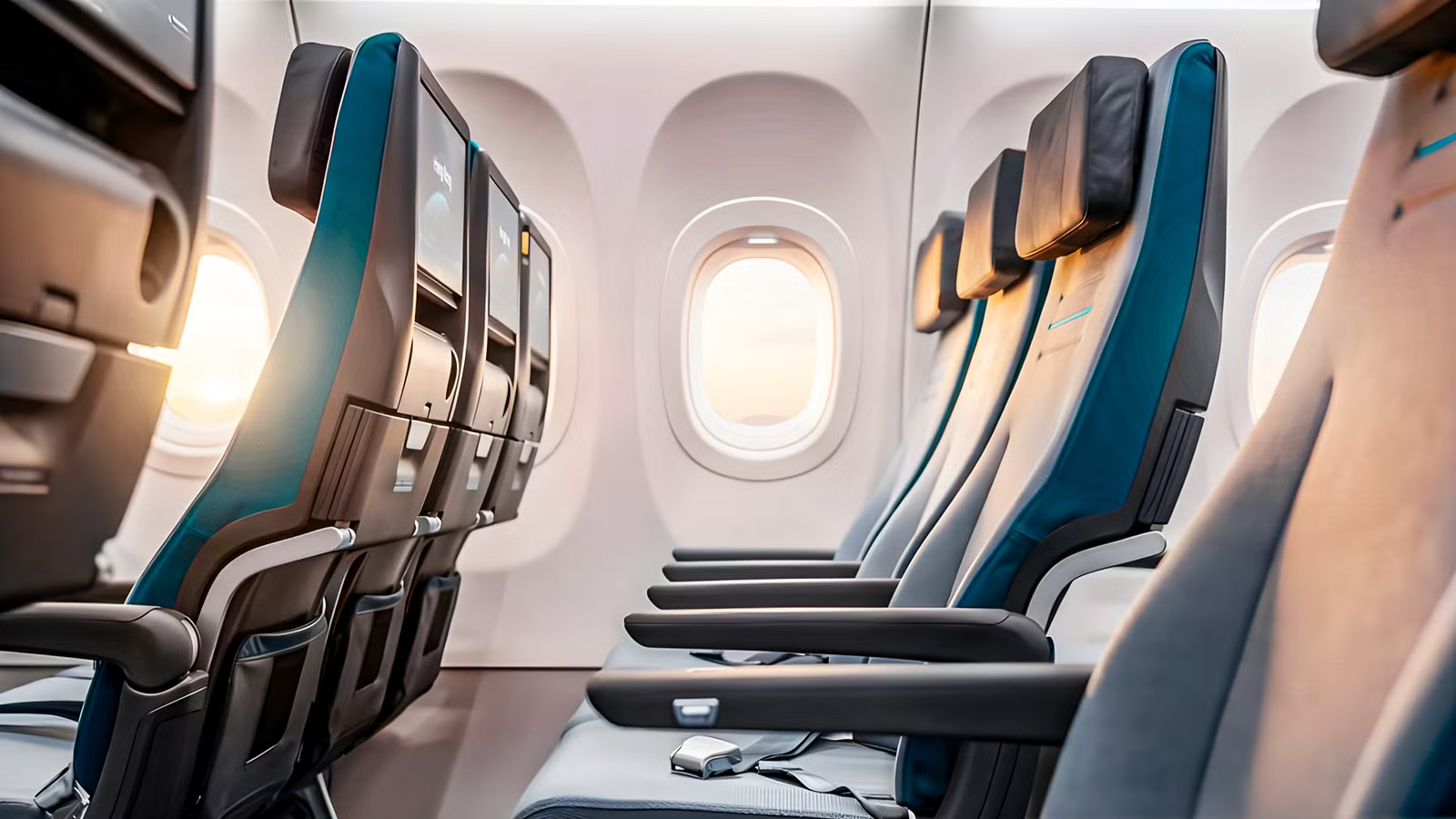
Cathay Pacific has committed to reconfiguring seating aboard its Airbus A321neo fleet. Having taken delivery of its first new engine option, the A321, in 2021, the move means Cathay is revisiting seating plans on aircraft that are, at a maximum, just five years old. Even more surprising, the Hong Kong-based carrier is actually removing, rather than adding, seats.
Indeed, the airline is cutting capacity in the jets’ economy cabins. Not only is this intended to improve legroom for the majority onboard the aircraft, but it is also allowing Cathay to redesign the rear end of cabins with service in mind based on crew feedback. So, what has prompted such a rare decision, and what will the changes look like in practice?
Cathay Strips Out Some A321neo Economy Seats

In all, Cathay’s new configuration will see seven seats removed from its A321neo economy cabin to take overall capacity aboard the aircraft from 202 to 195. Business capacity will remain unchanged at 12 seats under the reshuffle, with the number in the main cabin falling from 190 to 183.
Based on Cathay’s seat maps, the change appears to have been made possible by a rejigging of the planes’ emergency exit layout. Where the original configuration houses one set of exit rows at the middle and rear of the cabins respectively, the new arrangement has seen both placed mid-cabin.
It is a rare occurrence in today’s aviation industry for an airline to actively eat into capacity and, most notably, forego potential revenue. But by taking out seven seats and laying out its A321neo economy cabin more efficiently, Cathay has handed passengers a win. That is, it has managed to increase the space offered to each passenger in the main cabin and make the offering just that bit more appealing in one fell swoop.
Cathay A321neo Economy Leg Room Increased

In stripping out some seats and reconfiguring its A321neo economy cabin floor plan, Cathay will ultimately address a disparity between the space offered to economy passengers on its newest jets and other relatively young aircraft in its fleet. It will also look to make the offering more competitive against nearby rivals like  Singapore Airlines and Malaysia Airlines.
The A321neo economy seat pitch at Cathay is currently 30 inches (0.76 meters). Pitch itself represents the distance between the same points on two seats in a row. Bear in mind that the actual legroom allowed by each is less. Following the move, this pitch will be increased to at least 31 inches (0.79 meters), according to travel publication Executive Traveller. That means the gap to the likes of Cathay’s Airbus A350, where the pitch for economy passengers is 32 inches (0.81 meters), will be narrowed.
Perhaps more importantly, Cathay’s economy offering will gain an edge over some rivals in terms of space thanks to the decision. Singapore offers economy passengers 30 inches (0.76 meters) on its Boeing 737-8 aircraft, for instance. Malaysia, another airline to fly the MAX variant on regional routes, mirrors the city-state carrier on its economy seat pitch aboard the  Boeing narrowbody. For those that also operate the A321neo, including Taiwan’s China Airlines and Starlux, Cathay’s increased economy seat pitch will bring its offering in line with such peers.
Cathay A321neo Service Space Reshuffled

Alongside widening the gap between each row of seating, Cathay is also using the reduced capacity to rework the back end of the cabins in its A321neo fleet. Namely, retrofitted aircraft will house more room for cabin crew to prepare meals, as well as boast larger toilet cubicles.
Two of the four lavatories onboard Cathay’s A321neos have so far been located within the galley at the back of the aircraft, with another sat just in front of the aft doors. After retrofits, all three lavatories at the rear of the economy cabin will sit in front of the aft doors. The galley and lavatory located at the front of each plane will remain unchanged in the meantime.
Catch what other flight trackers miss
Emergency squawks, holds, NOTAMs — live signals, no signup.
Open tracker
Catch what other flight trackers miss
Emergency squawks, holds, NOTAMs — live signals, no signup.
Open tracker
This, Cathay customer experience design general manager Guillaume Vivet told Executive Traveller in July, will leave the aircraft with larger toilets across the board and axe the two original cramped cubicles. It would also pave the way for “elevating the dining proposition” on board “to offer more” to customers, given the additional space in the galley. “We’ve also listened to our cabin crew [who want to] deliver the best service on the A321neo,” Vivet flagged.
How Many A321neos Will Be Affected?

Cathay’s A321neo retrofit program is set to coincide with the latest delivery of one of the models from Airbus. As of the time of writing, this was imminent and reportedly set to take place over the coming weeks. All told, passengers should start to notice fresh interiors across Cathay’s A321neo fleet come the latter half of the year.
This latest arrival will be the first to feature the updated cabin, marking the 17th A321neo to make its way to the carrier. Having taken delivery of its first in August 2021, Cathay’s A321neo fleet has since grown to 16 aircraft. According to the airline’s latest annual report, Cathay had outstanding orders for a further 14 of the jets as of the end of 2025.
Cathay Pacific passenger aircraft orders, as of December 31, 2025:
Aircraft | Number of outstanding orders |
Airbus A321neo | 14 |
Airbus A330-900 | 30 |
Boeing 777-9 | 35 |
As such, those left to be delivered will all arrive from the factory with the latest cabin configuration. Three of these are set to be handed over in the current year, per the annual report, before eight in 2027, and the remaining three in “2028 and beyond.” Meanwhile, those already within Cathay’s ranks are set to be updated to mirror its new A321neos. As Vivet told Executive Traveller: “We’re going to go back to our first 16 aircraft and do those changes as well […] and we’re going to go very fast to get it out to our customers and improve that experience as fast as we can.”
Existing A321neos Originally Meant For Cathay Subsidiary

The pressing question is why Cathay did not just originally order its A321neos with such a cabin configuration already fitted. Based on Planespotters.net data, the 16 already in its fleet average under four years old, meaning the retrofit program is targeting an incredibly young fleet of aircraft by industry standards. Similar projects usually center around far older models to bring them up to modern standards, naturally.
Well, one reason for this sticks out. Those single-aisle Airbus aircraft that Cathay has already taken delivery of were actually meant for its former subsidiary Cathay Dragon. A regional carrier in its own right, Cathay Dragon, became a victim of the chaos caused by the pandemic and was shut down in October 2020. Many of its aircraft, alongside the routes they served, were subsequently transferred over to Cathay under the restructuring.
Cathay Pacific fleet, from Planespotters.net:
Aircraft | Total in fleet | Average age |
Airbus A321neo | 16 | 3.7 years |
Airbus A330 | 43 | 18.0 years |
Airbus A350 | 48 | 7.8 years |
Boeing 747 | 20 | 14.8 years |
Boeing 777 | 52 | 17.5 years |
This included its order backlog with Airbus for A321neos, as it transpired. Cathay originally put pen to paper on the order in September 2017. Some 32 models were included in the original order, which was set to “replace and modernize” Cathay Dragon’s existing portfolio of Airbus A320 and Airbus A321 jets. With the first 16 of these models, Cathay has taken on aircraft with pre-determined cabin configurations actually meant for Cathay Dragon. As a result, the carrier has thus far been improvising with a fleet that was originally kitted out to serve its former subsidiary airline.
Customer Feedback Taken Into Consideration

Another key reason behind the decision to cut capacity and increase space for economy passengers lies in Cathay’s latest annual report. “We have also listened to our customers’ feedback,” the airline wrote in regard to the plan. This would reinforce its “commitment to delivering the most comfortable and enjoyable experience for our customers,” the carrier added.
Combined with input from crew, as highlighted by Vivet’s comments, Cathay’s decision has clearly come about in part in response to feedback from those both traveling and working onboard the narrowbodies. On the side of passengers, the extra inch of space would appear invaluable, especially given it places Cathay far more competitively among peers on regional routes.
However necessary, though, the thinking would have been far from simple behind the scenes. Despite involving a seemingly insignificant seven seats, that is all capacity that could generate revenue for the carrier, leaving it a “hard decision to make” in Vivet’s own words. But the retrofit program has also opened the door for refreshed seat designs and new infotainment systems to be installed too. In all, the bid is one to improve Cathay’s image and “the right thing to do for us,” per Vivet. “I think only a few airlines in the world would make that decision,” he added.