dailynewsnblog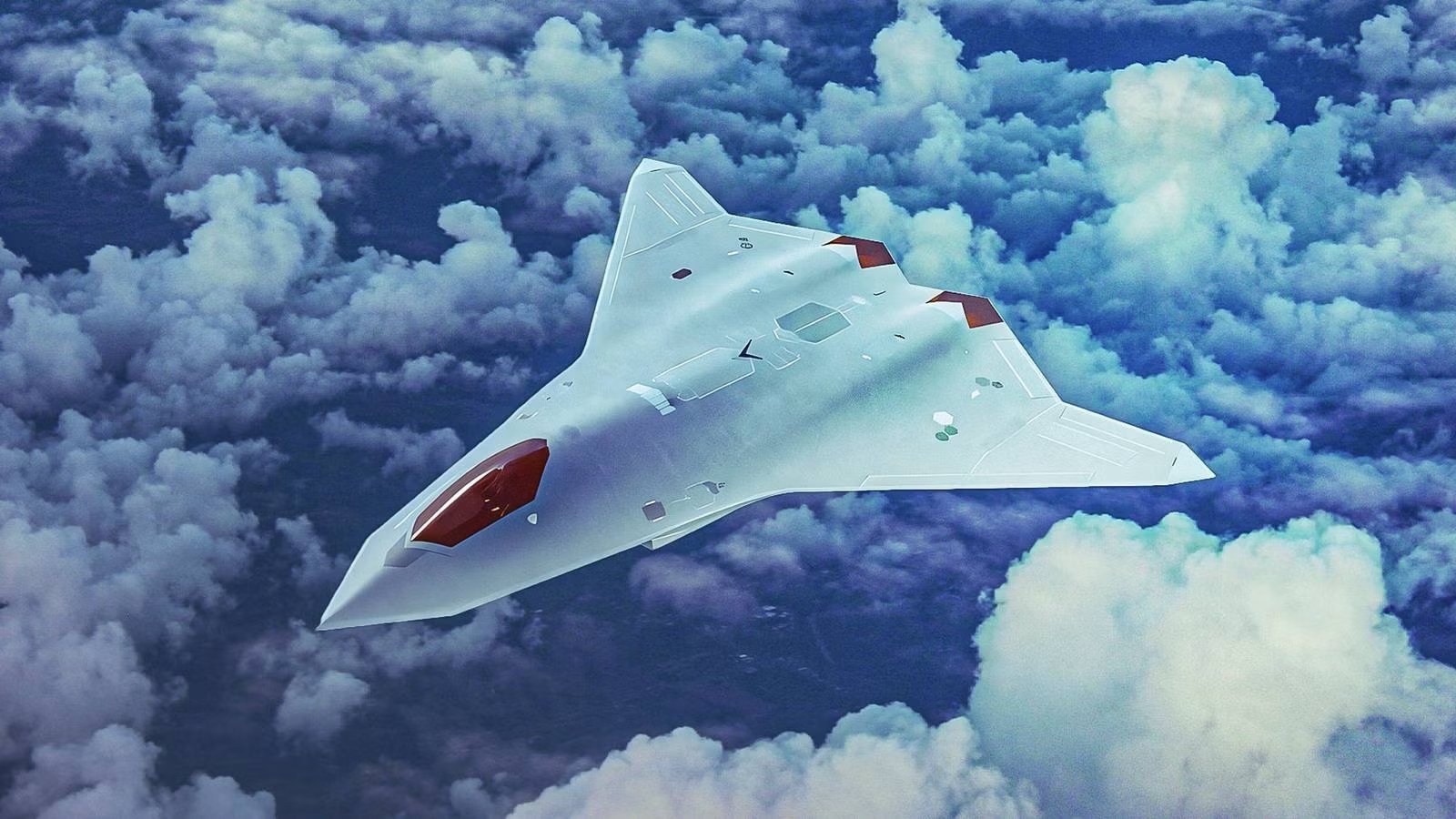
For most of the last twenty years, a new American fighter jet has meant the same story: a glossy unveiling, a decade of delays, and a final price tag nobody saw coming. The Lockheed Martin F-35 is still living that story, working through software delays two decades after its first flight. The  Boeing F-47 was supposed to follow the same script. Instead, the program moved from a classified prototype nobody was allowed to talk about to a $20 billion production contract while barely making headlines along the way, on a schedule that has caught even seasoned defense-industry watchers off guard.
What actually changed is the acquisition process behind it. This article walks through the three milestones that define the F-47’s rise: a secretly flown demonstrator in 2020, a $20 billion Engineering and Manufacturing Development award in March 2025, and a first-flight target for the production aircraft in 2028. It also explains the digital engineering shortcut that let the Air Force compress a normally decade-plus fighter program into about five years.
A Secret Flight In 2020 Started The Clock

A full-scale flight demonstrator for what would become the F-47 was built and flown in secret as early as 2020, years before the public had any hint an aircraft even existed, according to Defense News. DARPA has said separate X-plane prototypes flew in 2019 and 2022 as part of a multi-year risk-reduction campaign feeding into the Next Generation Air Dominance (NGAD) program. Simple Flying’s deep dive into the F-47 designation lays out why this detail matters more than it looks: by the time the Air Force revealed the name in 2025, the aircraft had already skipped the X-plane and Y-plane phases that normally consume years of a program’s life.
Those early flights were totally different from the glamour shots for a press release. Each demonstrator existed to validate a specific piece of the eventual production jet, aerodynamic shaping, stealth geometry, or manufacturing technique, so that by the time engineers sat down to finalize the F-47’s design, they were refining a known quantity rather than gambling on an unproven one. That distinction separates the F-47 from almost every previous US fighter program, where the jump from demonstrator to production aircraft routinely introduced problems nobody had tested for.
The payoff shows up directly in the calendar. A demonstrator flying in 2020, refined through 2022, fed into a production contract award in 2025, a five-year span for a milestone that took the F-35 roughly a decade to clear after its own X-35 demonstrator first flew in 2000.
The secrecy around those flights has an unusual side effect: nobody outside the program has seen the F-47. Unlike China’s Chengdu J-36, which Beijing has flown openly for anyone with a camera and an internet connection, the United States Air Force has released only artist renderings of its own sixth-generation fighter, a gap between what the public knows about each aircraft that is itself a data point: the program’s secrecy has held for six years running, a rare feat for a defense project this large.
Digital Twins Replaced Years Of Physical Testing

The data those demonstrators generated fed a digital twin of the F-47, a software model detailed enough for engineers to test radar cross-section, maintainability, and manufacturing sequencing entirely before cutting a single production-representative part. That is a meaningfully different approach than the F-35 took, where design changes discovered on a physical test article often rippled backward through a supply chain that was already tooled up and building jets.
That difference matters most in the moments a fighter program usually loses years: when a part doesn’t fit, a sensor overheats, or a maintenance panel turns out to be unreachable on the flight line. On the F-35, problems like these surfaced late, on real jets already rolling off the line, which is part of why the program racked up billions of dollars in retrofits and a multiyear backlog of unresolved deficiencies. Running the same checks against a digital twin lets engineers catch that kind of failure on a screen instead of a hangar floor, months or years before metal is cut, and revise the design without touching a single jet already under construction.
That digital-first approach did more than save time; it changed who owns the resulting code. Boeing’s F-47 uses a government-owned architecture, which the Air Force says will let it update software and weapons systems at what officials call “the speed of relevance,” according to Defense One, instead of routing every change through a single contractor’s proprietary systems the way the F-35’s Block 4 upgrade cycle has required.
The $20 Billion Contract That Beat Lockheed Martin

In March 2025, the Air Force awarded Boeing a $20 billion Engineering and Manufacturing Development contract for the F-47, beating out Lockheed Martin, the company that has built every US stealth fighter to date, as documented by Defense One. The award, confirmed publicly by President Donald Trump from the Oval Office, marked Boeing’s first clean-sheet fighter win in a generation, according to CNBC.
Losing that bid, and what it means for a company that has defined stealth aircraft since the Lockheed F-117 Nighthawk, is the subject covered by Simple Flying in its breakdown of why Boeing beat Lockheed Martin to the F-47 contract, tracing it to Boeing’s digital-engineering maturity rather than any lapse on Lockheed’s part.
The win also lands at a critical moment for Boeing’s balance sheet. The company’s defense unit has needed a marquee program after years of commercial turbulence, and the EMD award secures fighter work at its St. Louis facility for years, even as Boeing’s commercial side works through its own production recovery on the Boeing 737 MAX line, a reminder that the F-47 contract is as much a corporate turning point as a military one.
One Pilot, A Fleet Of Drones: The Quarterback Concept

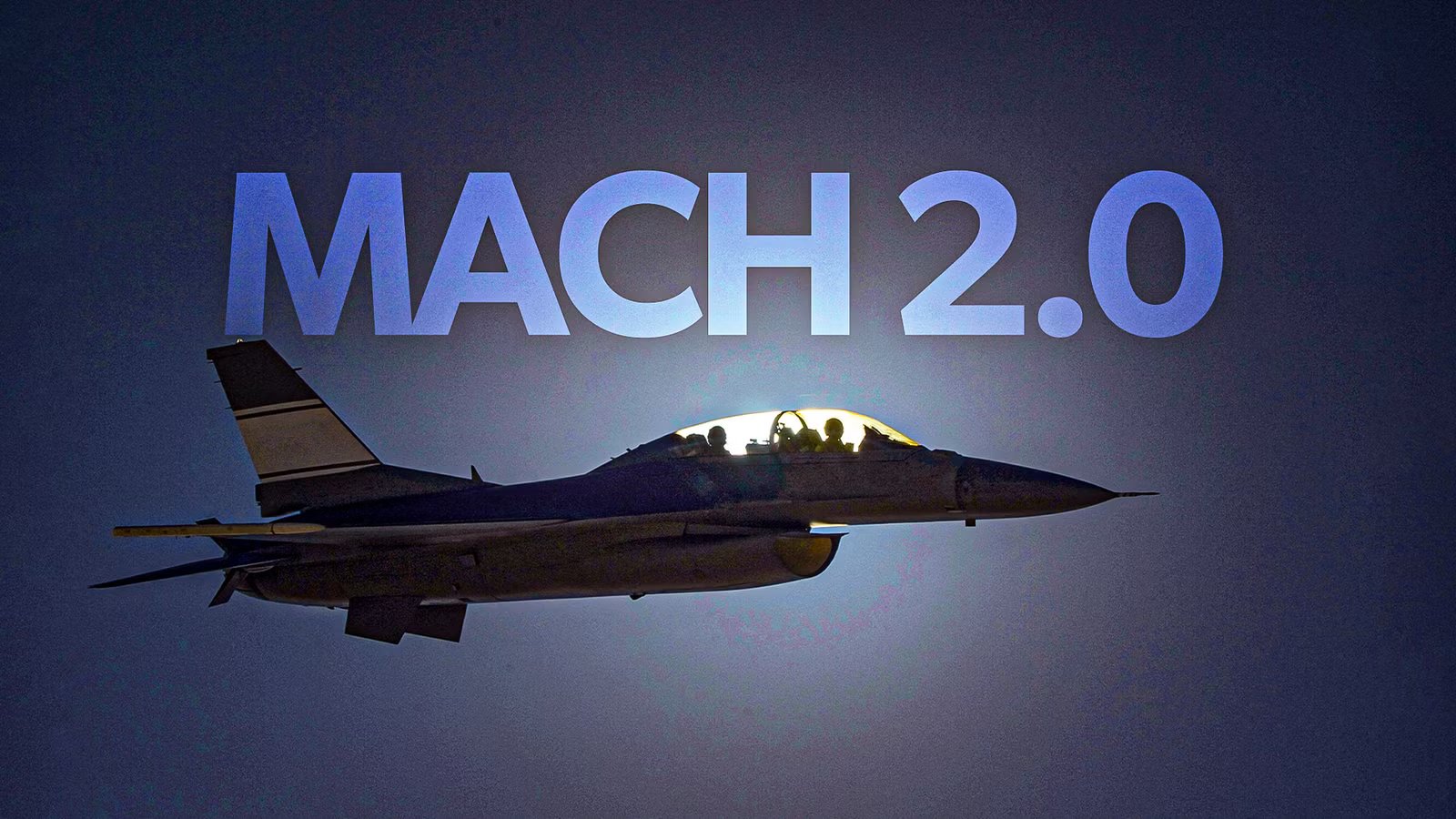
The F-47 is not designed to fly alone. The Air Force frames it as a “quarterback” for a family of systems, a crewed fighter that commands semi-autonomous Collaborative Combat Aircraft (CCA) droneshandling strike, electronic warfare, and reconnaissance roles around it, according to Partyard Military. That structure is central to why the jet needs the range it does: a combat radius in excess of 1,000 nautical miles (1,852-plus km) and speeds above Mach 2, or roughly 1,535 miles per hour (2,470 km per hour) at altitude, according to New Atlas, so a single F-47 can push its drone formation deep into contested airspace without aerial refueling.
General Atomics’ YFQ-42A and Anduril’s YFQ-44A are both in flight testing as the Air Force’s first production Collaborative Combat Aircraft, and despite coming from competing manufacturers, both are built around the same idea: a jet-powered, fighter-sized drone cheap enough to lose in combat, flexible enough to swap between a strike loadout one mission, and a sensor or jamming package the next one.
Planning documents point to a fleet of more than 1,000 CCAs eventually supporting the 185-strong F-47 force, a ratio of roughly five or six drones per crewed jet. Each CCA is cheaper to build, cheaper to lose, and faster to iterate than a crewed fighter, which lets the Air Force absorb attrition in a way it never could with the Lockheed Martin F-22 Raptor fleet it is replacing. The math only works, though, if the F-47 itself can reliably command that many autonomous wingmen at once, which is why so much of the program’s software investment sits inside the cockpit rather than the airframe.
2024: The Year The Program Nearly Got Canceled

The F-47’s rapid rise nearly did not happen. In 2024, the Air Force’s acquisition office paused the entire NGAD competition after projected unit costs climbed to roughly $300 million per aircraft, about three times an F-35’s price tag, according to Popular Mechanics. That is not a small gap to explain to Congress for a fleet meant to number in the hundreds, especially at a moment when the Air Force is also funding the Northrop Grumman B-21 Raider bomber, the Sentinel missile program, and a fleet of Collaborative Combat Aircraft, all competing for the same modernization dollars.
The Air Force spent months running an internal study asking whether NGAD, in any form, was still the right answer, and whether cheaper alternatives, more F-35s, more CCAs, a smaller crewed fighter, could deliver similar air dominance for less money. By early 2025, that study concluded there was no viable substitute for a crewed, long-range, deep-penetration platform, and the program restarted with its scope validated rather than shrunk.
The unit-cost math still matters going forward. At roughly $300 million per jet, according to the National Security Journal, a 185-aircraft fleet implies a total buy north of $55 billion before support, weapons, and the CCA fleet flying alongside it are even factored in, a bill the Air Force will be defending line by line for the next years.
What The F-47’s Blueprint Means For Everyone Else

The number that should worry rival air forces is not Mach 2 or 1,000 nautical miles, it is five: the number of years the United States needed to go from a secret prototype to a validated, funded production contract.
Allies working on their own sixth-generation fighters, including the UK-Italy-Japan Global Combat Air Programme (GCAP), are watching a US model built on digital twins and government-owned code outpace their own more traditional development structures, and that gap is becoming a genuine source of pressure inside those partnerships. Japan, in particular, has grown visibly impatient with GCAP’s pace, and a multibillion-dollar budget shortfall on the UK side has only added strain to a 2035 in-service target that already looked tight next to the F-47’s 2028 first-flight goal.
For Boeing, the F-47 is now the clearest test of whether digital engineering can consistently replace the expensive trial-and-error that plagued the F-35 for two decades. A first flight of the production-representative jet is targeted for 2028, according to Army Recognition, and every month that date holds will be read by defense ministries far beyond Washington as proof that the compressed-timeline approach works, not just once, but as a repeatable way to build a fighter jet.