dailynewsnblog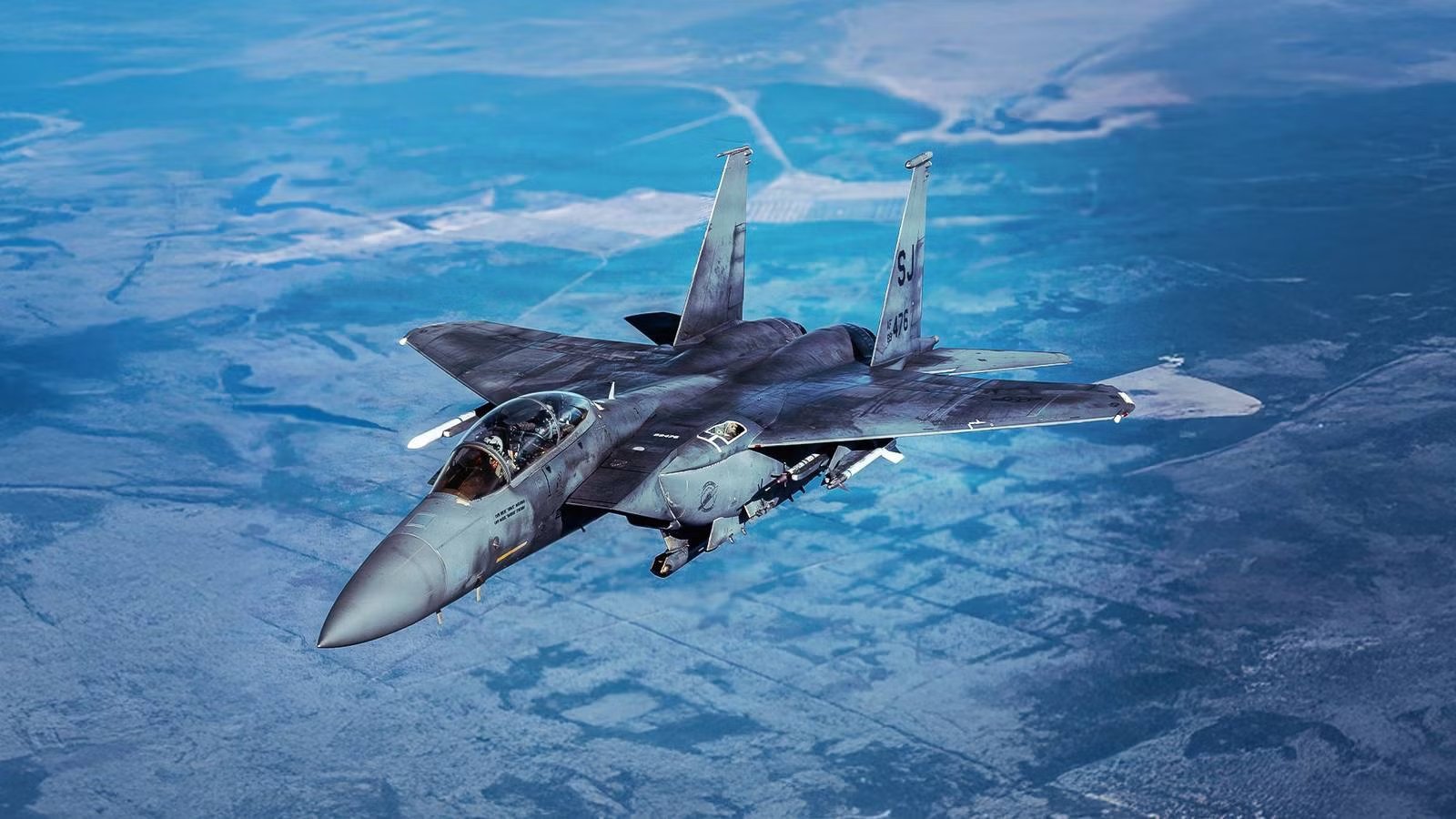
Lockheed Martin delivered over 170 F-35s across all variants in 2025, and the United States Air Force is pushing toward a mid-2026 production decision on the YFQ-42A and YFQ-44A Collaborative Combat Aircraft, the first uncrewed “loyal wingman” jets meant to fly alongside crewed fighters rather than replace them outright. Add a FY2027 budget request in which, according to Inside Defense, the Air Force asked to remove from service 149 aircraft to stabilize the Lockheed Martin F-35 and Boeing KC-46 Pegasus programs, and this situation starts showing up on individual squadron rosters.
By December 31, 2026, three specific slices of the US fighter fleet will look measurably different than they did on New Year’s Day: the Navy’s oldest Block I/II F/A-18E/F Super Hornets and EA-18G Growlers, the Air Force’s non-“Platinum” F-15C/D Eagles, and a shrinking pool of pre-Block 50 F-16C/Ds still working test, training, and aggressor duty. None of this is a fleet-wide retirement of the three types. It’s a variant-by-variant thinning, block by block, squadron by squadron, and by the end of this article, you’ll know exactly which airframes are on borrowed time, which units are absorbing the cuts, and what’s rolling onto the ramp to replace them.
The Navy’s Oldest Super Hornets And Growlers Go First

The  Boeing F/A-18E/F Super Hornet entered fleet service in 1999, and the first production Block II jets followed in 2005 with the APG-79 AESA radar. Those early Block II airframes are now pushing past 6,000–7,000 flight hours on carrier-cycle fatigue counters, a brutal service life given that catapult launches and arrested landings put roughly four times the structural stress on an airframe that a comparable land-based sortie does.
They’re the ones being thinned first as Boeing’s newer Block III becomes the fleet standard for carrier air wings deploying after 2026, with an Advanced Cockpit System (ACS), a new Distributed Targeting Processor Network (DTP-N) and the Tactical Targeting Network Technology (TTNT), reduced radar signature, and the AN/ASG-34 IRST (Infrared Search-and-Track), as previously seen on Simple Flying.
Carrier air wings themselves are shrinking their Super Hornet squadron sizes as part of the same math, trimming individual squadrons from 12 aircraft down to 10 in some cases, with the freed-up airframes and maintenance hours redirected to keep the remaining Block II and Block III jets flying at a higher readiness rate rather than spreading thin maintenance crews across every tail number on the books.
This is the flip side of a fleet that, per the US Navy‘s own account of taking delivery of its final Block II Super Hornet, has been counting down toward an all-Block-III carrier fleet for years. 2026 is simply where that clock runs out for the oldest tails still in the pattern.
The EA-18G Growler, the electronic-attack derivative that entered service in 2009, is losing 25 of its oldest airframes as the Navy leans on upgraded Next Generation Jammer pods to keep electronic-warfare capability up even with fewer airframes.
That divestment plan tracks with what Aviacionline reported on the Navy’s proposed cuts, and it lines up with Aerospace Global News’ reporting on the broader Boeing Super Hornet life-extension effort the Navy is funding in parallel to keep the airframes it does keep flying well past their original design life. Boeing has confirmed the last new-build Super Hornet aft fuselages are already in production, meaning The War Zone puts the close of the assembly line at 2027 with no export orders left to extend it, a detail that makes 2026’s Block I/II divestment feel less like routine attrition and more like the start of the type’s final chapter.
The Air Force’s Eagles: Fewer C/Ds, Far Fewer Strike Eagles

The Air Force enters FY26 with just 42 combat-coded F-15C/Ds Air Force-wide, a fraction of the roughly 400 the fleet counted at its 1990s peak, according to Simple Flying’s breakdown of the USAF’s official Tactical Fighter Aircraft Force Structure report. Roughly 100 of the remaining C/D-model Eagles are being retired this cycle, while around 80 “Platinum Eagles”, airframes with the lowest fatigue-life consumption, are kept flying homeland-defense alert duty out of Air National Guard units through 2030-2031, a split Simple Flying detailed, and that explains why headlines calling the F-15C “retired” and Guard pilots still scrambling F-15Cs on alert are both technically correct.
Kadena Air Base in Okinawa flew its last operational F-15C sorties in 2023, with F-15EX Eagle IIs rotating in on a schedule Air & Space Forces Magazine describes as permanent. The F-15EX cruises at speeds comparable to the C-model, Mach 2.5, with a service ceiling above 60,000 feet (18,290 meters), but carries fly-by-wire controls and a digital backbone the 1970s-designed C/D airframe was never built to support.
The bigger Eagle story in 2026 belongs to the F-15E Strike Eagle, and it’s a cut larger than the C-model’s. Of roughly 217 Strike Eagles currently in the fleet, only 99, the ones already fitted with the newer Pratt & Whitney F100-PW-229 engineand EPAWSS electronic-warfare suite, are slated to stay long-term, per Simple Flying’s coverage of the plan. Congress is applying the same brakes here that it applied to the A-10: Air & Space Forces Magazine reports that the Air Force wanted to retire 21 F-15Es in FY26 alone to save an estimated $140 million, and the FY2026 NDAA blocked it, capping total F-15E retirements at 68 jets through FY2029 with zero cuts allowed in FY2026 itself — a limit The Aviationist’s review of the same NDAA confirms.
F-16s: The Early Blocks Are The Ones Going Quiet

The Lockheed Martin F-16 storyline is less publicized than the Eagle’s, largely because the Viper fleet is so much larger and more dispersed. But the same pattern applies: Block 25, 30, and 32 airframes built in the 1980s are being pulled first from Air National Guard fighter wings, the 64th Aggressor Squadron at Nellis Air Force Base, and test units at Edwards Air Force Base. The War Zone reported the Air Force is cutting back the Nellis aggressor Viper fleet specifically, even as demand for “red air” adversary training keeps climbing, a sign the cuts are being driven by airframe health rather than declining need for the jets.
These are airframes averaging 35-plus years of service, many beyond their originally certified 8,000-hour service life. According to Air & Space Forces Magazine, Air National Guard leadership has flagged that Guard-flown Block 30 F-16s have limited structural airframe life left and must be retired over the next decade, while even the newer Block 40/42/50/52 jets are already averaging 36 years old. As F-35A deliveries continue to Guard units, the math on sustaining 40-year-old Block 25 Vipers for aggressor duty stops making sense, and Block 50/52 jets, with the F110-GE-129 engine and 29,000 pounds (129 kN) of thrust, are the ones being kept.
General Dynamics stopped building new Block 25/32 structural components decades ago, so every early-block Viper still flying draws on a shrinking pool of cannibalized parts from airframes already sent to Davis-Monthan. This isn’t a uniquely American pattern, either. Simple Flying has documented how the same pattern is emerging across NATO: rather than retiring entire fighter families overnight, air forces are quietly eliminating the oldest blocks first while concentrating funding on their newest variants. The US is following exactly that playbook.
Congress Changed The A-10’s Retirement, Not Its Fate

The replacement math is straightforward on paper: the Air Force’s FY2027 budget request expands planned F-15EX Eagle II production from 129 to 267 aircraft, the Navy’s Block III Super Hornet upgrade line keeps existing airframes flying into the 2030s pending the F/A-XX’s carrier debut, and F-35A deliveries to Guard units continue to absorb early-block F-16 retirements one wing at a time. None of these are one-for-one swaps in terms of unit cost: an F-15EX runs close to $90 million per copy, versus roughly $30 million (adjusted) for a late-production F-15C in the 1990s, but the Air Force is betting that fewer, more capable jets flying more sorties per airframe beats a larger fleet of aircraft nobody can keep structurally sound.
Not every legacy type is going quietly, though. The Fairchild-Republic A-10 Warthog remains the clearest counter example: as recently as January 2026, 19FortyFive reported that the Warthog had only three years of service life left on the accelerated retirement plan the Air Force wanted. Congress overruled that plan: Air & Space Forces Magazine confirmed the FY2026 NDAA blocked the requested A-10 and F-15E divestment outright, while the Air Force is now required to keep flying the Warthog through 2030 instead, as reported by Military Times. The act did not stop the drawdown altogether. The final A-10s did leave Hill Air Force Base’s maintenance depot this year, as documented by Air Force Materiel Command, and several squadrons began transitioning away from the Warthog. What lawmakers prevented was the fleet’s complete disappearance, preserving a core force while forcing the Air Force onto a slower retirement timeline.
That congressional friction doesn’t extend to every corner of the drawdown, either. Marine Corps Times reported in May that the Marine Corps is phasing out legacy F/A-18 Hornet maintenance occupational specialties entirely as its F-35 transition nears completion, and by that same month, Zona Militar noted that the Marine Legacy Hornet fleet was down to just three operational squadrons, a personnel and unit-level signal that the type’s active service life is closing out with far less resistance than the Warthog’s. The other veteran of the Marine Corps, the Boeing AV-8B Harrier II, didn’t get that slow fade: it made its final flight on June 3, 2026, at Cherry Point, closing out more than four decades of service in one ceremony rather than a gradual squadron-by-squadron wind-down.
What Actually Happens To These Jets After They’re Retired?

“Retired” doesn’t mean scrapped, at least not right away. Most of the aircraft discussed here will first pass through the 309th Aerospace Maintenance and Regeneration Group (AMARG) at Davis-Monthan Air Force Base in Arizona. Per AMARC Experience’s tracking of the facility, roughly 340 F-16s already sit in that desert storage, the bulk of them older F-16A/D models, and the early-block Vipers retiring in 2026 are simply joining that line.
The Arizona desert is more than a graveyard for retired military aircraft. The region’s hot, dry climate slows corrosion, allowing the Air Force to preserve thousands of airframes for years or even decades. What happens next depends entirely on timing, and this is where the story gets counterintuitive. Some eventually return to service, others become sources of spare parts, while many remain in storage until they are scrapped or transferred elsewhere.
For 15 years, the most common “second life” for a retired F-16 was conversion into a QF-16 full-scale aerial target, an optionally piloted drone used to absorb live missile shots during weapons testing. That pipeline just closed: Boeing delivered the 127th and final QF-16 to the Air Force in December 2025, ending the program outright, as The Aviationist reported. So any early-block Viper retiring later in 2026 won’t become a target drone; it goes into storage with no confirmed next assignment, available for parts cannibalization to keep its surviving squadron-mates flying, or simply waiting for a program that doesn’t exist yet.
The Navy runs a parallel system at its own boneyard, the Aerospace Maintenance and Regeneration Group detachment tied to NAS Pensacola and, for carrier types, storage at Davis-Monthan alongside the Air Force fleet. Neither the Super Hornet nor the Growler has an export customer lined up to take early-retired airframes the way some F-16 users have historically received hand-me-down jets, so for now, the most likely outcome for the oldest Block I/II Hornets and Growlers coming off the flight line in 2026 is the same as the Viper’s: cold storage, parts harvesting, and an open question about what, if anything, comes next.
The One Number That Actually Matters

Strip away the squadron-by-squadron detail and one figure sums up 2026: across the Navy, Air Force, and Marine Corps, roughly 90 to 100 legacy fighter airframes are leaving active-duty service this year, and every single one of those families keeps flying regardless. What disappears is the oldest 20 percent of each fleet, replaced by a newer block of the same jet, or, in the Super Hornet’s case, eventually by the F/A-XX sometime in the 2030s.
The number worth watching next isn’t a retirement count; it’s 2027, when Boeing’s Super Hornet production line is scheduled to close for good with no export customer to keep it open. That’s the date the drawdown described here stops being a midlife thinning and starts being an actual end.
For pilots and maintainers of these specific squadrons, 2026 will feel like an ending regardless of how the fleet-wide numbers shake out. But for anyone tracking the aircraft themselves rather than the units flying them, the honest read is less dramatic than the headlines suggest: the Super Hornet, the Eagle, and the Viper are all still here, just thinner, older on average within their own remaining ranks, and outnumbered on the flight line by the newer blocks and types built to eventually take their place.