dailynewsnblog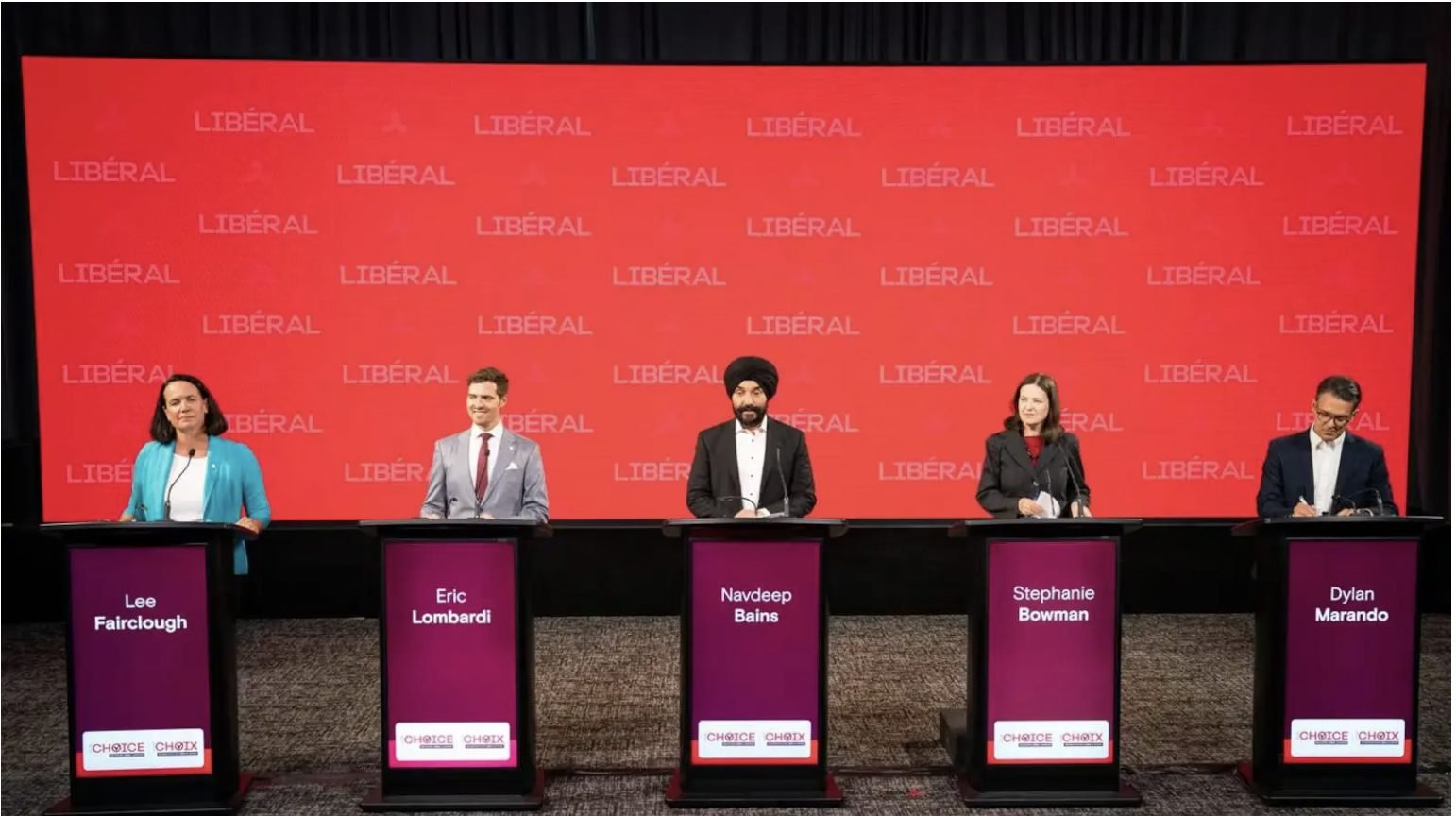
The most intense disagreement came over a question that has particular resonance for a party that has spent the past eight years trying to recover from its collapse in 2018: does its next leader need to be sitting in the legislature?
Ontario Liberal leadership candidates used their first debate of the campaign to make their case for who is best positioned to rebuild the third-place party.
And the clearest dividing line was over whether its next leader needs to already have a seat at Queen’s Park.
The five candidates (Navdeep Bains, Stephanie Bowman, Lee Fairclough, Eric Lombardi and Dylan Marando) faced off Monday evening in Brampton for the first debate ahead of the party’s Nov. 21 leadership vote.
But for much of the roughly 90-minute event, there was more agreement than confrontation.
The candidates shared concerns about the state of health care, education and Ontario’s economy and repeatedly directed their criticism toward Premier Doug Ford and his Progressive Conservative government.
The most intense disagreement came over a question that has particular resonance for a party that has spent the past eight years trying to recover from its collapse in 2018: does its next leader need to be sitting in the legislature?
Fairclough and Bowman, the two candidates who are currently Liberal MPPs, argued that it does.
“We can’t keep doing the same thing,” Fairclough said, pointing to the experience of the party’s two previous permanent leaders.
Steven Del Duca and Bonnie Crombie both led the Liberals from outside Queen’s Park. Neither was able to defeat Ford, and both resigned after losing provincial elections.
Bowman said she saw first-hand the disadvantages that came with having a leader outside the legislature.
“It was a real challenge,” she said, arguing that leaders without a seat can struggle to attract the same attention and regularly reach voters when they are not participating in question period and the daily battles at Queen’s Park.
Bowman was first elected in Don Valley West in 2022, while Fairclough entered the legislature after winning Etobicoke—Lakeshore in 2025.
The three candidates without seats pushed back on the idea that legislative status should determine who leads the party into the next election.
Marando argued voters will ultimately be judging the Liberals on their alternative to Ford, not asking whether the leader was already an MPP when they took over the party.
Bains, a former federal Liberal cabinet minister making a move into provincial politics, also talked about the appetite for political change and didn’t accept the push that the next leader must already be sitting at Queen’s Park.
“We all recognize that change is in the air,” Bains said.
Lombardi, a housing advocate and financial technology engineer, is also seeking the leadership without holding elected office.
The disagreement leaves Liberal members with a strategic question that has hung over the party since even before the race began: if experience inside Queen’s Park gives Bowman or Fairclough an advantage, or if the party needs a leader with a different profile to broaden its appeal.
Besides that question, the candidates found fewer opportunities to differentiate each other.
Discussions about health care, schools and affordability often turned to criticism of Premier Ford’s record instead of major disagreements among the Liberals over what they would do differently.
The debate comes at a potentially important moment for the Liberals.
Ford has won three consecutive majority governments since taking power in 2018, defeating three different Liberal leaders along the way: Kathleen Wynne, Del Duca and Crombie.
The Liberals were reduced to seven seats in the 2018 election and lost official party status before beginning a slow recovery. They returned to official party status in 2022 and increased their representation again in the 2025 election, but remained the third-largest party in the legislature.
Now they are preparing to choose their fourth permanent leader since losing government.
Bains enters the contest with one of the highest profiles in the field. He served in former prime minister Justin Trudeau’s cabinet before leaving federal politics in 2021 and moving into the private sector, including a senior role at Rogers Communications. He has also established an early fundraising lead in the leadership contest.
Bowman and Fairclough, meanwhile, say they offer something the party’s previous two leaders could not: an immediate presence on the floor of the legislature.
The five candidates now have until the fall to convince Liberals they are the person capable of turning the party’s gradual recovery into a credible challenge for government.
Members will select the new leader through a one-member, one-vote ranked ballot, with the winner announced Nov. 21. The deadline to join the party and be eligible to participate in the leadership vote is Sept. 9.