dailynewsnblog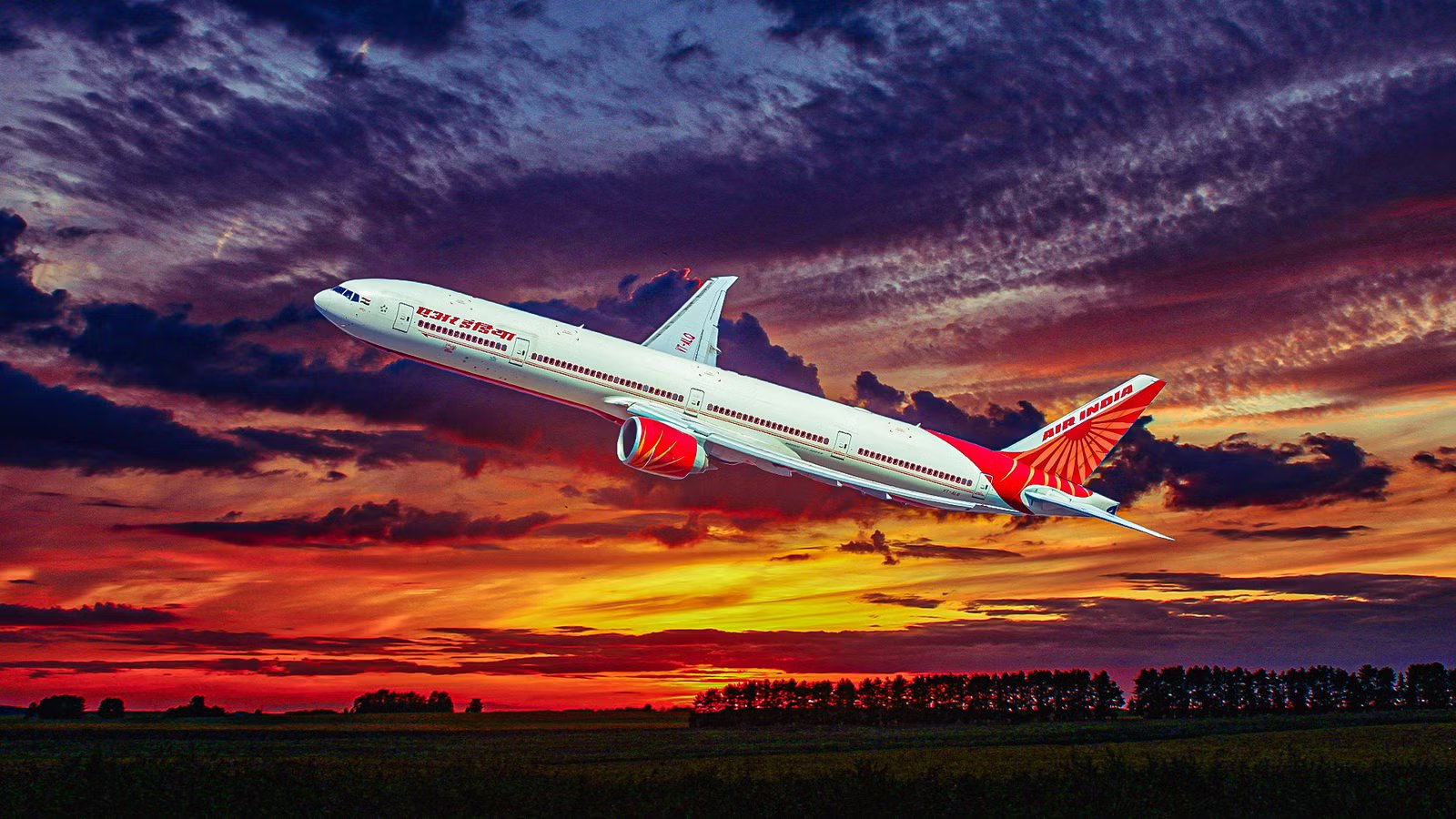
 Air India has scheduled a record number of flights between
  Delhi Indira Gandhi International Airport (DEL) and Melbourne Airport (MEL) this coming northern winter season, increasing weekly frequencies to ten flights. This is the largest schedule the Indian carrier has ever planned between the two cities as it rebuilds an international network scaled back sharply during the summer.
In July, the carrier swapped the Boeing 787-8 for the larger Boeing 777-300ER on this route, boosting capacity by nearly 500 weekly seats. This winter, the 777-300ER will operate a daily service, complemented by three additional weekly 787-8 flights.
Air India’s Record Delhi-Melbourne Winter Schedule

Air India is currently offering a reduced schedule on this route due to rising fuel costs, temporarily cutting flights to four per week. While it will return to a daily service from September 1, the ten weekly frequencies will not begin until October 25. The daily 777-300ER flight departs Delhi at 1:15 AM and lands in Melbourne at 7:00 PM, returning at 8:30 PM for a 3:50 AM+1 arrival back in the Indian capital the following morning.
Frequency | Route | Departure | Arrival | Aircraft |
|---|---|---|---|---|
Daily | Delhi (DEL) – Melbourne (MEL) | 1:15 AM | 7:00 PM | Boeing 777-300ER |
3x weekly | Delhi (DEL) – Melbourne (MEL) | 1:45 PM | 7:30 AM (+1) | Boeing 787-8 |
3x weekly | Melbourne (MEL) – Delhi (DEL) | 9:15 AM | 4:35 PM | Boeing 787-8 |
Daily | Melbourne (MEL) – Delhi (DEL) | 8:30 PM | 3:50 AM (+1) | Boeing 777-300ER |
The three weekly 787-8 services operate on separate timings, leaving Delhi at 1:45 PM for a 7:30 AM+1 arrival the next day, then departing Melbourne at 9:15 AM for a landing in Delhi at 4:35 PM. Flights have a block time of 12 hours and 15 minutes on the outbound, and 12 hours and 50 minutes for the inbound on this 6,368 miles (10,246 km) route.
Larger Boeing 777-300ER Service Since July

Air India introduced the 777-300ER on the route on July 1, opting for its higher-premium 328-seat variant. These airframes were originally flown by Etihad Airways, which the Indian carrier leased in 2023 before purchasing outright in 2025. The aircraft can accommodate 328 passengers across eight first class suites, 40 lie-flat business class seats, and 280 economy class seats.
The 787-8 it replaces can carry up to 259 in a two-class layout of 18 business and 241 economy seats, making the swap worth 69 additional seats per departure, an increase of 27%. Premium capacity is where much of the added capacity is found, rising from 18 seats to 48, including the first class cabin, which is not available on the 787-8.
Passenger data shows that around 281,000 round-trip passengers were carried between Delhi and Melbourne in the 12 months to April 2026, making it the busiest pairing between the two countries. Australian Bureau of Statistics figures show that India-born residents became the country’s largest overseas-born group for the first time in 2025, overtaking England.
Air India Continues To Restore Long-Haul Network

Melbourne is one of several long-haul routes gaining more flights as Air India restores capacity across its international network. In response to soaring jet fuel prices and other factors like airspace restrictions in the Middle East, the carrier made wide cutbacks to its long-haul services between June and August.
Nonetheless, it has maintained more than 1,200 international flights a month and plans to restore service to many key routes starting in September. However, some routes, including flights to Chicago (ORD) and Washington Dulles (IAD), will remain suspended due to a lack of available aircraft.
Much of that shortage comes due to a cabin retrofit drive involving its Boeing 787-8s, which began in 2025 and is scheduled to finish by mid-2027, as well as the retirement of the carrier’s older Boeing 777-200LRs. Air India’s long-haul fleet consists of 26 Boeing 787-8s, seven 787-9s, 19 777-300ERs and six Airbus A350-900s. The carrier also expects its first A350-1000s to be delivered by the end of 2026.