dailynewsnblog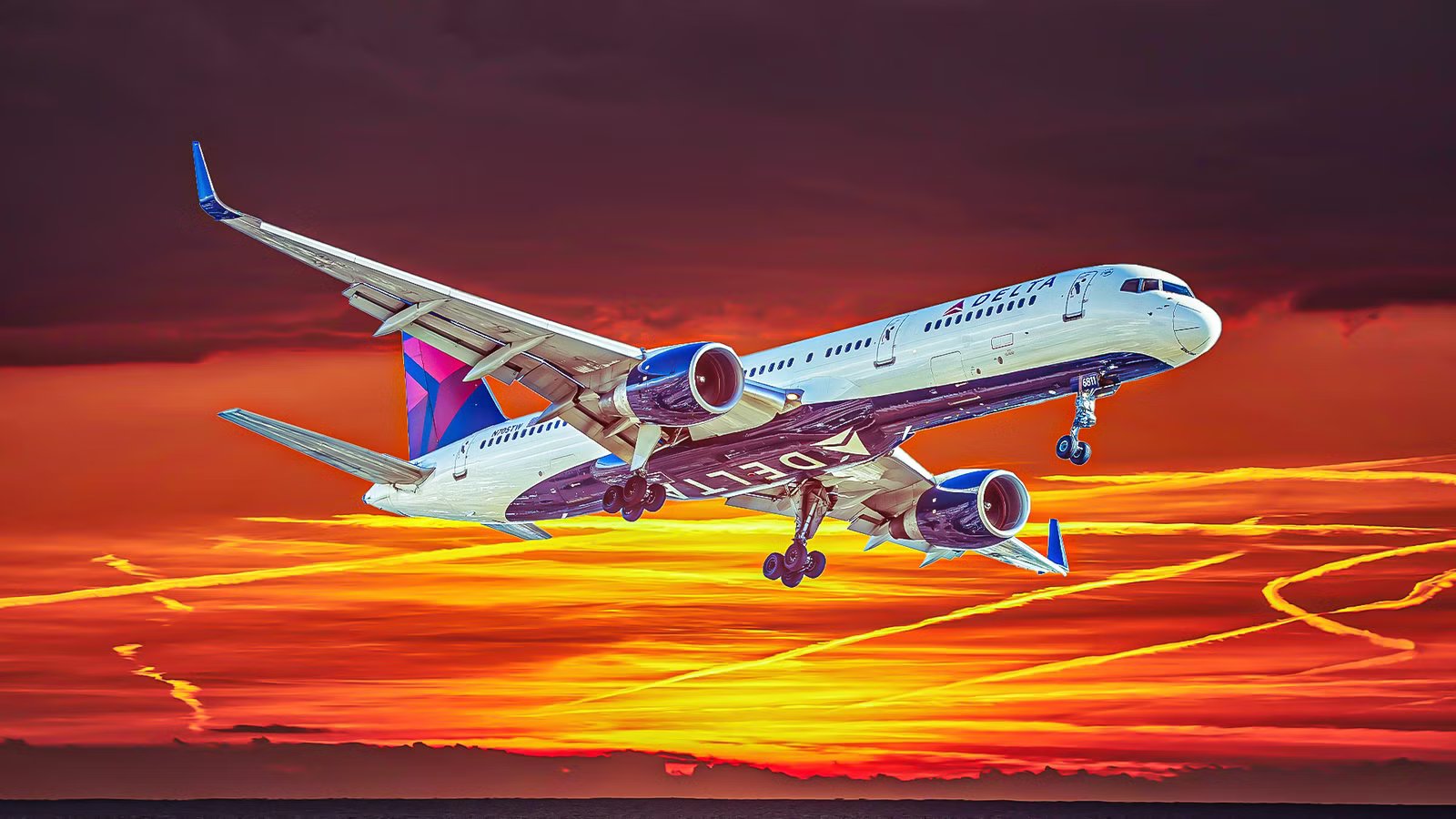
199 passengers on board a fully loaded  Delta Air Lines Boeing 757-200 evacuated the aircraft via emergency slides onto a taxiway after smoke and fumes entered the flight deck and cabin. The incident occurred at
  Hartsfield-Jackson Atlanta International Airport (ATL) on Saturday morning and began just minutes after the aircraft took off, when the pilots reported smoke and fumes in the cockpit, declared an emergency, and returned to ATL.
Once the aircraft had landed, it was inspected by airport firefighters, who found no visible smoke, fire or damage to the plane. The pilots then planned to taxi to the gate; however, smoke soon began filling the cabin, prompting the emergency evacuation of all passengers and crew by slides onto the taxiway.
Delta Smoke Incident Prompts ATL Emergency

The incident occurred on the morning of August 8 shortly after Delta Flight 2204 from Atlanta to  Orlando International Airport (MCO) took off. The flight — operated by a 24-year-old Boeing 757 — departed ATL at 07:35 AM local time and was still climbing when fumes and smoke began to enter the cockpit. The flight crew halted the climb at approximately 9,000 feet and advised air traffic control (ATC) of the problem, telling controllers, “We have smoke and fumes… We are declaring an emergency.”
The pilots donned oxygen masks before announcing over the cabin PA that fumes had entered the flight deck, even instructing passengers to brace for landing. The aircraft landed safely on Runway 09R roughly 17 minutes after takeoff before coming to a stop on a taxiway. The 757 was inspected and cleared by airport firefighters, and the flight crew planned to taxi to a gate. However, the situation changed within minutes, with the pilots radioing to ATC:
“Delta 2204, change of plans. We now have smoke in the back, and we need to deplane immediately.”
Smoke Spreads To Cabin, Emergency Slides Deployed

The pilots immediately shut down both engines before ordering an emergency evacuation. The aircraft’s emergency slides were deployed, and all 199 passengers and six crew members evacuated onto the taxiway. It is reported that one passenger and one crew member required medical attention following the evacuation, but the nature of their injuries has not been disclosed.
Footage posted to social media by a passenger shows smoke filling the cabin while flight attendants shouted instructions to those onboard. They were then bused from the taxiway back to the terminal, and the airline arranged for a replacement aircraft, which departed Atlanta at 12:05 PM and arrived in Orlando with a four-hour delay.
The aircraft involved, registered N555NW, is 24 years old and powered by two Pratt & Whitney PW2000 engines. It was delivered to Northwest Airlines in 2002 before merging into Delta’s fleet in 2008. The 757 has a maximum passenger capacity of 199 passengers (20 Domestic First and 179 Main Cabin), meaning it was flying at maximum capacity on Saturday morning.
In 2024, this airframe was chosen by Delta as the first to receive its narrowbody cabin interior overhaul, which includes various aesthetic upgrades and new Domestic First recliner seats. Simple Flying reached out to Delta for comment on this incident — a spokesperson did not elaborate on what caused the fumes, but confirmed “reports of fumes in the flight deck,” adding that maintenance teams were inspecting the aircraft. Flight tracking data shows that N555NW remains on the ground at the time of publication.
Fume Events Remain An Industry Concern

Fumes are a common cause of emergencies on board commercial aircraft. A Wall Street Journal investigation from September 2025 found that thousands of incidents have been logged with the FAA since 2010, and reports have accelerated in recent years. The Airbus A320 has been particularly susceptible to fume events, with an analysis finding events on the A320 were reported at seven times the rate of the Boeing 737.
On the majority of commercial jets in service today, bleed air is taken from the engines to supply the cabin and flight deck. Although seals are meant to keep engine oil out of that airflow, these components are capable of failing, leading to toxic fumes leaking into the cabin. Exposure to toxic fumes has been linked to various symptoms, with both immediate and long-term health implications, one of the most serious being the impairment of the flight crew.