dailynewsnblog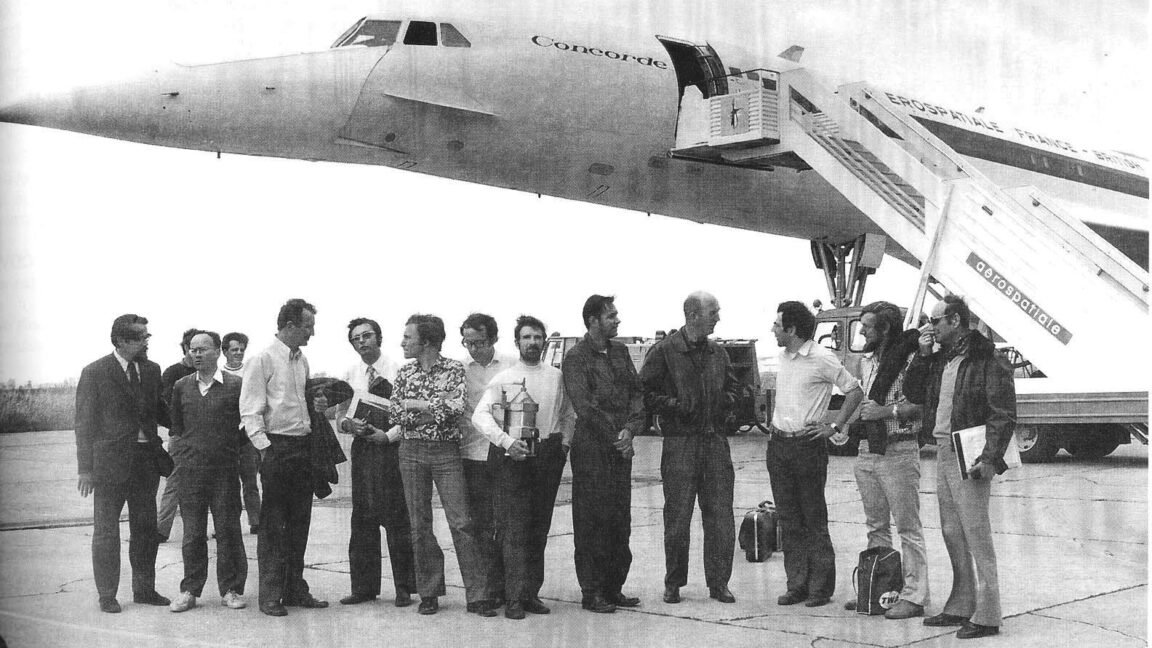
With his plan accepted, Léna began organizing experiments for the historic flight. Flying at nearly 17 km above the Earth’s surface had many benefits. “Flying very high in the stratosphere had several advantages, including no humidity, which meant an excellent infrared transmission of the solar light.”
“I had planned an experiment to study the particles of dust in the corona in the infrared wavelengths. However, it would have been presumptuous to use this big aircraft only for a single experiment. So the first thing we did, after we got a feeling that the project would go ahead, was to propose to other scientific groups in France, the UK, and the United States a seat on this flight to carry their own observations,” he said.
Building a team
While Léna was from the Paris Observatory, the other scientists came from the French National Centre for Scientific Research; Queen Mary College in London; Kitt Peak Observatory in Arizona; Los Alamos National Laboratory; and the University of Aberdeen.
The main goal of this project was to use the long totality to study the solar corona at different wavelengths, as the whole corona is only visible during a total eclipse. According to Léna, the experiments included studying the dust in the corona (which was emitting infrared radiation), studying the oscillating hot gas in the corona, and studying the chromosphere.
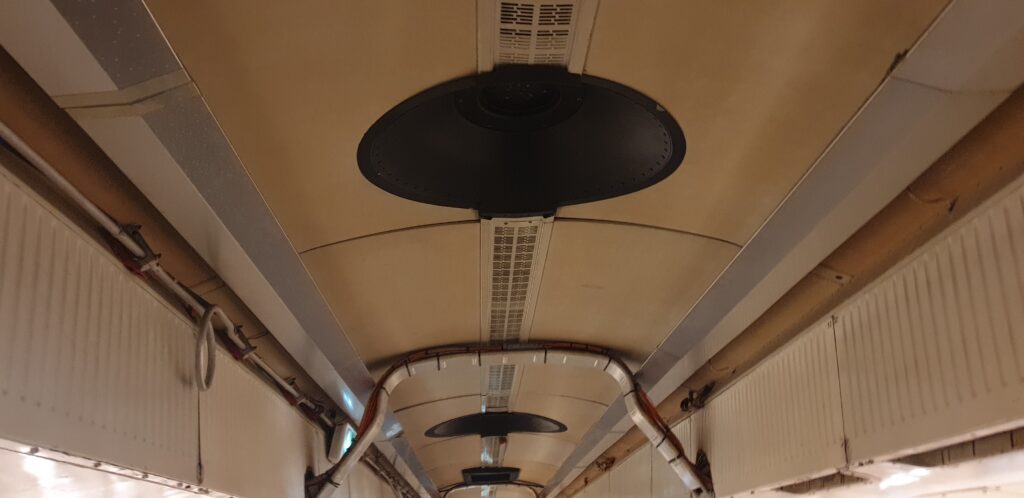
To accommodate these experiments, the Concorde 001 prototype underwent significant modifications, notably the creation of four portholes in the ceiling, with one dedicated window for each experiment. Those portholes are unmissable even today. They can be seen while walking down the aisle of the aircraft.
Dhananjay Khadilkar
A view of the portholes on the ceiling of the Concorde prototype 001, used for the observations.
Dhananjay Khadilkar
Dhananjay Khadilkar
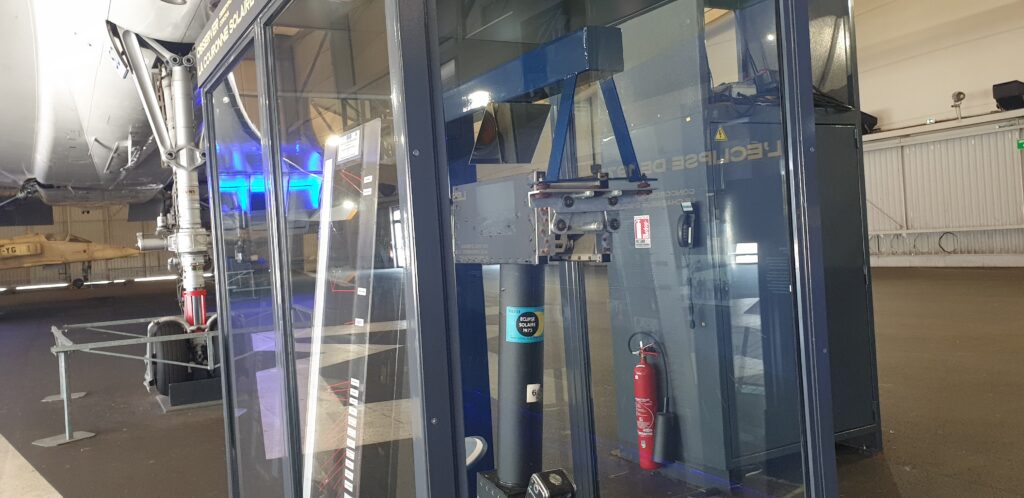
One of the instruments that was on board the Concorde to study the June 30, 1973 total solar eclipse.
Dhananjay Khadilkar
A view of the portholes on the ceiling of the Concorde prototype 001, used for the observations.
Dhananjay Khadilkar
One of the instruments that was on board the Concorde to study the June 30, 1973 total solar eclipse.
Dhananjay Khadilkar
With the experiments and the team of scientists chosen, two rehearsal flights were conducted before the actual flight, which took off from Las Palmas in the Canary Islands for a rendezvous with the eclipse shadow over Mauritania.