dailynewsnblog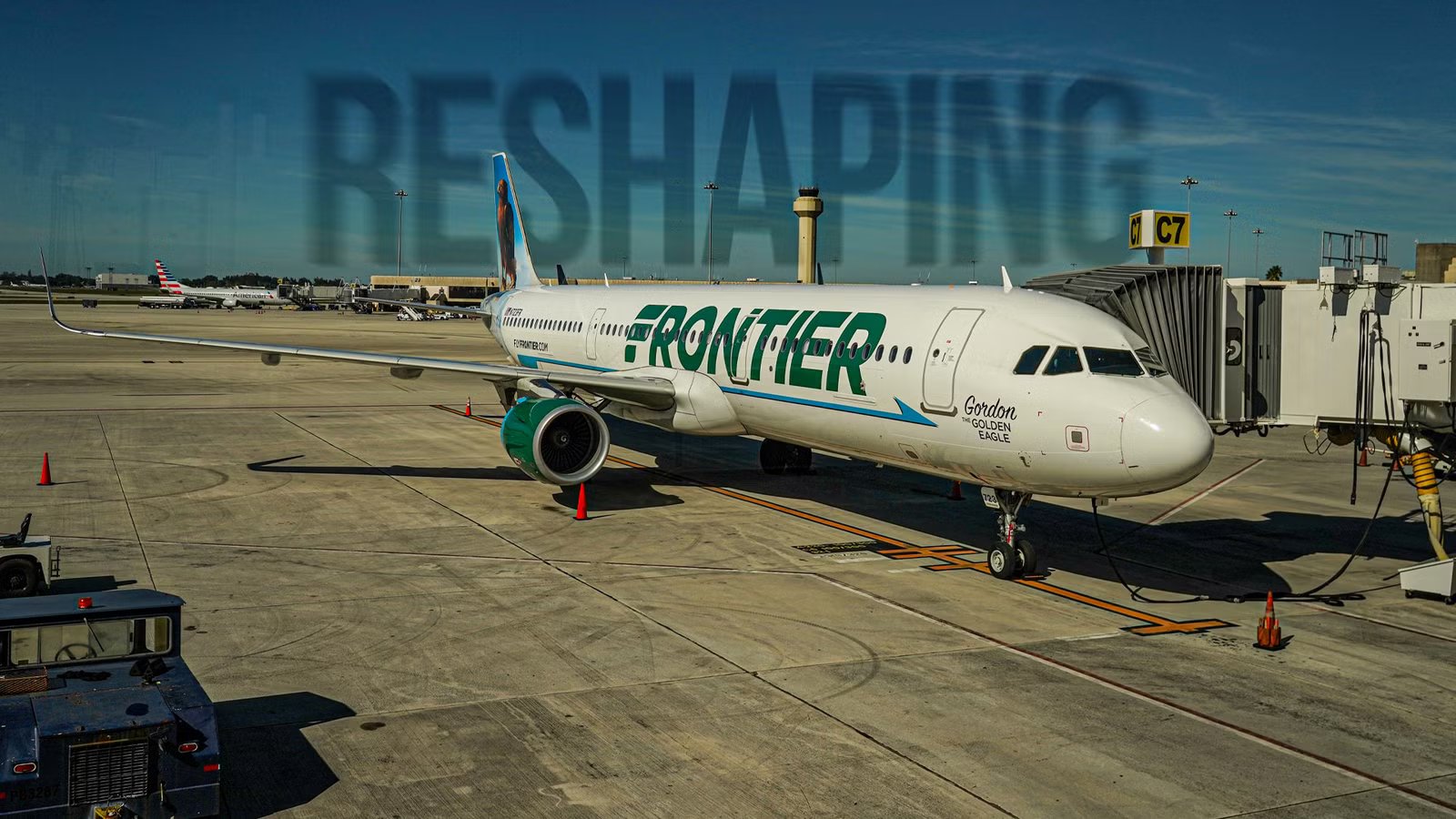
The competitive landscape for ultra-low-cost airlines in the United States has changed more dramatically over the past year than at any point since the sector emerged in the early 2000s. Spirit Airlines, long one of the country’s largest ultra-low-cost carriers (ULCCs), ceased operations in May 2026 after years of financial struggles, removing more than 1.6 million domestic seats from the market and leaving dozens of routes without their lowest fare provider. At nearly the same time, Allegiant Air completed its $1.5 billion acquisition of Sun Country Airlines, creating a significantly larger leisure-focused airline with the scale to compete across the country. Together, those developments have reshaped a market that once relied on intense competition among several similarly sized operators.
Every surviving ULCC now occupies a different competitive position than it did only a year ago. Allegiant has transformed itself into the segment’s largest leisure airline through acquisition, while Frontier Airlines must rebuild momentum after another difficult financial year and the collapse of its longtime rival. Meanwhile, Breeze Airways and Avelo Airlines continue expanding into underserved markets where the major network carriers offer limited competition. Rather than competing solely on the lowest advertised fare, today’s budget airlines are increasingly differentiating themselves through network design, operational efficiency, and customer experience. This article examines the carriers best positioned to shape the next chapter of America’s ultra-low-cost market. Each faces different opportunities and challenges, but together they represent the future of low-fare competition following the most disruptive twelve months the sector has experienced in decades.
Allegiant And Sun Country Become The New Leisure Airline Powerhouse

No airline emerged from the past year with a stronger competitive position than Allegiant. On May 13, 2026, the company completed its $1.5 billion acquisition of Sun Country Airlines, creating a combined carrier with approximately 195 aircraft, service to nearly 175 cities, more than 650 routes, and roughly 22 million annual passengers. The merger immediately established the largest leisure-focused airline in the US and gave Allegiant a broader network than it could have achieved through organic growth alone.
The transaction also brought together two airlines with complementary business models rather than directly overlapping networks. Allegiant built its reputation by connecting smaller cities with popular vacation destinations using an Airbus A319 and Airbus A320 fleet. On the other hand, Sun Country expanded beyond leisure flying by operating scheduled passenger service alongside charter flights and a growing cargo business for Amazon using Boeing 737 freighters. Those additional revenue streams provide the combined company with greater diversification than many traditional ULCC competitors. Management expects the merger to generate approximately $140 million in annual synergies once integration is complete. In the near term, however, the airline is proceeding cautiously. Allegiant will continue operating as a separate brand for an estimated 18 to 24 months while the two carriers work toward a single operating certificate. That gradual approach reduces operational risk while allowing both airlines to maintain existing schedules and customer recognition during the transition.
Spirit Airlines’ exit has created another opportunity. Many of the routes vacated by Spirit serve price-sensitive leisure travelers, a customer segment that aligns closely with Allegiant’s core business. Although the airline is unlikely to replace every former Spirit market, its larger fleet and broader geographic footprint provide flexibility to expand where demand and profitability justify additional capacity. Unlike several competitors that have struggled to achieve consistent profitability, Sun Country entered the merger from a position of financial strength, reporting positive GAAP net income in 2025. Combined with Allegiant’s established presence in secondary airports and vacation markets, that performance gives the new company a stronger financial foundation than many other airlines competing in the low-fare segment. As the integration progresses, the merged carrier appears well positioned to become the benchmark against which the remaining ULCCs will increasingly be measured.
Frontier Airlines Tries To Redefine Its Place In The Market

Frontier Airlines enters this new competitive landscape from a very different position. Spirit’s shutdown has removed one of Frontier’s closest rivals, but it has not eliminated the broader challenges facing the ultra-low-cost model. The airline continues to work through financial pressures that affected much of the industry. According to DWU Consulting, Frontier reported a net loss of $137 million in 2025, underscoring how difficult it has become to generate sustainable profits while maintaining rock-bottom fares. Rising labor costs, volatile fuel prices, and higher operating expenses have squeezed margins across the sector, forcing airlines to rethink strategies that once relied heavily on ancillary fees.
Rather than simply replacing Spirit’s capacity, Frontier has focused on changing how customers perceive the brand. In 2026, the airline expanded its “Clear, Upfront Pricing” initiative, placing greater emphasis on fare transparency and simplifying optional fees that had long been criticized by travelers. The strategy reflects an industry-wide recognition that while passengers remain highly price sensitive, they increasingly value predictable pricing and a smoother booking experience.
Frontier Airlines Fleet as of May 2026 | ||
|---|---|---|
Aircraft | In Service | Orders |
Airbus A320-200 | 6 | |
Airbus A320neo | 94 | 6 |
Airbus A321-200 | 21 | |
Airbus A321neo | 62 | 136 |
Total | 183 | 142 |
Frontier still retains several competitive advantages. Its large Airbus A320neo family fleet delivers some of the lowest fuel consumption per seat among narrowbody aircraft, helping the airline maintain a cost structure that remains attractive despite higher expenses. Its nationwide network also provides flexibility to shift aircraft into markets where reduced competition has created new opportunities following Spirit’s exit. Whether that strategy proves successful will depend on execution. Frontier no longer needs to match Spirit on every route or compete solely on the lowest advertised fare. Instead, its challenge is demonstrating that it can offer a low-cost product that attracts leisure travelers without relying on the aggressive pricing tactics that defined the previous era of ULCC competition.
Breeze Airways Continues Expanding Where Others Do Not

While Allegiant and Frontier compete in established leisure markets, Breeze Airways has pursued a different strategy by building a network around routes that larger airlines have historically overlooked. Since its launch in 2021, the carrier has focused on what founder David Neeleman describes as “long, thin” markets, linking smaller and mid-sized cities with nonstop service that would otherwise require a connection through a major hub. Rather than trying to capture traffic on heavily contested routes, Breeze has concentrated on creating demand in underserved city pairs where competition is limited, and travelers place a premium on convenience. Many of these routes connect communities in the Midwest, Southeast, and Northeast with destinations in the West, allowing the airline to avoid direct competition with the largest network carriers while establishing customer loyalty in markets with few alternatives.
Breeze has also differentiated itself through a relatively modern fleet. Its growing number of Airbus A220-300 aircraft provides lower fuel consumption, improved operating economics, and a quieter passenger experience than many older narrowbody jets. Those characteristics make the aircraft particularly well suited for medium-length routes that may not support larger airplanes but still require efficient operating costs. The airline’s measured expansion has also reduced some of the risks associated with rapid growth. Instead of pursuing market share through aggressive fare wars, Breeze has generally added destinations where it believes sustainable demand already exists. That disciplined strategy has allowed the carrier to steadily expand its network while avoiding many of the financial pressures that have challenged other budget airlines.
Catch what other flight trackers miss
Emergency squawks, holds, NOTAMs — live signals, no signup.
Open tracker
Catch what other flight trackers miss
Emergency squawks, holds, NOTAMs — live signals, no signup.
Open tracker
As the domestic market adjusts to the loss of Spirit Airlines, Breeze appears well positioned to benefit from travelers seeking nonstop service outside the traditional hub-and-spoke system. Although it remains much smaller than Allegiant or Frontier, its emphasis on underserved routes gives it a distinct niche that is becoming increasingly valuable as competition intensifies elsewhere.
Avelo Airlines Relies On Secondary Airports To Stay Competitive

Avelo Airlines has taken perhaps the most distinctive approach among the surviving ultra-low-cost carriers. Rather than building large operations at congested hub airports, the airline has concentrated on smaller, secondary airports where operating costs are lower, and competition is limited. Bases such as Tweed New Haven Airport (HVN) in Connecticut and McKinney National Airport (DTX) near Dallas allow Avelo to offer nonstop service while avoiding many of the delays, gate constraints, and higher airport charges associated with major metropolitan airports. That strategy has helped the airline carve out a loyal customer base despite operating a comparatively small network. Travelers often benefit from shorter security lines, easier parking, and faster boarding, while Avelo enjoys lower operating expenses that support its low fare model. The airline has continued adding routes that connect underserved communities with popular leisure destinations, creating demand in markets that previously had few nonstop options.
Spirit Airlines’ departure presents both opportunities and challenges for Avelo. Reduced competition opens the door for additional expansion into leisure markets where low fares remain in demand. At the same time, larger rivals with greater financial resources may also target some of those routes, increasing competitive pressure in markets that were once less contested. Unlike Allegiant, which now benefits from significantly greater scale following its acquisition of Sun Country, or Frontier, which operates a nationwide Airbus fleet, Avelo’s future depends on maintaining disciplined growth. Expanding too quickly could strain resources, while moving into highly competitive airports would undermine the cost advantages that define its business model.
The airline’s focus on secondary airports remains its greatest strength. As travelers continue prioritizing convenience alongside affordability, Avelo’s network strategy provides a degree of insulation from direct competition with both legacy airlines and larger low-cost rivals. If it can continue identifying underserved city pairs while preserving operational reliability, the carrier should remain an important player in the evolving ultra-low-cost sector.
A New Era Of Ultra-Low-Cost Competition Is Taking Shape

Spirit Airlines’ collapse and the creation of the Allegiant and Sun Country merger have fundamentally reshaped the US ultra-low-cost sector. For years, competition centered on several similarly sized carriers pursuing the same price-sensitive customers. Today, the market is more clearly defined, with each surviving airline occupying a distinct position rather than competing through identical business models. Allegiant enters this new phase with the greatest scale and the broadest leisure network, supported by diversified passenger and cargo operations inherited through Sun Country. Frontier remains one of the country’s largest low-cost airlines, but its long-term success will depend on whether its renewed emphasis on transparent pricing can strengthen customer loyalty while restoring profitability. Breeze and Avelo, meanwhile, continue demonstrating that carefully targeted growth can succeed without directly challenging larger airlines in their strongest markets.
The next several years will determine whether the traditional ULCC model continues to evolve or gives way to a more diversified approach to low-cost flying. Rising operating expenses and changing passenger expectations are making it increasingly difficult to compete on fares alone, encouraging airlines to differentiate themselves through network planning, operational efficiency, and customer experience instead of simply offering the cheapest ticket.
For travelers, the disappearance of Spirit removes one of the industry’s most aggressive fare setters, but it does not signal the end of low-cost competition. Instead, the remaining carriers are entering a period in which success will be determined less by how cheaply they can sell a seat and more by how effectively they match their networks, fleets, and business strategies to an increasingly competitive marketplace. The airlines that combine disciplined growth with sustainable economics are likely to define the next chapter of budget air travel in the United States.