dailynewsnblog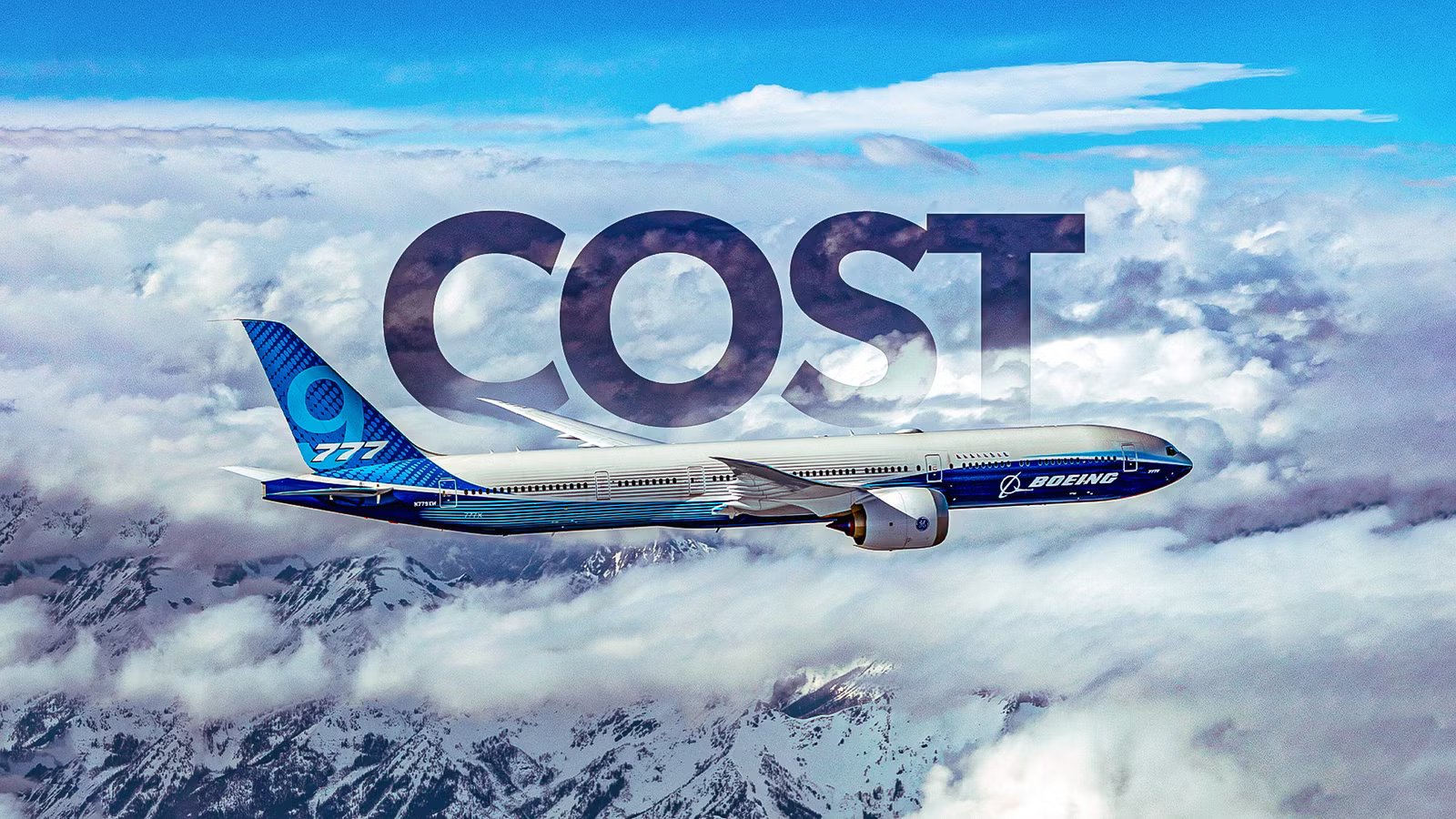
The Boeing 777X was supposed to be the low-risk successor to one of the most successful and popular widebody aircraft ever built. Rather than developing an all-new airliner, Boeing chose to evolve the proven 777 with new composite wings, GE9X engines, folding wingtips, and updated systems. That strategy promised airlines a familiar aircraft while saving Boeing billions in development costs compared to a clean-sheet design.
Instead, the opposite has happened. With cumulative accounting charges now reaching around $15 billion, the 777X has become one of the most expensive derivative aircraft programs in aviation history. Remarkably, those delay-related costs now roughly equal what Airbus is estimated to have spent developing the entire clean-sheet A350 family from scratch, as reported in the Aeronautics Magazine analysis.
In our article, we will try to explain why this happened and why, despite all the obstacles the program has been facing since the beginning, the Boeing 777X still remains a desired aircraft and the most awaited among more than a dozen airlines, with over 500 solid orders, making it still a formidable rival to the popular Airbus A350.
A Derivative Program That Became Anything But Inexpensive

When  Boeing officially launched the 777X program in 2013, the aircraft was positioned as the logical evolution of the hugely successful 777-300ER. Instead of designing a completely new airframe like the 787 Dreamliner, Boeing retained much of the existing fuselage while introducing major aerodynamic improvements, including the world’s largest composite wing on a commercial airliner and the record-breaking GE9X turbofan engines.
The strategy appeared financially sound, which attracted many customers. Derivative aircraft typically cost substantially less to certify because they inherit much of the previous aircraft’s design, systems architecture, and operational approval, resulting in faster deliveries. Airlines also benefit because pilots require less additional training, maintenance infrastructure already exists, and airports are already compatible with the aircraft.
But things went differently, and the financial picture has changed dramatically. Boeing disclosed another $4.9 billion pre-tax accounting charge during the third quarter of 2025 following yet another certification delay, bringing cumulative accounting charges on the program to approximately $15 billion. Those charges include supplier disruptions, production inefficiencies, customer compensation, inventory costs and ongoing program losses accumulated over years of delay, according to Leeham News.
Seven Years Of Delays Transformed The Program

The 777X was originally expected to enter commercial service in 2020. Instead, first delivery is now targeted for 2027, representing a seven-year certification delay that few observers predicted when the program was launched.
A combination of several unfortunate events created this unprecedented delay. The grounding of the 737 MAX fundamentally changed the certification landscape inside both Boeing and the US Federal Aviation Administration ( FAA). Regulators introduced far more detailed oversight, requiring additional design reviews, extensive documentation and more comprehensive flight testing than had previously been expected.
Certification itself also became a moving target. According to many industry observers, both Boeing engineers and FAA specialists faced a steep learning curve as new post-MAX certification standards evolved during the program rather than before it. Requirements that might once have been resolved relatively quickly instead required repeated reviews and redesign work, extending timelines by years rather than months, as noted by the Engine Cowl report.
The COVID-19 pandemic then compounded the problem by disrupting global aerospace supply chains. Manufacturers struggled to secure components, experienced skilled labor shortages, and faced production interruptions throughout the industry. Each delay increased costs further because engineering teams, test aircraft and production facilities remained active while no customer deliveries generated revenue.
How The A350 Comparison Became Unavoidable

The comparison with the Airbus A350 is emblematic because the two programs followed completely different development philosophies. Unlike the 777X, the A350 was effectively an all-new aircraft. Airbus developed a new carbon-fiber fuselage, advanced composite wing, entirely new production techniques, fresh avionics architecture, and a completely new certification program. Industry estimates place total A350 development expenditure at roughly $15 billion, making it one of the largest commercial aircraft investments ever undertaken by Airbus.
That figure is significant because Boeing’s $15 billion does not represent total development spending on the 777X. Instead, it largely reflects extraordinary accounting charges associated with delays, production inefficiencies and certification problems. Boeing still invested billions in designing the aircraft itself, and according to BlackJet, the final program development cost might reach approximately $20 billion total. In other words, the total 777x program cost is substantially higher than the reported accounting charges.
At the same time, Airbus spent approximately $15 billion creating an entirely new family of long-haul aircraft from a blank sheet of paper. Boeing has now incurred roughly the same only in financial damage simply managing delays and overruns on what was originally intended to be a lower-risk derivative.
The painful irony becomes even greater considering the original business case. Boeing specifically chose the derivative approach to avoid the enormous financial exposure associated with launching another clean-sheet program after the expensive development of the 787 Dreamliner. Instead, certification changes and repeated delays erased much of that anticipated financial advantage.
The Hidden Cost Of The Growing “Shadow Fleet”

Another factor, one of the least visible but most expensive consequences of prolonged certification delays, has been the accumulation of completed aircraft waiting for approval.
Boeing has reportedly assembled around 30 production-standard 777-9 aircraft that cannot be delivered until certification is complete, as reported by Leeham News. These aircraft continue to occupy storage facilities while engineering teams determine which modifications will be required before customers can finally accept them.
Because certification standards evolved throughout the delay period, many aircraft that were built years ago no longer exactly match the final certified configuration. That means Boeing must perform expensive retrofits before deliveries can begin. Depending on the changes required, some aircraft could spend months undergoing rework despite already being physically complete.
The program has even seen an extraordinary step rarely associated with modern commercial aircraft development, which caused outrage among many aviation enthusiasts. Boeing scrapped one early test airframe, known internally as WH007, which was supposed to be delivered to  Emirates, after determining that the cost of bringing it up to final certification standards and airline requirements exceeded its remaining value as a development aircraft. That illustrates how dramatically the certification program has changed since the aircraft first entered flight testing.
Unlike normal production inventory, these aircraft also tie up billions of dollars in unfinished assets. Until airlines formally accept delivery, Boeing cannot recognize the associated revenue, creating additional financial pressure beyond the headline accounting charges.
What The Numbers Really Say About Boeing’s Strategy

The 777X remains an impressive aircraft from a technical perspective. The composite wing, innovative folding wingtips, GE9X engines and updated flight deck all promise meaningful improvements in fuel efficiency, operating economics and passenger comfort over today’s 777-300ER.
However, the program also demonstrated that derivatives are no longer automatically low-risk projects. Modern certification standards, increasingly complex digital systems and heightened regulatory oversight mean that upgrading an existing aircraft can become almost as challenging as certifying a completely new one.
The financial comparison also illustrates how program delays create costs far beyond engineering work alone. Airlines awaiting deliveries may require compensation, suppliers continue producing parts despite slower deliveries, manufacturing facilities remain underutilized, and completed aircraft require storage, maintenance, and eventual modification.
Boeing 777X and Airbus A350 Development History
Metric | Boeing 777X | Airbus A350 |
Program type | Derivative of 777 | Clean-sheet aircraft |
Original entry into service | 2020 | 2015 |
Current first delivery target | 2027 (expected) | Entered service as planned in 2015 |
Estimated development/financial impact | ~$15 billion accounting charges | ~$15 billion estimated total development cost |
Delay | Seven years | Development completed before service entry |
Stored completed aircraft | ~30 777-9s awaiting certification | – |
The comparison does not suggest the programs are directly equivalent financially, since Boeing’s numbers are about delay-related accounting charges, while the Airbus figures represent overall development expenditure. Nevertheless, placing the numbers side by side highlights just how expensive prolonged certification delays have become.
The 777X Still Has Every Chance To Succeed

Despite the enormous financial impact, the commercial story of the 777X is not necessarily over. Airlines continue to value its combination of capacity, range and operating efficiency, particularly for high-density long-haul routes where the A350-1000 offers less seating capacity.
Major customers including Emirates, Qatar Airways, Lufthansa and other international carriers continue planning around the aircraft’s eventual arrival. Global demand for large twin-engine aircraft also remains strong as international travel continues recovering and airlines replace aging Boeing 777-300ERs and Airbus A380s.
If certification proceeds according to Boeing’s current schedule, deliveries beginning in 2027 could finally allow the manufacturer to convert years of engineering effort into revenue while gradually reducing its inventory of completed aircraft. Even then, however, the program will remain a remarkable case study in how dramatically the economics of commercial aircraft development can change. A derivative that was supposed to minimize risk has accumulated delay-related costs comparable to the total investment Airbus made creating one of the world’s most advanced clean-sheet widebody families from the ground up.
Catch what other trackers miss
Emergency squawks, holds, NOTAMs — live signals, no signup.
Open tracker
Catch what other trackers miss
Emergency squawks, holds, NOTAMs — live signals, no signup.
Open tracker