dailynewsnblog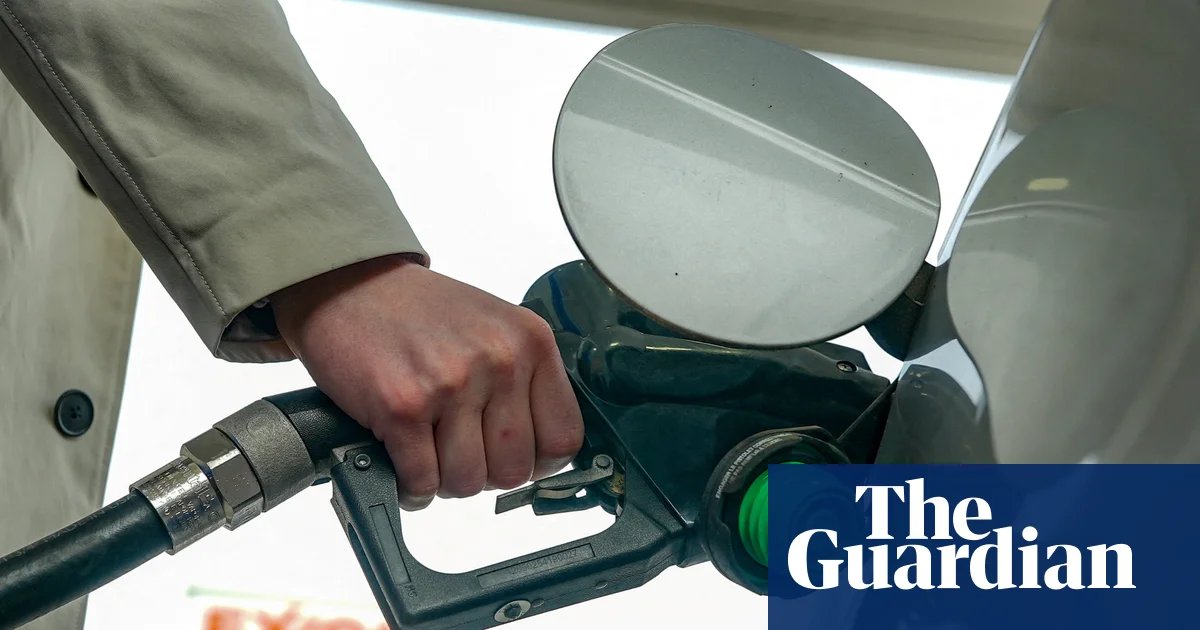
Good morning. Donald Trump’s statement that oil companies have made “too much money” from the Iran war has angered environmentalists, who say his policies were designed to benefit those very corporations.
Americans have paid more than $78bn more at the pump since the start of the Iran war, according to a Brown University tracker. A recent analysis from the environmental advocacy group Climate Power and the Center for American Progress Action Fund, a liberal thinktank, found that Trump’s policies had cost the average American family $285 more when filling up their cars.
As oil companies have reaped billions from the Iran war’s impact on fossil fuel prices, the Rhode Island senator Sheldon Whitehouse and the California congressman Ro Khanna have proposed taxing big oil’s windfall profits from the crisis, and said proceeds from that tax should go to American families who are paying more for fuel.
What policies has Trump enacted to help the oil industry? Since re-entering the White House last year, he has eased dozens of restrictions and regulations on fossil fuel expansion, exempted fossil fuel producers from environmental rules, and signed an executive order last year directing the attorney general to prioritize blocking climate lawsuits targeting oil majors. Trump has also personally invested in major oil companies.
Trump signs new orders targeting birthright citizenship
Donald Trump has made a second attempt to restrict the constitutional guarantee of birthright citizenship, just weeks after the US supreme court rejected his initial, more sweeping attempt to deny automatic citizenship to children born to undocumented immigrants and temporary foreign residents.
Trump on Thursday signed two executive orders that seek to broaden the categories of children ineligible for automatic US citizenship and ban so-called “birth tourism”. The directives are expected to face legal challenges. Trump’s obsession with casting doubt on the citizenship of children born in the US to foreign parents has had an overtly political element from the start – his original rise to political prominence was tied to his false claims about Barack Obama’s eligibility for office, something he repeated when facing Kamala Harris as an electoral opponent.
What did the supreme court previously rule? In the court’s June decision, the chief justice, John Roberts, said Trump’s first order violated the 14th amendment of the US constitution. “Citizenship, then and now, was the right to have rights – to freely participate in our political community,” he wrote. “The framers of the 14th amendment extended that promise to ‘every free-born person in this land’. We keep that promise today.”
US law enforcement gave false information in case against woman charged in anti-ICE protest
Law enforcement officials provided false information to federal judges as they sought to build a criminal case against the independent journalist Georgia Fort in connection with a January protest, her lawyers said in court filings on Thursday asking that the charges against her be dismissed.
Fort was one of nearly 40 people charged after demonstrators interrupted a service at Cities church in St Paul, Minnesota, after they learned that an Immigration and Customs Enforcement (ICE) official was a pastor there. Trump administration officials vowed to arrest anyone involved in the protest.
How has the Trump administration expanded the tracking of immigrants? The US is tracking nearly 54,000 immigrants through GPS-enabled ankle monitors as part of an ICE electronic surveillance program, according to The Geo Group, a private prison corporation. Early last year, just 17,000 immigrants were wearing the devices. Executives said a large number of participants had been shifted from less intensive forms of surveillance, such as phone check-ins, to ankle monitors.
Why have airports become an increased target for ICE enforcement? With a goal of 2,000 daily immigration arrests, ICE has started detaining people – many of whom have overstayed visas after coming to the US legally and have pending applications for immigration relief – in public places far from security checkpoints, whether at ticket counters or near gates. Authorities have generally avoided immigration enforcement at airports so as not to disrupt domestic travel.
In other news …
A Thai teenager killed two of his grandparents before opening fire at his school, where he shot five people dead and took his own life, police have said, in an attack that has shaken a country struggling to deal with gun violence.
Donald Trump has doubled down on his criticism of Jeanine Pirro after the US attorney for the District of Columbia publicly challenged his claims that vandals had damaged the recently renovated Lincoln Memorial reflecting pool.
The FCC has scrapped the limit on local TV ownership, in a win for major media conglomerates.
Donald Trump has ordered a new 15% tariff on imported products made of polysilicon, a key material for solar panels and microchips that is primarily produced by China.
The Republican US senator Mitch McConnell has been discharged from a rehabilitation center after a fall that left him hospitalized.
A New Mexico court has ordered Meta, the parent company of Facebook, to pay $567m into a fund aimed at redressing adverse mental health impacts from the social media firm’s platforms. The ruling comes as a part of the second phase of a landmark trial that the company lost in March. At the time, a jury found that the company had knowingly harmed children’s mental health and concealed what it knew about child sexual exploitation on its platforms
Culture Pick: Why today’s horror film-makers are obsessed with obsolete tech
James McClellan argues that modern aesthetics lack the texture that horror movies need to thrive, a texture that can be more easily found in past eras – whether smacking a TV to improve a fuzzy signal in Backrooms, or the kitschy, old-fashioned gag gift that is central to Obsession.
Don’t miss this: An Israeli professor lost a prestigious US job offer after speaking out on Gaza. Now the university is paying him $250,000
The University of Minnesota withdrew an offer for Raz Segal to lead its Center for Holocaust and Genocide Studies after an organized campaign against his hiring. Alice Speri has the story.
… or this: Outrage in Little Rock as two datacenters loom
There seems to be a fight over datacenters in nearly every city in the US right now. And despite the extreme polarization of today’s politics, the opposition tends to be bipartisan. George Chidi has been in Little Rock, Arkansas, to observe one such clash.
Climate check: Europe’s dry riverbeds and scorched earth
Much of the continent is battling wildfires and drought during a summer of extreme heat, and our picture editors have selected some of the most striking images of the impact for this gallery.
Last Thing: Overlooked masterpiece by still life pioneer discovered in storage area
The curator of Norway’s national museum in Oslo is bringing a work by the Flemish baroque artist Clara Peeters out of obscurity in a major exhibition of female artists after the curator chanced upon an unattributed still life in the museum’s storage area.
Sign up
Sign up for the US morning briefing
First Thing is delivered to thousands of inboxes every weekday. If you’re not already signed up, subscribe now.
Get in touch
If you have any questions or comments about any of our newsletters please email newsletters@theguardian.com