dailynewsnblog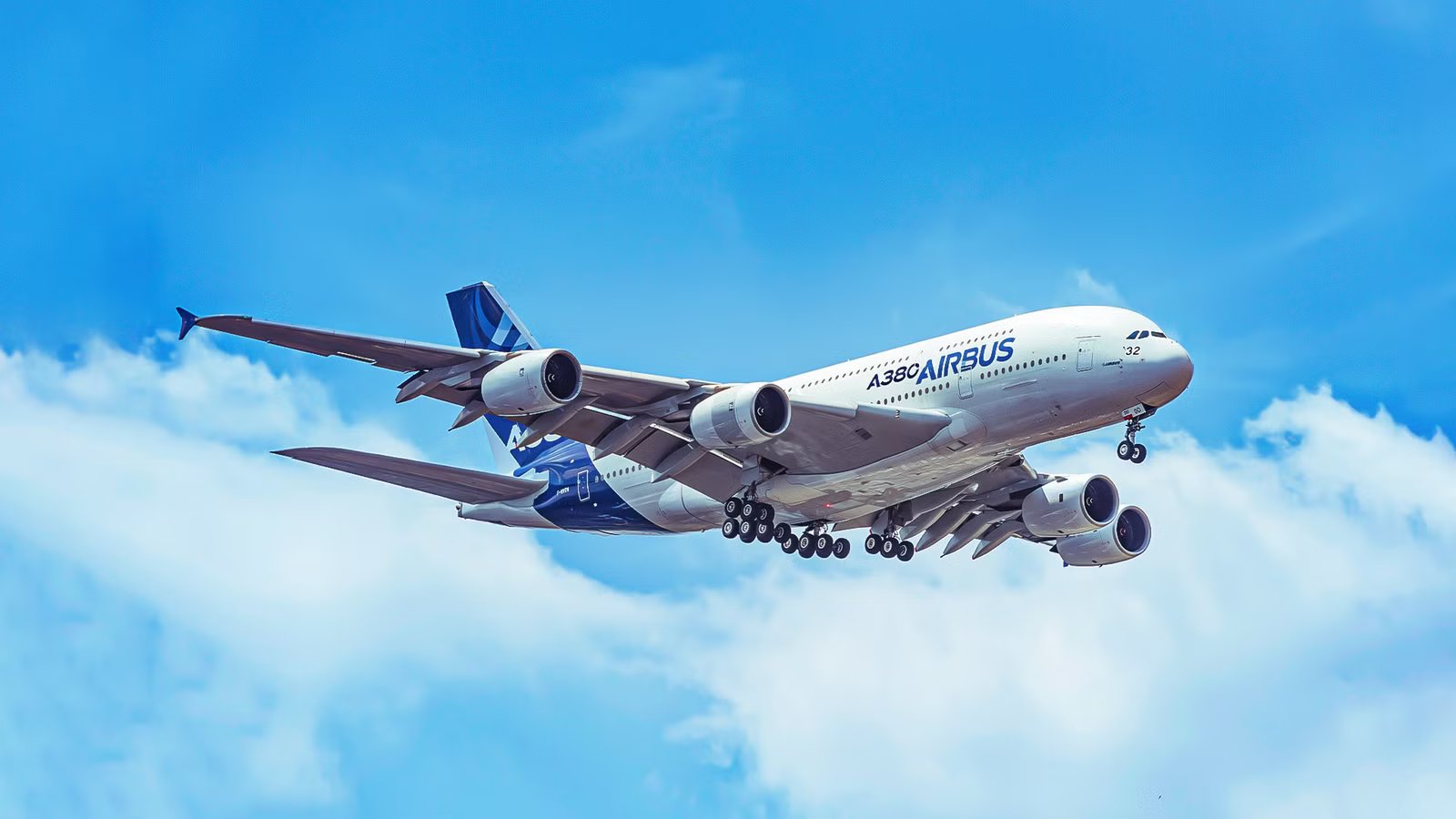
The Airbus A380 looked to raise the bar when it came to widebody airliners. Two entire decks, room for over 850 passengers onboard if airlines so desired, the quietest cabin of any long-haul aircraft, and so on. Based on Airbus’ bet, the superjumbo would take the industry into a new era of hub-to-hub-based travel, easing congestion at airports thanks to its incredibly high capacity.
It was not to be, though. After less than two decades in production since the aircraft first debuted commercially, and tens of billions of dollars later, Airbus wound up its A380 program. While the aircraft had no doubt pushed the boundaries of what air travel could look like, airlines failed to find the same level of enthusiasm, leaving lackluster demand as operators looked in another direction.
Early Development And Thinking Behind A380

Airbus’ prediction for the future of air travel was a fair one at the time. Growing demand around a finite number of key airports across the globe meant a solution would eventually be needed. Enter the superjumbo. With this, the European manufacturer attempted to offer airlines a means to move greater numbers of passengers than ever before per air movement, in turn reducing the strain on slots at busy airports.
Development began back in the early 1990s, at a time when the Boeing 747 dominated the high-capacity long-haul space unchecked. Unlike its US-built counterpart, the A380 would feature a second deck running all the way along its fuselage. No passenger jet would mimic its size — ever, as it turned out — or have the ability to carry so many people.
But it took well over a decade to bring the idea to fruition. Late 2000 saw the program officially launched by Airbus, with commercial deliveries penciled in for early 2006 at the time. Delays saw this pushed back almost two years to October 2007, when  Singapore Airlines got its hands on the first production model. By this point, airlines had already begun committing to hybrid operating models incorporating point-to-point operations, leaving a progressively smaller market for Airbus and the A380 to attack. Where the A380 had promised a solution to the industry’s capacity problem, smaller and more efficient twin-engine jets, with their ability to open up new routes, appeared to already be growing in popularity.
A380 Captured Passenger Imaginations, But Not Airlines’

It is fair to say, passengers and avgeeks placed the A380 on a pedestal, at least far more so than airlines ever did. Countless travel bloggers and reporters alike have praised the A380 over time for one reason or another, be it its sheer size, quiet cabin, or the ample space it offers for luxuries like  Emirates’ onboard shower and bar. As CNN anchor Richard Quest proclaimed in an interview about his favorite aircraft earlier this year: “You and I could be sitting on the wing next to the engines at full takeoff power and be talking like this — a normal conversation because it is so beautifully built.”
In this case, noise-reducing acoustic paneling in both the aircraft’s engines and airframe helped to create the quietest cabin among any widebody jet by far and gave the A380 a title that it is yet to be stripped of to this day. Such technology was included in over 380 patents filed by Airbus during development, which also saw engineers use a full digital mock-up while designing an aircraft for the first time. Much of this proved useful when it came to the next-generation Airbus A350 XWB. Carbon fiber-reinforced plastics had been incorporated into some components on the A380, for instance, and were later used more widely on the A350.
For those on the outside, fun facts around the A380’s capabilities were enough to get the mind racing. Per  British Airways, paint coating the surface of the aircraft alone weighs around 1,100 lb (500 kg), while all of its wiring laid out would stretch for 320 miles (515 km). In Emirates’ case, the length and height of the jet are equated to two blue whales and five giraffes respectively. One could go on. Unfortunately for Airbus, the engineering marvel it had created was not enough to win over those in airlines’ finance departments around the globe.
A380 Orders Never Hit Airbus’ Hopes Or Expectations

Where Airbus had looked to sell 700 models to recoup the roughly $25 to $30 billion spent on research and development over the years, only 251 were ever delivered to airlines. Almost half of these went to Emirates alone, with the United Arab Emirates co-flag carrier taking delivery of its 123rd and the final model built in 2021.
Indeed, the superjumbo proved far more valuable to Emirates than any other airline. A string of others like British Airways and Singapore did make purchases to bolster capacity on their most in-demand routes, but it was only really at Emirates where the perfect conditions appeared to exist for the A380 to thrive.
Airbus A380 operators in 2026:
Airline | Number of A380s |
Emirates | 116 |
British Airways | 12 |
Singapore Airlines | 12 |
Qantas | 10 |
Etihad Airways | 9 |
Lufthansa | 8 |
Qatar Airways | 8 |
Asiana Airlines | 6 |
Korean Air | 5 |
All Nippon Airways | 3 |
Built around funneling the vast majority of passengers through its Dubai International Airport (DXB) mega-hub — itself a gateway to Europe, the Middle East, Africa, and South Asia — Emirates’ business model proved the perfect fit for the double-decker aircraft. As Emirates president Tim Clark said upon the final delivery in 2021: “[The A380] gave us the opportunity to redefine the travel experience, efficiently serve demand at slot-constrained airports, and bolster our network growth.”
The Rise Of The Flexible And Efficient Twinjet

For the majority of other airlines serving long-haul routes, improvements in the twin-engine widebody space increasingly offered an alternative to the largest passenger quadjets. Even before the A380 debuted with Singapore, the industry was increasingly taking advantage of new point-to-point routes opened up by the likes of extended-range Boeing 777 variants.
A huge jump in efficiency was just around the corner, too, with the Boeing 787 Dreamliner entering commercial service in 2011 after the program’s official launch in 2004. As was rapidly becoming apparent at this point, airlines overwhelmingly valued the better economics and increased flexibility offered by twin-engine models. Airbus itself was already looking to get in on the action, also, having officially launched its A350 program in 2006. This came shortly after its  Boeing counterpart, entering commercial service in 2015.
Catch what other flight trackers miss
Emergency squawks, holds, NOTAMs — live signals, no signup.
Open tracker
Catch what other flight trackers miss
Emergency squawks, holds, NOTAMs — live signals, no signup.
Open tracker
Former Airbus chief executive Tom Enders acknowledged the reality while speaking to Aviation Week in 2021. “We were very aware of the project’s risks […] technology and the market changed faster than everyone had thought,” he said. “In the 1990s, not only Airbus, but also many airlines, were still very focused on four engines when it came to widebodies […] We all have misjudged the future of the twins, and that led to the efficiency problem of the A380.”
A380 Just Too Much Plane For Most

Whether the A380 came too late or not to rival increasingly efficient alternatives is one matter. Another matter was its size, which represented both the A380’s biggest strength but also a fundamental issue. Ultimately, airlines had to be confident they could fill enough seats on each flight for the fuel-hungry quadjet to turn a profit. Most turned their backs in response.
Notably, no A380s were ever sold in the US, where major airlines already relied heavily on multi-hub strategies and served a mainly domestically focused market. Unlike Emirates, British Airways, Singapore, and so on, which could station their A380s at one key airport each, their US peers favored frequency and capturing dispersed demand instead. All told, the A380 just did not fit the bill, and that cut off the world’s largest aviation market to the program.
Similarly, no airlines across South America or Canada opted for Airbus’ superjumbo. Another major market, China, also drummed up little interest. Expectations at the manufacturer were for between 60 and 100 sales in the country. China Southern Airlines, the sole operator of the A380 locally, only ever bought five.
A380-800 Only Variant Ever Built

In the end, demand was the problem. Airbus successfully created the double-decker jet it had set out to in the early nineties. It was bigger than anything passenger airlines had flown before, pioneered new technologies, and laid the groundwork for future series like the A350 in doing so. But aviation had largely moved on by the time of its commercial rollout.
Having forecast annual production of 45 airframes, Airbus saw production peak at 30 units in both 2012 and 2014. Plans for follow-ups like a larger A380-900, freighter variant, or even a new engine option were shelved in the meantime. Appetite was simply not there.
The final nail in the coffin came in 2019, when Emirates pulled the plug on 39 of its A380 orders. With just a handful of models left to deliver over the coming years, and a €463 million ($527 million) one-off charge related to the cancellation recognized in its full-year results, Airbus began the process of winding down A380 production. Cut forward two years, and a string of temporary pandemic-related groundings among airlines, and the last example finally made its way into the hands of Emirates.