dailynewsnblog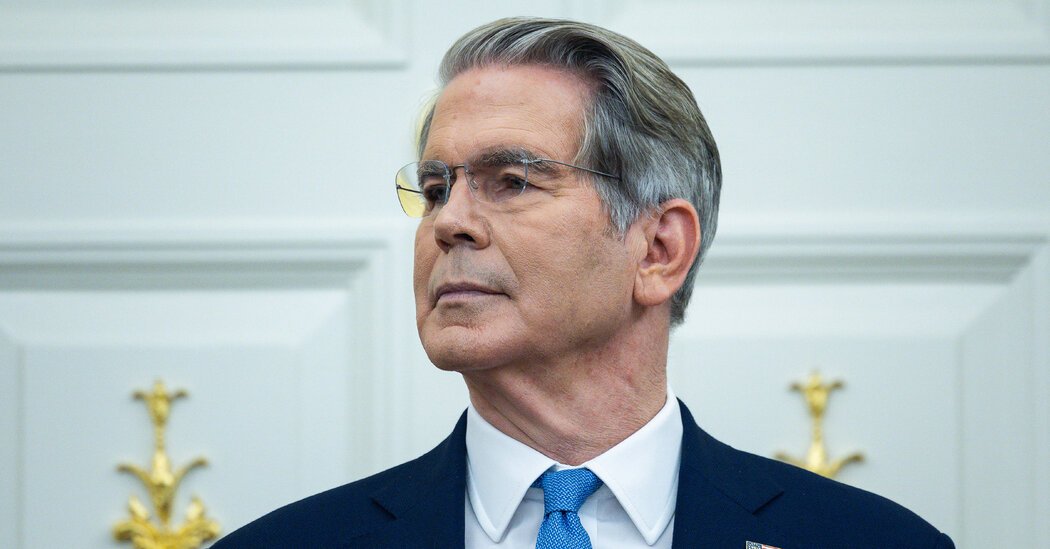
Treasury Secretary Scott Bessent made $1 billion betting against the yen as the top investor for George Soros more than a decade ago. Now, he is using the might of the U.S. economy to prop up the Japanese currency.
But this time, Mr. Bessent is doing so to help ensure that Washington’s borrowing costs do not creep even higher and to support a faltering American ally in China’s backyard. The coordinated effort by the United States and Japan to stabilize the rapidly weakening yen late last week marked the second time in the last year that the Treasury secretary returned to his roots as a hedge fund manager to make a big currency bet. The move demonstrated the lengths that the Trump administration is prepared to take to shield the U.S. economy from the volatility of global markets at a moment of political peril.
The scale of the yen purchases was not disclosed. During a cabinet meeting on Friday, a photograph of Mr. Bessent’s note pad — which he has previously said he keeps visible for the media to peruse — showed purchases of between $5 billion and $10 billion worth of yen on his “to do” list.
The Treasury Department’s most recent currency report, published last month, said the yen was substantially undervalued and that excess volatility in the currency’s trading was “undesirable.”
Currency analysts said that the United States used its holdings of euros to buy yen, bolstering its value without shaking confidence in the dollar.
In announcing the intervention on Sunday, Mr. Bessent called to expand the Federal Reserve’s repurchase agreement facility for foreign and international monetary authorities, which was established by Congress in 2020. It currently allows central banks that hold U.S. Treasuries to borrow up to $60 billion to bolster their holdings of dollars.
“We will not hesitate to participate in further joint intervention,” Mr. Bessent said in a social media post.
The Federal Reserve facility was created to help preserve the smooth functioning of the U.S. bond market. The decision to directly support the yen, which fell to a 40-year low against the dollar in recent days, appeared to be designed with the bond market in mind.
Borrowing rates in the United States have risen in recent months and Japan, which is the largest holder of U.S. debt, would have had to sell Treasuries to support its currency. This could have pushed U.S. interest rates higher while the Trump administration is concerned that elevated mortgage and car loan rates will frustrate midterm election voters.
“We know the U.S. administration’s sensitivity to what goes on in the Treasury market is extremely high,” said Robin Brooks, senior fellow in economic studies at the Brookings Institution.
Mr. Brooks said that he disagreed with Mr. Bessent’s contention that Japan’s currency is undervalued. He argued propping up the yen was a temporary fix that would not fix Japan’s underlying economic problems.
“The yen is weak not because of speculators causing yen to be undervalued,” Mr. Brooks said. “The yen is weak and falling because Japan has so much public debt.”
Ed Al-Hussainy, a portfolio manager at Columbia Threadneedle Investments, said that politics was a factor in the Trump administration’s decision to come to Japan’s aid.
Approval ratings for Japan’s prime minister, Sanae Takaichi, have slumped as the yen has weakened and the United States has been seeking to bolster ties with Japan amid intensifying competition with China. Japan has also worked to deepen ties with the United States, pledging last year to invest more than $500 billion in the American manufacturing.
“Look at approval ratings of Takaichi in Japan and its pledges to invest in the U.S. and that tells you about the timing of everything,” Mr. Al-Hussainy said.
The last time the United States intervened directly in currency markets to support the yen was in 1998 during the Asian financial crisis.
The yen intervention also had echoes of last fall, when Mr. Bessent helped support the political fortunes of Javier Milei, the president of Argentina, by propping up that country’s falling peso. At the time, Mr. Bessent said that the United States was prepared to offer loans to Argentina’s central bank, as well as direct currency purchases and purchases of U.S. dollar-denominated Argentine government debt from Treasury’s Exchange Stabilization Fund to keep Argentina’s economy afloat.
The United States profited from the currency swap line deal with Argentina, making the bet a successful one for Mr. Bessent. It also worked out well for Mr. Milei, whose party won a resounding victory in the October elections.
Although that move paid off, some still view the use of such economic tools for political purposes as questionable.
“The U.S. is unwise to enter the market in support of the yen — even if it makes a small profit in doing so — unless it is part of a Japanese plan to tackle the fundamental issues driving yen weakness,” said Mark Sobel, a former Treasury official who is now the U.S. chairman of the Official Monetary and Financial Institutions Forum. “After all, the Treasury’s Exchange Stabilization Fund isn’t a hedge fund.”