dailynewsnblog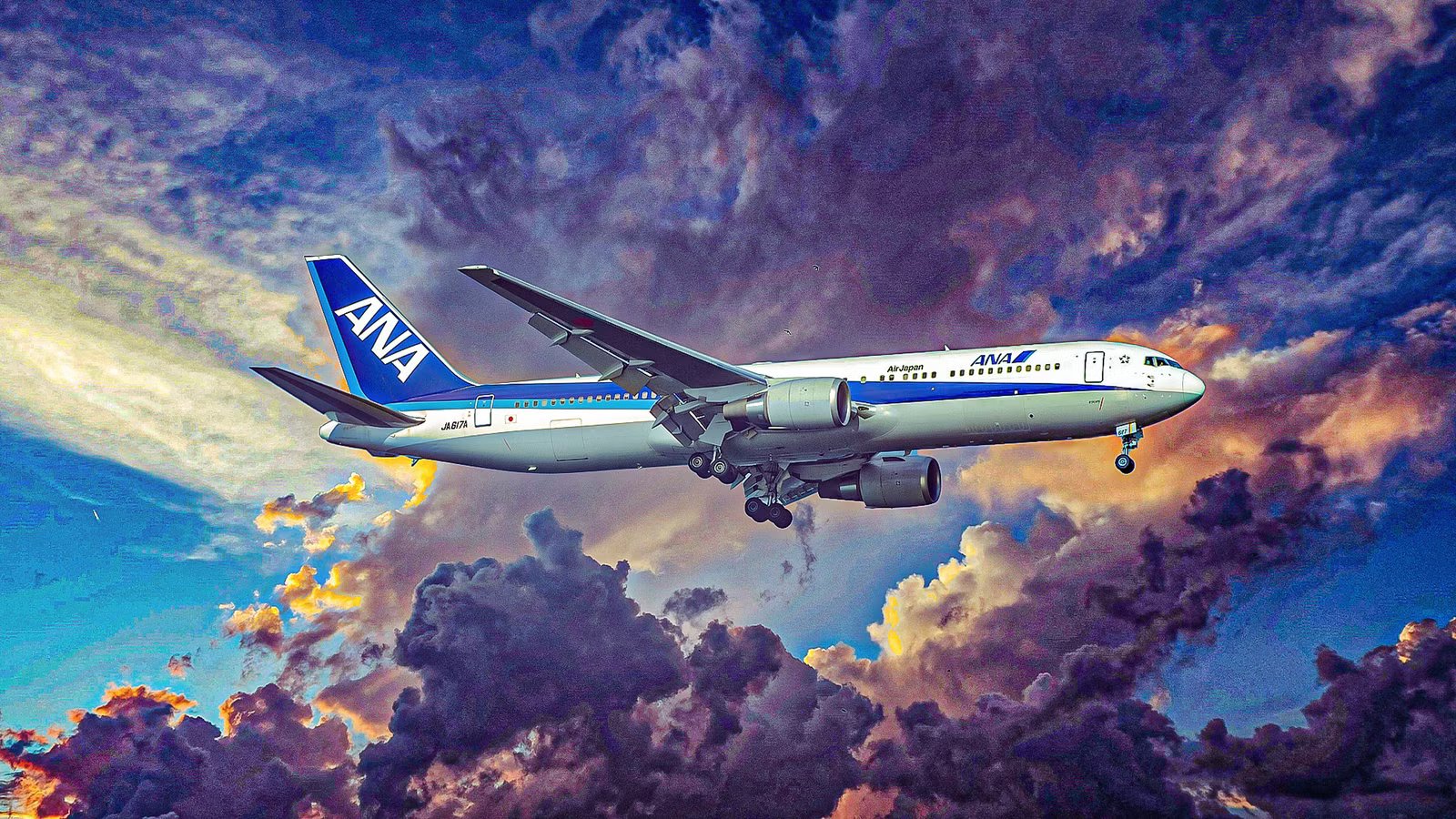
 Tokyo Haneda Airport (HND) came close to witnessing another major widebody disaster on Tuesday morning. An All Nippon Airways (ANA) Boeing 767 arriving from Shanghai came within approximately 70 feet (20 meters) of a Japan Civil Aviation Bureau (JCAB) flight inspection aircraft while on final approach.
The extreme near-miss involved ANA Flight NH968 and a JCAB Cessna Citation CJ4. Although both aircraft landed safely, the incident attracted immediate attention from aviation watchers because Haneda remains under intense scrutiny following the fatal runway collision between a Japan Airlines Airbus A350 and a Japan Coast Guard Dash 8 in January 2024. Authorities are expected to investigate this latest incident and determine exactly how the two aircraft came into such close proximity in some of the world’s busiest airspace.
The Events As They Unfolded

Flight NH968 is the first of ANA’s two daily departures from  Shanghai Pudong International Airport (PVG) to Haneda, and was operated by a Boeing 767-300 (registered JA626A) on Tuesday morning. FlightRadar24 shows that it departed shortly before 2:30 AM for the short hop across the East China Sea, and by 5:40 AM was banking over Tokyo Bay and making its final approach to Runway 34R at HND.
At the same time, the JCAB-operated Cessna CJ4 had just departed Runway 06 to conduct a scheduled flight inspection around Haneda. After banking sharply right following departure, it was climbing out on a southwesterly heading, directly across the path of the oncoming ANA 767. The air traffic control audio reveals an extremely agitated approach controller calling out to the aircraft as they converged, coming within 70 feet (20 meters) of each other as both aircraft passed through 1,000 feet.
The audio also reveals that the pilots on Flight NH968 reported that they had “received a TCAS RA” (Resolution Advisory), an automated collision-avoidance command that instructs pilots to take immediate evasive action when another aircraft is predicted to come dangerously close. Such alerts are very rare during normal airport operations, and represent the final airborne layer of protection against a midair collision.
That TCAS command may be all that ultimately saved the two aircraft from a catastrophic midair collision. The FlightRadar24 data shows that the ANA 767 immediately pulled up into a steep climb, eventually banking right and away from the airport before returning to land some 15 minutes later. For its part, the JCAB CJ4 flight inspection aircraft briefly halted its climb and descended to 900 feet, passing below the ANA 767, before proceeding with its mission across Tokyo Bay.
What Is A Flight Inspection Aircraft?

Flight inspection aircraft perform one of aviation’s least visible — but most important — safety functions. Their job is to verify that airports’ navigation aids are transmitting accurate signals and that pilots can safely rely on instrument procedures during poor weather. Airports around the world require regular inspections to maintain certification.
During these missions, specially equipped aircraft fly highly precise approaches, departures, and missed approaches, while sophisticated onboard equipment measures the accuracy of Instrument Landing Systems (ILS), approach lighting, radio navigation aids and other critical infrastructure. Because these flights deliberately follow unusual profiles that differ from normal airline operations, they require careful coordination with air traffic controllers.
What Flight Inspection Aircraft Verify | |
|---|---|
System | Purpose |
Instrument Landing System (ILS) | Verifies the accuracy of localizer and glideslope guidance |
Approach lighting system | Confirms lighting alignment and intensity for instrument approaches |
PAPI/VASI | Ensures visual glide path indicators are correctly calibrated |
VOR/DME | Checks the accuracy of radio navigation signals |
RNAV/GNSS procedures | Validates satellite-based instrument approach procedures |
Airfield lighting | Verifies runway and taxiway lighting systems operate correctly |
That unusual mission helps explain why a small business jet was operating around one of the world’s busiest airports early in the morning. The aircraft involved was Cessna Citation CJ4 (registration JA010G), call sign “CKSTR10” (Checkstar 10), which has operated as part of the JCAB flight inspection program since delivery in 2015. It is a cruel irony that while it was setting out to calibrate Haneda’s navigation and safety systems, it subsequently created a serious safety incident.
A New Incident At Haneda Will Receive Special Scrutiny

A near-miss at Haneda will draw extra scrutiny following the runway collision on January 2, 2024, when a Japan Airlines Airbus A350-900 collided with a Japan Coast Guard De Havilland Dash 8 while landing. The incident claimed five lives aboard the Coast Guard aircraft, and destroyed JAL’s flagship widebody. That accident prompted Japan to implement a range of runway safety improvements, including enhanced controller monitoring, revised procedures and additional technology aimed at reducing the risk of runway incursions.
This latest incident is different, as it occurred on final approach rather than via a runway incursion, and there was fortunately no collision. Nevertheless, the fact that TCAS was activated and instructed the pilots to take immediate evasive action will certainly trigger an investigation. As they review the aircraft positioning, controller instructions, crew readbacks, and surveillance data, the investigators will be looking to see why established separation standards were not maintained.
At the back of their minds will be the similarities with the American Airlines Flight 5342 incident from January last year, where an aircraft with 60 passengers and four crew onboard collided with a military helicopter while on final approach to  Ronald Reagan Washington National Airport (DCA), and ended up crashing into the Potomac River. Tuesday’s incident at Haneda came perilously close to a similar occurrence and outcome, and will receive exhaustive scrutiny as investigators work to determine exactly how two aircraft came within such a remarkably short distance of each other.